Pay in installments of $5.41 with
 ,
,
 and
and

Shipping Estimate
USA
- USA
- CAN
- USA
- CAN
Ships within 48 hours · Estimated delivery Aug 5 - Aug 10
 Promo Codes Available:
For Your Every Summer RSVP, with Code: SUMMER15
Description
leopard plant succulent Shop 'Silver Squill - Ledebouria Socialis Miner' Care and InfoIntroducing the silver squill plant, known as Ledebouria socialis Miner. It is also known as the Violet Squill, Leopard Lily, & Wood Hyacinth. It gets its common name, silver squill, because of its unique silver grey foliage. This dwarf plant has a fast growth rate and reaches a height of up to 8 inches, with the most widely cultivated bulbs multiplying fast. The Silver Squill, a bulbous perennial plant in the Asparagaceae family, shares fleshy leaves
Introducing the silver squill plant, known as Ledebouria socialis Miner. It is also known as the Violet Squill, Leopard Lily, & Wood Hyacinth. It gets its common name, silver squill, because of its unique silver-grey foliage.
This dwarf plant has a fast growth rate and reaches a height of up to 8 inches, with the most widely cultivated bulbs multiplying fast. The Silver Squill, a bulbous perennial plant in the Asparagaceae family, shares fleshy leaves with succulents but is not classified as a succulent. Native to Eastern South Africa, the silver squill plants are winter dormant.
At maturity, teardrop-shaped bulbs form above the ground. Its fleshy, lance-shaped leaves store energy in its bulb. The 'Miner' variety of Ledebouria socialis stands out with its distinctive leaves.
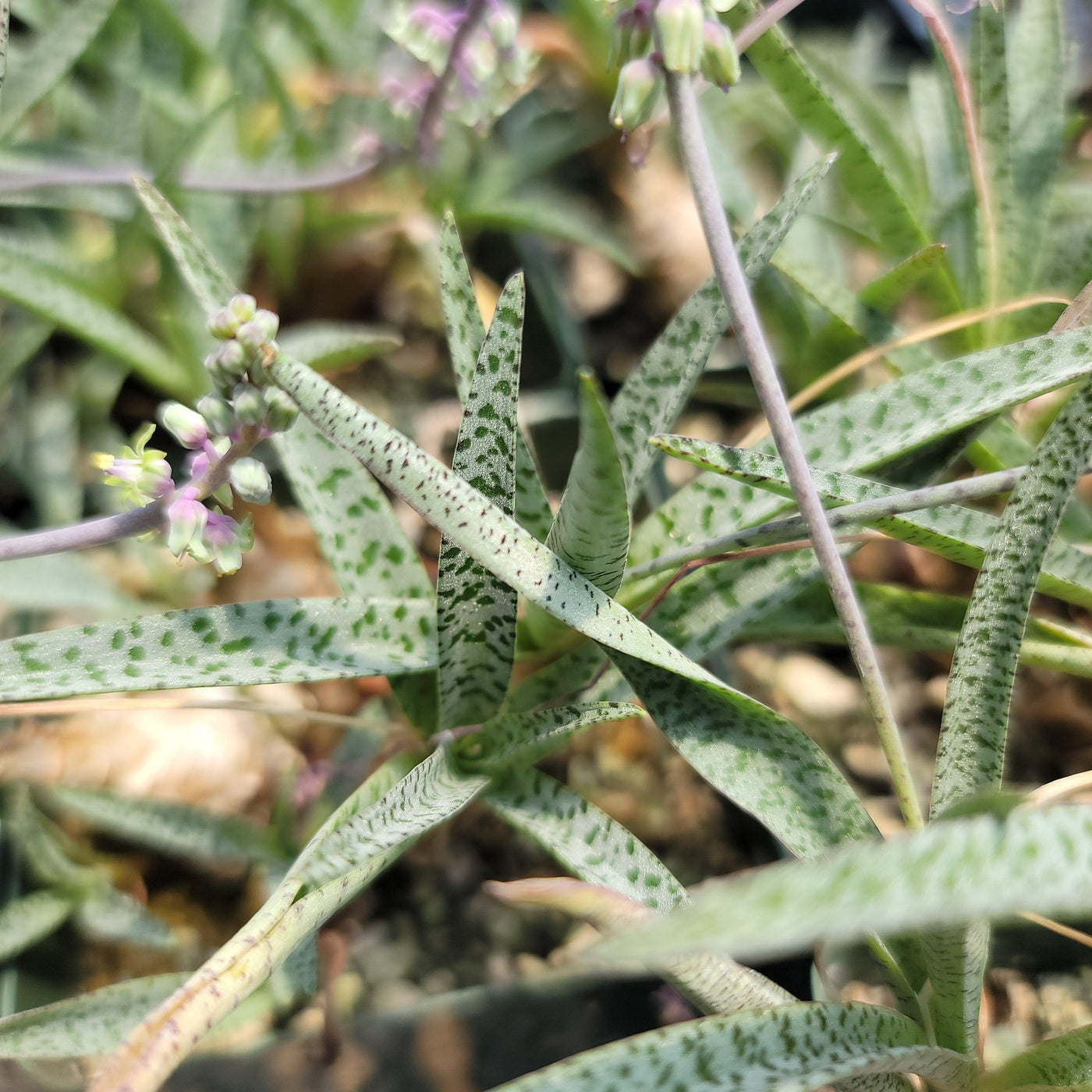
The leaves are elongated and have a beautiful silver-green coloration with dark green leopard spots or markings. These markings resemble the spots found on a leopard's coat; hence, this silver squill plant is also known as "Leopard Lily."
The contrast between the silver background and the dark spots creates an eye-catching and visually appealing display.
The flowers of the variegated silver squill miner bloom very rarely, but in its natural habitat, the silver squill in early spring grows small green flowers or white-pale pink on pink stems that emerge from the rosette-shaped foliage. The plant's elegant appearance is enhanced by its delicate stems or foliage, not its flowers.
Additionally, this silver squill has the ability to produce offsets, or "pups." Ledebouria socialis propagation is best done through its teardrop-shaped bulbs, which are formed by dividing tubers and rhizomes. As they mature, they can be separated and propagated to create new plants. This makes it a great option for those interested in expanding their succulent collection or sharing plants with friends.
Watering Needs
Silver squill has minimal watering needs. It's important to strike a balance and avoid overwatering or underwatering this perennial plant. When watering your silver squill plant, allow the top inch of soil to dry out before watering again. This will help prevent the risk of root rot. It's best to water it thoroughly and then let the excess water drain out completely.
The watering needs of the silver squill ledebouria socialis include regular watering, typically during its active growth period during spring and summer, but the soil should never be wet for long. During the winter rest period, cut down on watering. Observing the plant's leaves can also give you an indication of its watering needs.
If the leaves start to appear wrinkled or droopy, it may be a sign that your Ledebouria socialis needs water. On the other hand, if the leaves become mushy or discolored, it could be a sign of overwatering.
Light Requirements
When growing indoors, place your silver squill plant in a location where it can receive bright light throughout the day. A north- or east-facing window is usually ideal for filtered or indirect light. If you don't have access to natural light, you can use artificial grow lights to provide the necessary light requirements for your Ledebouria socialis.
For outdoor cultivation, this silver squill prefers bright, indirect light for at least 4-6 hours daily. The silver squill light requirement includes filtered sunlight. It thrives in minimal direct sunlight, but too much of it should be avoided as it can scorch the leaves.
Keep an eye on the leaves of your silver squill. If they start to turn yellow or pale, it may be a sign that your succulent is not receiving enough light. If, on the other hand, the leaves become bleached or develop brown spots, this could indicate that they have been exposed to too much direct sunlight.
Remember to rotate your Ledebouria socialis occasionally to ensure even light exposure to all sides. This will help prevent the succulent plant from leaning or growing unevenly toward the light source.
Optimal Soil & Fertilizer Needs
For silver squill plants, it's best to use well-draining sandy soil that allows excess water to flow out easily. The silver squill soil should be humus rich. It should be sandy for good drainage. Fine to medium-grained is a good option. Ideally, you want to use our specialized succulent potting mix that contains 5 natural substrates and organic mycorrhizae to promote the development of a strong root system that helps your succulent thrive.
As for fertilizer, Silver Squill doesn't require heavy feeding. You can use a balanced fertilizer with NPK (5-10-5) during the growing season, which is typically in the spring. During the dormant period in fall and winter, you can reduce or stop fertilizing altogether. Avoid over-fertilizing, as it can lead to nutrient burn and damage the plant's roots.
Hardiness Zone & More
When grown indoors, the silver squill thrives in temperatures between 60-75°F. It can handle slightly cooler temperatures, but it's best to avoid exposing it to frost or extreme heat.
For outdoor cultivation, it is suitable in USDA zones 9–11. It's important to avoid exposing it to temperatures below 50°F, as it can cause damage to the foliage and overall health of Ledebouria socialis
In terms of humidity, Silver Squill prefers moderate humidity levels, around 40–60%. You can achieve this by misting the leaves occasionally or by placing a tray of water near the silver squill plant to increase humidity. However, it can still tolerate lower humidity levels, so it should do well if you are growing silver squill indoors.
Final Thoughts
Overall, the silver squill plant (Ledebouria socialis 'Miner') is versatile and features a silver-green coloration that can thrive both indoors and outdoors. It prefers temperatures between 60-75°F indoors and is adaptable to average humidity levels. When grown outdoors, it is typically hardy in USDA zones 9–11 but may require protection from frost in colder climates. When it comes to care, the silver squill plant is relatively low-maintenance, requiring infrequent watering and well-draining soil. With the right care and conditions, this plant can add a touch of unique beauty to any space.
Shipping Notes
- Free Standard Shipping on $100+ Orders to the USA.
- Except Preorder products are shipped in 48 hours.
- Delivery to the USA:
- Standard Shipping : 3-10 business days
- If time is of the essence, please consider selecting expedited delivery for faster service.
Exchange/Return Notes
- We offer a 30-day return/exchange service after receiving.
- Final sale items are not eligible for returns or exchanges.
- To process your return/exchange, please contact us at [email protected]
- Please click here for more details>>> Return & Exchange Policy