fertilizing ponytail palm Ponytail Palm
SKU: 96893022822
fertilizing ponytail palm

fertilizing ponytail palm Ponytail Palm

Sale price$25.87 Regular price$28.74
Save 10%

Shipping Estimate
USA
  • USA
  • CAN

Ships within 48 hours · Estimated delivery Jul 7 - Jul 12

Promo Codes Available:

For Your Every Summer RSVP, with Code: SUMMER15

Description

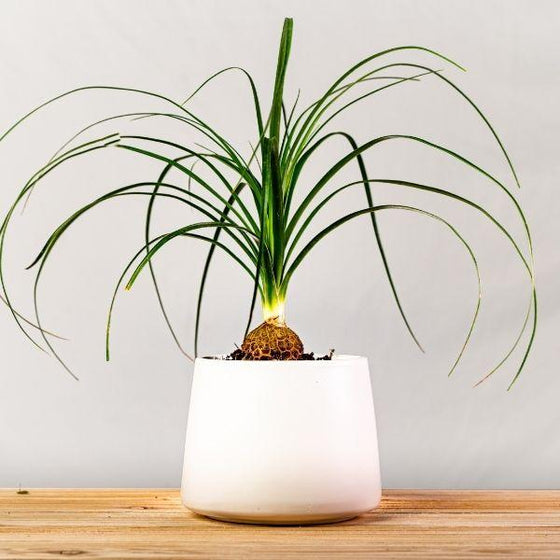
fertilizing ponytail palm Ponytail PalmCurly Ponytail Foliage on a Swollen Trunk Ponytail Palm is one of those plants that makes people smile at first glance. A swollen, bulbous base tapers into a slender trunk, crowned with a fountain of long, ribbon like leaves that spill over the sides like a green ponytail. Despite its common name, it isnt a true palm at all, but a caudex forming succulent native to Mexico, which has evolved to store water in its thick base. The look is part desert

Curly “Ponytail” Foliage on a Swollen Trunk

Ponytail Palm is one of those plants that makes people smile at first glance. A swollen, bulbous base tapers into a slender trunk, crowned with a fountain of long, ribbon-like leaves that spill over the sides like a green ponytail. Despite its common name, it isn’t a true palm at all, but a caudex-forming succulent native to Mexico, which has evolved to store water in its thick base. The look is part desert sculpture, part whimsical houseplant, and it fits just as well on a sunny windowsill as it does styled on a plant stand.

Slow, Compact Growth, and Long-Lived

Indoors, Ponytail Palm is slow-growing, which makes it a fantastic long-term companion plant. Young plants have a single trunk and a tight tuft of foliage, while older specimens gradually thicken their base and may branch into multiple heads over time. In containers inside the home, most plants typically top out at around 3–4 feet tall, although very old specimens in large pots can reach 5–6 feet. Because it grows slowly and stays relatively narrow, it’s easy to tuck into corners, tabletops, or grouped displays without worrying that it will outgrow the space overnight.

Bright Light and Infrequent Watering is all it requires

Think of Ponytail Palm as more of a succulent than a palm when it comes to care. It thrives in bright, indirect light and happily basks in a bit of gentle direct sun, especially morning or late-afternoon rays. A bright east or south window is ideal; in lower light, it will survive, but growth slows dramatically, and the trunk may elongate rather than stay stout. Plant it in a very well-draining mix—such as cactus or succulent soil, or potting mix heavily amended with sand and perlite—so that excess water runs through quickly and never lingers around the roots.

Watering is where Ponytail Palm really earns its “set it and forget it” reputation. The caudex stores water, so you’ll want to let the soil dry out completely between waterings, then soak thoroughly and drain well. In most indoor settings, that means watering every 2–4 weeks, less in low light or winter, and a bit more in bright, warm conditions. It prefers typical household temperatures of around 65–80°F and average humidity, shrugging off dry indoor air that would bother more finicky tropicals. Overwatering is just about the only way to truly get into trouble with this plant—if the base ever feels soft or the leaves pull out easily, it’s a sign the roots have stayed wet too long.

Pet-Safe Personality Plant for Home or Office

In the “indoor landscape,” Ponytail Palm is pure personality. Use it as a quirky focal point on a plant shelf, as a sculptural accent on a low stool, or lined up in multiples for a desert-inspired vignette. It pairs beautifully with cacti, snake plants, and other drought-tolerant houseplants, adding a softer, playful texture to an otherwise spiky or architectural grouping. And because it’s considered non-toxic to cats, dogs, and even horses, you can relax a bit if curious paws can’t resist playing with those tempting, dangling leaves.

Shipping Notes
  • Free Standard Shipping on $100+ Orders to the USA.
  • Except Preorder products are shipped in 48 hours.
  • Delivery to the USA:
  1. Standard Shipping : 3-10 business days
  • If time is of the essence, please consider selecting expedited delivery for faster service.
Exchange/Return Notes
  • We offer a 30-day return/exchange service after receiving.
  • Final sale items are not eligible for returns or exchanges.
  • To process your return/exchange, please contact us at [email protected]
  • Please click here for more details>>> Return & Exchange Policy
SKU: 96893022822

Discover Niche Categories That Outsell fertilizing ponytail palm

Top-Converting Item to Boost Your Average Order

4.5 ★★★★★
Based on 1780 reviews
Sort
Highest Rating
Newest First
Oldest First
Product Reviews
R
Verified Purchase
Riyen
Port Orchard, US
★★★★★ 5
Truly, the best we could do
Format: Kindle
An excerpt from my analysis essay I submitted for my literature course: By revisiting her family’s past from before, during, and after the Vietnam War, she gained a deeper understanding of the emotional burdens her parents carried and the sacrifices they made that defined the entirety of their lives. Bui’s illustrated graphic memoir reveals that trauma does not simply disappear over time; instead, it becomes inherited, processed, and transformed. Through this process, Thi Bui is able to move toward empathy for her parents, acceptance of who they are, and a more complete sense of self.
WAS THIS REVIEW HELPFUL?YesReportShare
Reviewed in the United States on April 21, 2026
K
Verified Purchase
Kathy
Whiting, US
★★★★★ 5
Phenomenal. A must-read!
Format: Paperback
I first learned about this book only a week ago when visiting my sister for Thanksgiving in Eugene, Oregon. We went to the Jordan Schnitzer Museum of Art where I saw some work on display by the author, and there was a copy of her book available to look at, so I perused through and decided to buy it and read it. I'm so glad that I did! This is an incredible, poetic story that spans four generations, multiple wars and conflicts, and examines the fragility of the author's relationship with her parents and with her sense of place and motherhood. This book is one of the best I've read in a long time, and the art is moving and beautiful. It gave me new insight into the struggles of refugee life, and created a truly relatable narrative. I devoured this story in one Saturday. I highly recommend it.
WAS THIS REVIEW HELPFUL?YesReportShare
Reviewed in the United States on December 2, 2018
S
Verified Purchase
Sav
Houston, US
★★★★★ 5
A well composed memoir
Format: Paperback
Full review on nguyentoread.com The Best We Could Do is Thi Bui's graphic memoir. Thi was born in Vietnam three months before the Vietnam War reached what we consider to be the end of the war. She came to America with her family in 1978. Bui's memoir spans multiple generations. In learning of her mother's and father's pasts, we learn the history of their parents. We see the struggles and pains of two people from very different walks of life trying to live during a time of war and chaos. We see glimpses of the agony everyone in the middle of the Vietnam War faced. Those who were not directly involved on either side but were caught in the middle of larger powers at war. This memoir more closely details the lives of her parents leading up to them arriving in America and making their life there. I was unsure if this memoir would focus largely on the experience of being a Vietnamese immigrant in America. There were parts that showed how it was for Bui's parents in a country where tensions were still high after the Vietnam War, where discrimination largely due to that was overt, and where degrees were not recognized and people who had spent their lives working and creating careers for themselves were not qualified for most work and had to hurdle multiple challenges to learn a language and complete education all over again if they wanted to provide a better life for their children. What Bui so beautifully captures in this memoir is the why behind how her parents were in raising her. Although Bui was born in Vietnam she was young when her family arrived in America. So I think her experience is one that many first generation Vietnamese-American people of my generation can understand and sympathize with. The wanting to know why their parents are the way they are but unable to ask because many have parents, like Bui's mother, who reluctantly share their stories and don't allow their children that glimpse that could help them better understand. In the panel which was most poignant to me, Bui draws her father as he looks over her work that would become The Best We Could Do. He says "You know how it was for me. And why later I wouldn't be... normal."
WAS THIS REVIEW HELPFUL?YesReportShare
Reviewed in the United States on May 20, 2019
N
Verified Purchase
Noah Beitzel
Whiting, US
★★★★★ 5
This book made me love my parents more
Format: Kindle
I loved the raw depictions of vietnamese history and human emotions. I recommend this book to anyone experiencing intergenerational trauma. 5 stars, this book helped me understand my father and mother just a little more, and that is priceless
WAS THIS REVIEW HELPFUL?YesReportShare
Reviewed in the United States on September 25, 2025
A
Verified Purchase
Andres Hoyos
Belleville, US
★★★★★ 5
Excellent customer service
Format: Paperback
Totally recommendable.
WAS THIS REVIEW HELPFUL?YesReportShare
Reviewed in the United States on August 26, 2019

recommand products