Pay in installments of $6.80 with
 ,
,
 and
and

Shipping Estimate
USA
- USA
- CAN
- USA
- CAN
Ships within 48 hours · Estimated delivery Jul 16 - Jul 21
 Promo Codes Available:
For Your Every Summer RSVP, with Code: SUMMER15
Description
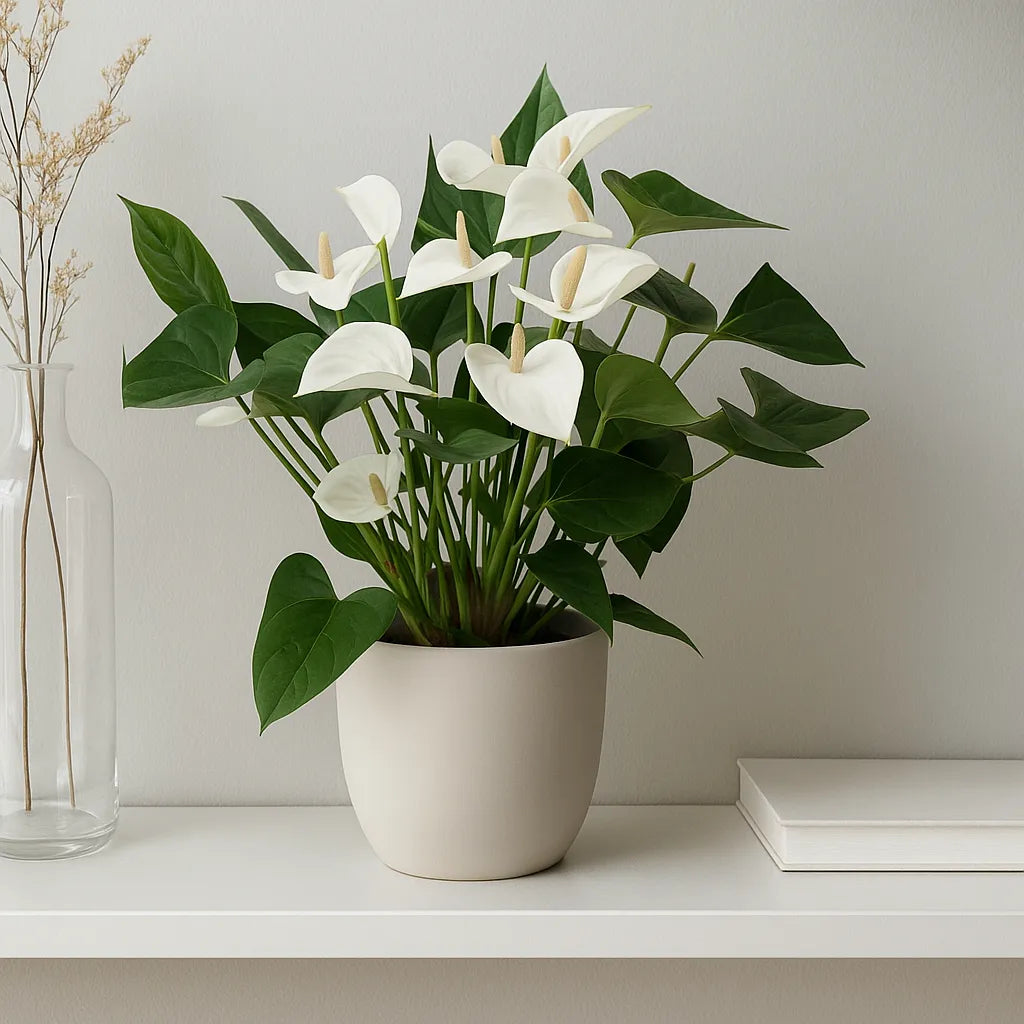
plant with white flowers indoor 35Anthurium andraeanum White, also known as the White Flamingo Flower, is an elegant tropical houseplant admired for its pure white blooms, glossy green foliage, and sophisticated simplicity. A member of the Araceae family and native to the rainforests of Colombia and Ecuador, this variety is a modern classic embodying balance, serenity, and refinement. The plant produces long lasting white spathes (modified leaves) that surround a golden yellow spadix,
Anthurium andraeanum ‘White’, also known as the White Flamingo Flower, is an elegant tropical houseplant admired for its pure white blooms, glossy green foliage, and sophisticated simplicity. A member of the Araceae family and native to the rainforests of Colombia and Ecuador, this variety is a modern classic — embodying balance, serenity, and refinement.
The plant produces long-lasting white spathes (modified leaves) that surround a golden-yellow spadix, creating a sculptural contrast against the rich, dark-green foliage. Each bloom can last for several weeks, and with consistent care, Anthurium ‘White’ flowers multiple times throughout the year. The heart-shaped leaves are thick and glossy, adding lush, tropical depth even when the plant is not in bloom.
Understated yet luxurious, Anthurium ‘White’ brings a sense of calm and grace to interiors — a living expression of tropical elegance and timeless design.
Anthurium andraeanum ‘White’ – Care Guide
Light
Thrives in bright, indirect light. Consistent brightness encourages strong blooms and healthy foliage. Avoid direct sunlight, which can burn the leaves, and low-light areas, which may reduce flowering frequency. East-facing windows or filtered daylight are ideal.
Watering
Keep the soil lightly moist but not soggy. Water when the top 2–3 cm of soil feels dry to the touch. Anthuriums prefer evenly moist conditions but are sensitive to overwatering. Always ensure good drainage and avoid letting the plant sit in water. During winter, reduce watering slightly while maintaining humidity.
Temperature and Humidity
-
Temperature: Prefers warmth between 20–28 °C; avoid temperatures below 16 °C.
-
Humidity: Requires moderate to high humidity (60–80%) for best performance. Mist regularly or use a humidifier to maintain consistent moisture levels. Low humidity can cause browning on leaf edges or shorter-lasting blooms.
Soil and Potting
Use a coarse, well-draining tropical mix, such as compost combined with orchid bark, perlite, and coco coir. This allows airflow around the roots while holding gentle moisture. Repot every 1–2 years in spring to refresh the mix and encourage healthy root growth.
Feeding
Feed every 4–6 weeks during the growing season (spring and summer) with a diluted, phosphorus-rich fertiliser or one formulated for flowering plants. Over-fertilising can cause root burn or reduce bloom quality. Suspend feeding in autumn and winter when growth slows.
Pruning and Maintenance
Remove faded blooms and yellowing leaves at the base to encourage new growth and keep the plant tidy. Wipe leaves regularly with a soft, damp cloth to maintain their glossy finish and prevent dust accumulation. Rotate the plant occasionally for even light exposure.
Growth and Maturity
A moderate grower, Anthurium ‘White’ typically reaches 40–60 cm in height and width. When mature and well cared for, it produces flowers throughout the year, each bloom lasting several weeks. Its lush green foliage and continuous flowering habit make it both a decorative and enduring addition to any collection.
Common Issues
-
Brown tips: Low humidity or water quality (fluoride or chlorine sensitivity).
-
Yellowing leaves: Overwatering or poor drainage.
-
Lack of flowers: Insufficient light or nutrients.
-
Pests: Occasionally thrips or spider mites; treat promptly with neem oil or insecticidal soap.
Background and Benefits
Native to tropical South America, Anthurium andraeanum grows as an epiphyte beneath the rainforest canopy, where it thrives in warm, humid, and shaded conditions. The ‘White’ variety was bred for its pure, luminous blooms, symbolising peace, purity, and elegance — making it a favourite for modern interiors, weddings, and minimalist design spaces.
Beyond its ornamental beauty, Anthuriums are also excellent air purifiers, filtering common indoor toxins and releasing oxygen while maintaining humidity. Its elegant heart-shaped flowers and lush foliage make it both a natural décor piece and a living symbol of balance and vitality.
Quick Care Summary
Light: Bright, indirect light; avoid direct sun
Water: Keep soil evenly moist; allow top 2–3 cm to dry before watering
Temperature: 20–28 °C; avoid below 16 °C
Humidity: High (60–80%)
Soil: Coarse, free-draining tropical mix – compost, bark, perlite, coco coir
Feed: Every 4–6 weeks in spring/summer with bloom-boosting fertiliser
Growth: Upright clumping habit, 40–60 cm; glossy green leaves with long-lasting white flowers and yellow spadix
⚠️ Toxicity note: Contains calcium oxalate crystals and is toxic if ingested. Keep out of reach of pets and children.
Styling Tip
Display Anthurium ‘White’ in a ceramic or matte stone planter to complement its refined, sculptural form. It pairs beautifully with foliage-rich plants such as Philodendron ‘Birkin’ or silver-toned species like Scindapsus treubii ‘Moonlight’. For a minimalist look, style it as a stand-alone centrepiece on a dining table, console, or bright corner, where its pristine white blooms can capture the light and create an atmosphere of calm sophistication.
Shipping Notes
- Free Standard Shipping on $100+ Orders to the USA.
- Except Preorder products are shipped in 48 hours.
- Delivery to the USA:
- Standard Shipping : 3-10 business days
- If time is of the essence, please consider selecting expedited delivery for faster service.
Exchange/Return Notes
- We offer a 30-day return/exchange service after receiving.
- Final sale items are not eligible for returns or exchanges.
- To process your return/exchange, please contact us at [email protected]
- Please click here for more details>>> Return & Exchange Policy