Shipping Estimate
USA
- USA
- CAN
- USA
- CAN
Ships within 48 hours · Estimated delivery Jul 12 - Jul 17
 Promo Codes Available:
For Your Every Summer RSVP, with Code: SUMMER15
Description
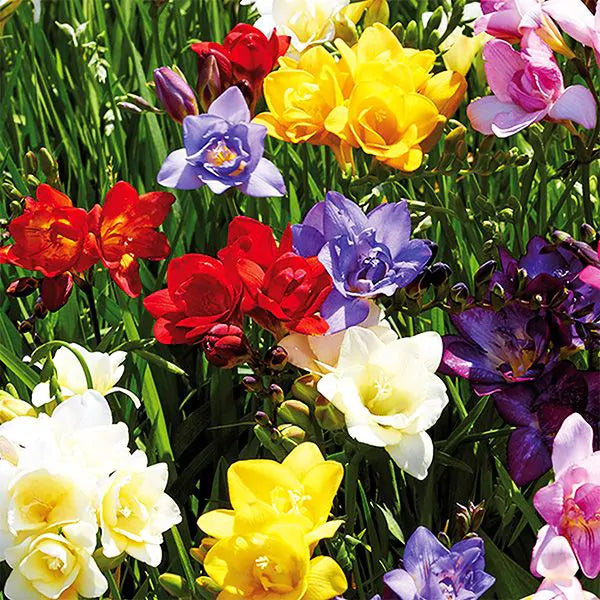
planting freesia seeds Double Mix Freesia Bulbs Growing Bonsai Roots Rhizomes Corms Tubers Potted Planting Reblooming Fragrant Garden Species Blooms Flower Seeds Plant GardeningAbout this item Where to Plant Freesias do best in a warm, sheltered environment with plenty of sun. Indoors, place pots of freesias in a well lit spot on a windowsill, in a porch, or conservatory. However, conditions must not be too warm: a maximum of 15C is the optimum for freesias, as warmer conditions result in spindly growth and flowers that quickly fade. Outdoors, grow in pots, or plant in the ground so long as the soil is well drained. Raised
-
How to Plant
Freesias are versatile and can be grown in pots indoors or outdoors, or in the ground. Freesias aren’t frost-hardy so can only be planted outdoors in spring or early summer.
Well-drained soil or potting compost is essential as freesias are likely to rot in heavy or waterlogged soil. In pots, use a soil-based potting compost mixed with around a quarter to a third by volume of coarse grit.
There's no need to soak freesia bulbs before planting. Plant the long, slender freesia bulbs pointy-end up, at a depth of 3-5cm, and spaced 5cm apart.
Once planted, water well and then stand the pot in a cool, shaded, frost free place â€?a temperature of around 5°C is ideal. After 3-4 weeks when shoots appear, move into a warmer and sunny position.
-
How to Grow
For indoor growing, plant freesia bulbs (corms) in autumn to bloom in late winter. To grow freesias in indoor pots for early summer flowering, plant from January to March under cover. To grow outdoors, plant from April to June.
Plant freesia corms in well-drained soil or potting compost pointy-end up, at a depth of 3-5cm, and spaced 5cm apart. Water well and then stand the pot in a cool, shaded, frost free place â€?a temperature of around 5°C is ideal. After 3-4 weeks when shoots appear, move into a warmer and sunny position
-
How to care for freesias
Water freesias regularly once growth appears, aiming to keep the compost moist, but take care not to over-water. Start feeding freesias when the flower buds start to form. Use a liquid fertilizer high in potash and apply every 10-14 days.
Supporting freesia flowers in some way is necessary to stop the stems flopping over, regardless of whether they’re growing in pots or in the ground. Either buy ready-made supports or use twiggy sticks pushed into the soil.
Freesia bulbs are not frost hardy so if you're growing them outside you'll need to dig them up, dry them and store them to replant the following year. When flowering has finished, simply cut off the faded flower stems and reduce watering gradually as the leaves turn yellow and die. Once the leaves have died back completely, lift the corms from the soil. Once lifted, put them in a warm place for several months to ripen the corms, mimicking the conditions of a South African summer. Then, store in a paper bag in a cool frost-free place to plant the following year. The effects of the heat treatment will have worn off so the saved corms can only be planted in spring..
-
How to propagate freesias
Freesias can be grown from seed, sown into potting compost with added grit or perlite, in autumn or winter. Seed-raised plants can take a couple of years to become large enough to bloom.
Small offsets or tiny corms can be detached from the original corms when lifting in autumn. These can be planted individually in small pots in spring, to grow on into larger corms. Again flowering can take a year or more. -
Pests and diseases
Freesia leaves go yellow and the corms are likely to rot if the soil or compost become waterlogged. Pot-grown freesias should be checked after watering to ensure they’re not sitting in water.
Under cover, pests such as red spider mite and aphids may appear. Inspect the undersides of leaves regularly for signs of mottling caused by the tiny red spider mite, or for clusters of aphids. Improving humidity can deter red spider might, while a jet of water, soap spray or biological control can be used to combat aphids and other pests.
Why Seedsplant ?
- Experts in the field
- Family owned and operated - 100 years
- Rigorous quality control
- We strive for your success by offering the bulb size you need
- Affordable quality
Flower Bulb Facts of Life
Bulbs: Beauty In a Bottle:
Bulbs are a natural product. And, as such, follow a natural cycle of growth and rebirth. Enjoying their fabulous flowers means planting ahead in one season then results the next. Bulbs are among the easiest flowers to grow, not only are they affordable, but bulbs offer the most stunning colors available. Even the most novice gardener can create a breathtakingly beautiful spring garden with bulbs.
What's a Bulb?
A flower bulb is really a self-contained flower factory. Within this marvelous little package is nearly everything the flower needs to come to life! Split a bulb open, for instance, and you'll see its baby flower bud, leaves, roots, stem and food supply. All bulbs need from you is to be placed in the ground at the appropriate season of year, given a liberal drink of water then left to work their magic.
Variety:
Flower bulbs come in seemingly limitless varieties which makes them perfectly suitable for any garden design you can dream up.
Is It a bulb ?
The Difference Between Bulbs, Corms, Tubers, Roots,Today, people commonly us the term 'bulb' to refer to any plant that stores its own food underground. But, in truth, many popular 'bulbs' are not true bulbs at all. These include corms, tubers and roots and, while they all produce beautiful flowers, technically the plants are different
When To Plant
In fall, after soil temperatures are below 50ºF/10ºC. These bulbs bloom the following spring and require the cold winter temperatures for development. But let's say winter arrives and your bulbs are still in their bag. Not to worry! Bulbs are pre-programmed to grow so even if you have to plant through snow, plant your bulbs!
How To Plant
Most bulbs thrive in either full or partial sun and in almost any location with good drainage. Avoid planting at the base of hills or under drainage pipes where water collects and will rot the bulbs.
- Dig a hole
- Drop in the bulb
- Water thoroughly
Tips For success
- A larger grouping of flower bulbs are far more fab than just a few planted here and there. Think clumps of color.
- Buy the largest bulbs you can find.
- Note the flowering times. Not all bulbs will bloom at the same time. A little planning will greatly increase the number of months you will enjoy bulb flowers.
Passionate About bulbs
Generally speaking, the best predictor for gardening success is bulb size. Almost always, the larger the initial bulb size planted, the larger and stronger the plants will be, producing more flowers. The first year end result will be noticeable to anyone.The best predictor for gardening success is bulb size.
Shipping
All items are shipped usually within 2 working days (usually sooner) except plug plants. Plants only dispatch Monday-Thursday to avoid problems with live plants sitting in a postal depot over the weekend. During busy periods , due to the nature of product and extra care needed when packing and preparing for post, please allow up to 7 days for delivery (depending on day purchased). Plants are only dispatched when crops are ready to travel , therefore some multi orders may be delivered separately and occasionally it may be necessary to hold back dispatch until plants are ready. Shipping is either via Post or 24/48 Hour courier depending on order size/weight etc. at our discretion. Please be patient when ordering plants as you cannot rush nature. Please be aware delivery dates shown by Seedsplant are estimates only and do not apply to live plant orders. Any orders returned to us by Post or Courier will incur a further postage charge to resend.
Returs
You may return all unopened items within 14 days of delivery for a full refund less P&P charges. Any items received damaged in transit must be notified in writing/email within 24 hours of receipt. Live plants should arrive in perfect condition , If however for some reason they do not please contact us immediately upon receipt. A full refund including original P&P will be made for any items not as described or wrong part no etc. All returns must include your full details with a copy of original receipt. You may cancel any transaction as long as notice is received before item(s) are / have been dispatched.
Contact us
You can message us through Seedsplant messages , otherwise You can write to us by email :[email protected]
Shipping Notes
- Free Standard Shipping on $100+ Orders to the USA.
- Except Preorder products are shipped in 48 hours.
- Delivery to the USA:
- Standard Shipping : 3-10 business days
- If time is of the essence, please consider selecting expedited delivery for faster service.
Exchange/Return Notes
- We offer a 30-day return/exchange service after receiving.
- Final sale items are not eligible for returns or exchanges.
- To process your return/exchange, please contact us at [email protected]
- Please click here for more details>>> Return & Exchange Policy