Shipping Estimate
USA
- USA
- CAN
- USA
- CAN
Ships within 48 hours · Estimated delivery Jul 11 - Jul 16
 Promo Codes Available:
For Your Every Summer RSVP, with Code: SUMMER15
Description
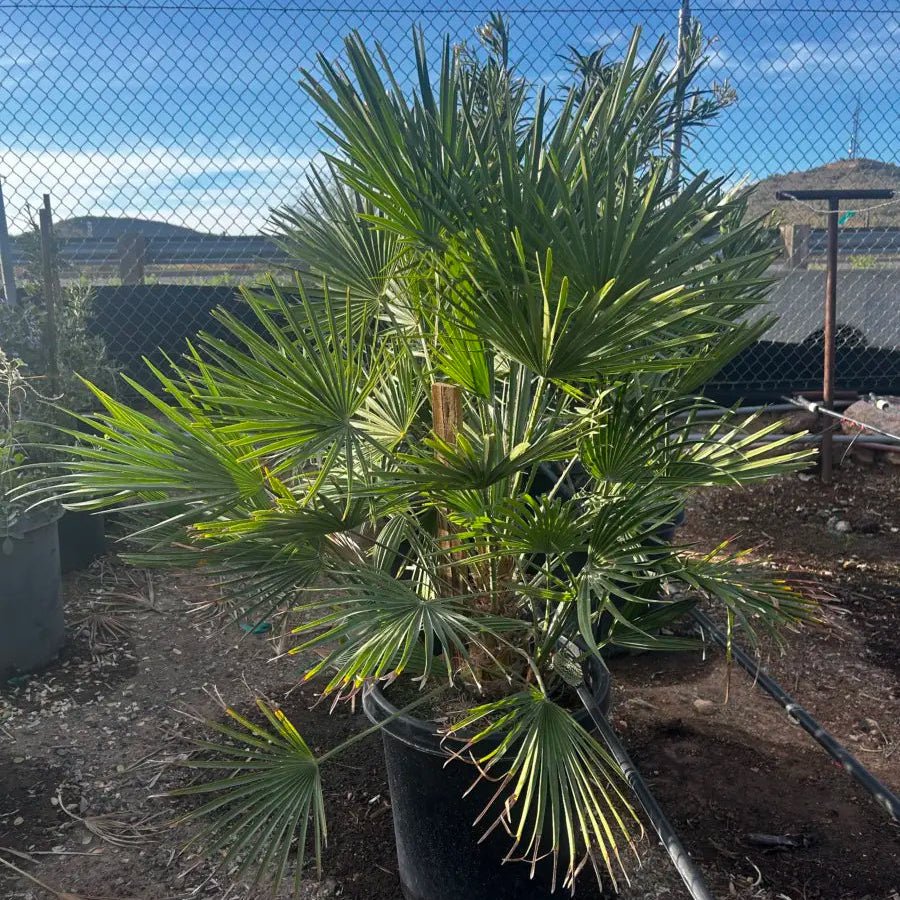
fan palm toxic to cats Buy Dwarf Fan Palm Phoenix, AZ | Chamaerops humilisArizona's Most Pool Friendly Palm Beautiful, Safe & Tough Mediterranean Fan Palm (Chamaerops humilis) is the top clumping palm for Phoenix pool landscapes, modern desert gardens, and low maintenance entrances. Slow growing but incredibly tough, it reaches 1520 feet at full maturity while staying manageable for years. Its fan shaped fronds, multi trunk silhouette, and near zero litter make it one of the safest palms for pools and patios in the Valley.
Arizona's Most Pool-Friendly Palm — Beautiful, Safe & Tough
Mediterranean Fan Palm (Chamaerops humilis) is the top clumping palm for Phoenix pool landscapes, modern desert gardens, and low-maintenance entrances. Slow-growing but incredibly tough, it reaches 15–20 feet at full maturity while staying manageable for years. Its fan-shaped fronds, multi-trunk silhouette, and near-zero litter make it one of the safest palms for pools and patios in the Valley. Whether you're designing a resort-style backyard in Scottsdale, adding structure to a courtyard in Gilbert, or creating a low-water landscape in Chandler — Mediterranean Fan Palm delivers year-round elegance with almost no care.
Mediterranean Fan Palm Plant Details
| Attribute | Detail |
|---|---|
| Scientific Name | Chamaerops humilis |
| Common Names | Mediterranean Fan Palm, European Fan Palm, Dwarf Fan Palm |
| Mature Height | 15–20 feet |
| Mature Width | 10–15 feet |
| Growth Rate | Slow — 6–12 inches per year in Phoenix |
| Sun | Full sun to partial shade (6+ hrs). Handles reflected heat from walls. |
| Water | Low once established. Highly drought-tolerant. |
| USDA Zones | 8–11 (Phoenix is Zone 9b–10a) |
| Soil | Well-draining. Adapts to Arizona caliche soils. |
| Foliage | Evergreen — stays green year-round |
| Form | Multi-trunk clumping palm with distinctive fan-shaped fronds |
Mediterranean Fan Palm Uses in Phoenix Landscapes
Pool and Patio Surrounds
Mediterranean Fan Palm is one of the only palms genuinely rated pool-friendly — it drops minimal debris, has non-invasive roots, and produces no sharp seed pods to end up in the water. Plant 6–8 feet from the pool edge for a lush, resort-style look without clogging skimmers or cracking pool decking. Pair with Desert Spoon or Mexican Sage for a layered, architectural border around the pool.
Privacy Screening
Planted in a staggered row or cluster, Mediterranean Fan Palms create a dense visual screen reaching 8–12 feet tall in 5–7 years. Their arching fronds fill in overhead space that standard shrubs can't reach, giving you privacy at multiple heights. For a 20 ft fence — 3 plants / 40 ft fence — 5–6 plants. Combine with Purple Hopseed Bush at the base for a solid year-round privacy barrier.
Modern Desert Design
Few plants capture the clean, architectural look of a contemporary desert landscape like a clumping fan palm. The symmetrical multi-trunk silhouette pairs beautifully with decomposed granite, concrete, steel-edged beds, and minimalist hardscape. Mix with Blue Palo Verde, Agave, or Desert Spoon for a bold, low-water composition that's hard to beat in the Phoenix Valley.
Low-Maintenance Entrances and Courtyards
Mediterranean Fan Palm's slow growth means it won't outgrow a courtyard or entry planting for years — you get a polished look without constant trimming. Plant solo as a focal specimen or in a pair to frame a gate or front door. Its pet-friendly, non-toxic status makes it a smart choice for homes with dogs or children running through the yard.
Best Time to Plant Mediterranean Fan Palm in Phoenix
Fall (October–November) is the ideal planting window. Warm soil encourages deep root development while cooler air temperatures reduce transplant stress — giving the palm 6–8 months to establish roots before its first Phoenix summer. Spring (February–April) is the second-best window. Avoid planting during peak summer heat if possible; if you must plant in summer, deep watering every 1–2 days is essential during the first few weeks of establishment.
How to Plant Mediterranean Fan Palm
- Dig wide, not deep — 2–3x the root ball width, same depth as the container
- Check for caliche — break through any hardpan layer with a bar or pick to ensure drainage
- Backfill with native soil — a light 20% organic amendment is fine but not required
- Spacing — 6–8 ft apart for clustered screening; 10–12 ft for individual specimens
- Water basin — build a 3–4 inch soil ring around the drip line to concentrate water at roots
- Mulch — 2–3 inches of gravel or bark mulch to retain moisture and keep roots cool
Watering Mediterranean Fan Palm in Phoenix
First Year Watering Schedule
- Weeks 1–2: Every 1–2 days, deep and slow (20–30 min per session)
- Month 1–2: Every 3–4 days
- Month 3–6: Every 7–10 days (5–7 days in peak summer heat)
- After Year 1: Every 10–14 days in summer; every 3–4 weeks in winter
Drip Irrigation
Place drip emitters 18–24 inches from the base of each trunk, using 2–4 GPH emitters per plant. Mediterranean Fan Palm is highly drought-tolerant once established and needs very little supplemental water during cooler months. Overwatering is a more common mistake than underwatering — always let the soil dry between deep watering cycles to avoid root rot.
How fast does Mediterranean Fan Palm grow in Phoenix?
Mediterranean Fan Palm is a slow grower, adding 6–12 inches per year in the Phoenix climate. That deliberate pace works in your favor for pools, courtyards, and entry plantings where you want shape and structure without outgrowing the space. You get years of looking great before any pruning is needed.
Is Mediterranean Fan Palm truly pool safe?
Yes — it's one of the best palms for pool areas in the Valley. Mediterranean Fan Palm drops minimal litter, its roots are non-invasive (won't crack pool decks or plumbing), and it has no sharp seed pods that fall into the water. Keep it 6–8 feet from the pool edge for best results.
Is it drought tolerant once established?
Very much so. After year one, Mediterranean Fan Palm can thrive on minimal supplemental water and handles Phoenix's arid conditions extremely well. It's well-adapted to summer heat and prefers deep, infrequent watering over shallow, frequent irrigation once roots are established.
Can it handle Phoenix summer heat and reflected wall heat?
Mediterranean Fan Palm is rated for USDA Zones 8–11 and performs well in Phoenix summer temperatures, including reflected heat from south- and west-facing walls. It appreciates some afternoon shade protection when first transplanted, but established plants handle full reflected heat with ease.
Is Mediterranean Fan Palm pet-friendly?
Yes. Mediterranean Fan Palm is non-toxic to dogs and cats, which makes it one of the most popular palms for Phoenix family landscapes. It's a worry-free choice for yards with pets and children.
You May Also Like
- Blue Palo Verde — Arizona's state tree and a fast-growing shade tree that pairs beautifully with palms in a modern desert landscape design.
- Desert Spoon (Dasylirion) — A bold, architectural accent plant with silvery-blue foliage that creates stunning contrast alongside fan palms.
- Purple Hopseed Bush — Dense evergreen privacy shrub ideal for filling in between palms along a fence line or property border.
- Texas Sage — A low-water flowering shrub that adds seasonal color to palm-anchored landscape designs across the Valley.
- Italian Cypress — Tall, columnar evergreen that creates striking vertical interest when mixed with Mediterranean Fan Palm in a formal or Mediterranean-style garden.
How Many Mediterranean Fan Palm Do I Need?
Mediterranean Fan Palm is a slow, multi-trunk clumping palm. Its 10 to 15 foot mature spread sets the spacing, whether you use it as a specimen or a loose screen.
- Single specimen: one clump anchors a pool corner, courtyard, or entry. Give it 10 to 12 feet of clear space and keep it 6 to 8 feet off the pool edge.
- Pair or focal group: flank a gate or door with two, or plant odd-numbered groups of 3 for a grove feel.
- Screen: stagger at 6 to 8 feet on center. A 20-foot run takes about 3 plants; a 40-foot run takes 5 to 6.
Mediterranean Fan Palm Season-by-Season in Phoenix
- Spring (Feb to Apr): new fan fronds unfold from each trunk as soil warms. A solid second planting window.
- Summer (May to Sep): handles full reflected wall heat with ease once established, growing slowly and steadily through the monsoon. Let soil dry between deep soaks to avoid rot.
- Fall (Oct to Nov): the ideal planting season, giving roots 6 to 8 months to settle before the next summer.
- Winter (Dec to Jan): fully evergreen and cold-hardy to about 15°F, so Valley frosts cause no harm. No cover needed.
At a Glance
✔ Heat-Loving (Reflected-Heat Tolerant) ✔ Drought-Tolerant ✔ Evergreen ✔ Pool-Friendly (Low-Litter) ✔ Low-Maintenance ✔ Cold-Hardy to 15°F
Plant It With
- Purple Hopseed Bush: dense evergreen screen to fill in between or behind the palms.
- Desert Spoon: silvery-blue architectural rosette for bold contrast at the base.
- Texas Sage: low-water flowering shrub for seasonal purple color around the palm.
- Red Yucca: red bloom spikes and hummingbird traffic in the understory.
Is Mediterranean Fan Palm Right for Your Yard?
Mediterranean Fan Palm is right for you if you want a tough, low-litter, pet-safe clumping palm for full sun or reflected heat, sharp-draining or broken caliche soil, and a pool, courtyard, or entry where a slow, manageable size is a plus. It is not a fit if you need fast height or instant screening, since it grows only 6 to 12 inches a year.
Shipping Notes
- Free Standard Shipping on $100+ Orders to the USA.
- Except Preorder products are shipped in 48 hours.
- Delivery to the USA:
- Standard Shipping : 3-10 business days
- If time is of the essence, please consider selecting expedited delivery for faster service.
Exchange/Return Notes
- We offer a 30-day return/exchange service after receiving.
- Final sale items are not eligible for returns or exchanges.
- To process your return/exchange, please contact us at [email protected]
- Please click here for more details>>> Return & Exchange Policy