Shipping Estimate
USA
- USA
- CAN
- USA
- CAN
Ships within 48 hours · Estimated delivery Jul 15 - Jul 20
 Promo Codes Available:
For Your Every Summer RSVP, with Code: SUMMER15
Description
succulents victoria Buy Queen Victoria Agave Phoenix, AZ | Agave victoriae-reginaeThe Most Stunning Geometric Agave for Phoenix Collectors & Modern Landscapes Queen Victoria Agave (Agave victoriae reginae) is widely considered the most beautiful agave in the world and for good reason. Its tight, compact rosette of dark green leaves painted with crisp white lines creates a geometric pattern that looks almost hand drawn. Slow growing and topping out at just 12 feet, this is the crown jewel of any succulent collection or modern desert
The Most Stunning Geometric Agave for Phoenix Collectors & Modern Landscapes
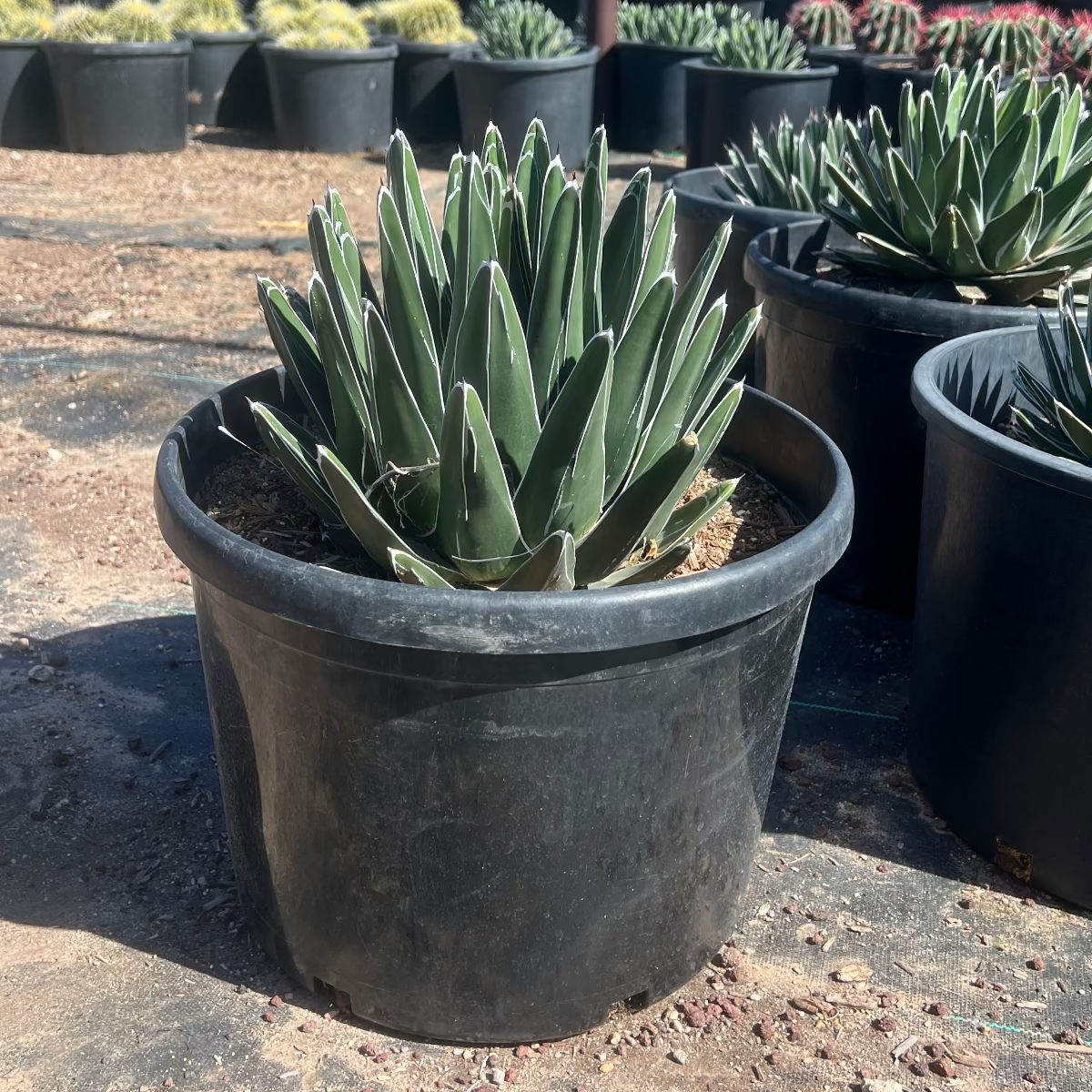
Queen Victoria Agave (Agave victoriae-reginae) is widely considered the most beautiful agave in the world — and for good reason. Its tight, compact rosette of dark green leaves painted with crisp white lines creates a geometric pattern that looks almost hand-drawn. Slow-growing and topping out at just 1–2 feet, this is the crown jewel of any succulent collection or modern desert garden in Scottsdale, Mesa, Chandler, Gilbert, and Tempe. It’s drought-tolerant, heat-loving, and demands almost nothing once established.
Queen Victoria Agave Plant Details
| Attribute | Detail |
|---|---|
| Scientific Name | Agave victoriae-reginae |
| Common Names | Queen Victoria Agave, Royal Agave, Queen Agave |
| Mature Height | 1–1.5 feet |
| Mature Width | 1.5–2 feet |
| Growth Rate | Slow — reaches mature size in 5–10 years |
| Sun | Full sun to partial shade. Handles reflected heat from walls. |
| Water | Very low once established. Extremely drought-tolerant. |
| USDA Zones | 9–11 (Phoenix is Zone 9b–10a) |
| Soil | Well-draining. Adapts to Arizona caliche soils. |
| Foliage | Evergreen — dark green leaves with distinctive white bud imprints |
| Terminal Spine | Small black spine at each leaf tip |
Queen Victoria Agave Uses in Phoenix Landscapes
Specimen & Focal Point Planting
Queen Victoria Agave is a showpiece. Plant a single specimen in a prominent spot — near an entryway, at the center of a gravel courtyard, or in a raised planter box — and it becomes the instant focal point of your landscape. Its geometric perfection draws the eye without needing any companion plants. In Scottsdale and Paradise Valley, it’s a favorite for high-end modern desert design.
Container & Patio Gardens
The compact size makes Queen Victoria Agave ideal for decorative pots on patios, courtyards, and pool decks. Use a wide, shallow terracotta or concrete bowl to showcase the rosette’s perfect symmetry. It thrives in containers for years without repotting — perfect for balconies and townhome patios in Tempe and Chandler.
Rock Garden & Desert Vignettes
Tuck Queen Victoria Agave among boulders, decomposed granite, and desert companion plants for a curated rock garden. Pair with Golden Barrel cactus for a classic desert combination, or plant alongside Blue Glow Agave for contrasting rosette shapes and colors. Space 2–3 feet apart for a grouped collection display.
Modern & Minimalist Design
The clean lines and geometric symmetry of Queen Victoria Agave make it a natural fit for contemporary landscape architecture. Plant in a linear row of 3–5 along a modern wall or pool feature for a gallery-like effect. Works beautifully in Mesa and Gilbert homes with clean desert modern aesthetics.
Best Time to Plant Queen Victoria Agave in Phoenix
Fall (October–November) is ideal. The soil is still warm for root establishment while cooler air reduces transplant stress. Spring (February–April) is the second-best window. Avoid summer planting — while this agave can handle extreme heat once established, fresh transplants struggle in 115°F conditions.
How to Plant Queen Victoria Agave
- Dig wide, not deep — excavate 2–3x the root ball width at the same depth as the container.
- Check for caliche — break through any hardpan layer completely. Drainage is critical for this species.
- Backfill with native soil — add 20–30% pumice or perlite for extra drainage. Avoid rich compost.
- Spacing — 2–3 feet apart for grouped plantings; give standalone specimens 3+ feet of clear space.
- Water basin — build a 2–3 inch soil ring to direct water to the root zone.
- Mulch with gravel — 2–3 inches of decorative rock. Keep organic mulch away from the crown to prevent rot.
Watering Queen Victoria Agave in Phoenix
First Year Watering Schedule
Weeks 1–2: Water every 5–7 days, deep and slow. Month 1–3: Every 10–14 days. Month 3–6: Every 2–3 weeks. After Year 1: Monthly in summer; little to no supplemental water in winter.
Drip Irrigation
Place one 1 GPH emitter 8–12 inches from the base. Queen Victoria Agave is extremely rot-prone if overwatered — err on the side of too dry rather than too wet. In containers, ensure the pot has drainage holes and never let it sit in a saucer of water.
How fast does Queen Victoria Agave grow?
Slowly. Expect about 1–2 inches of new growth per year. A 5 gallon specimen is typically 8–10 inches wide and may take 5–10 more years to reach full 18–24 inch spread. The slow growth is part of its appeal — it stays compact and proportional for years.
Is Queen Victoria Agave rare?
It’s not rare in the nursery trade, but large specimens are uncommon and command premium prices because of the slow growth rate. Our 10/15 gallon and 24”/25 gallon sizes represent years of growing time.
Can it handle full Phoenix summer sun?
Yes, though it appreciates some afternoon shade during the hottest weeks. In full western exposure against a block wall, the leaf tips may brown slightly — a light shade cloth during July–August peak can prevent this.
Does Queen Victoria Agave die after flowering?
Yes — like all agaves, it is monocarpic and flowers once at maturity (typically 20–30 years old), then the main rosette dies. However, it often produces offsets (pups) before flowering that carry on the plant.
You May Also Like
Blue Glow Agave — A medium-sized agave with glowing blue leaves and red margins. Beautiful contrast alongside Queen Victoria’s geometric white lines.
Parry’s Agave — A silvery-blue compact agave native to Arizona. Great companion for a native desert agave collection.
Foxtail Agave — A large, graceful agave with arching leaves that adds dramatic scale next to the compact Queen Victoria.
Golden Barrel (Bareroot) — Round, golden-spined barrel cactus — the classic partner for Queen Victoria Agave in desert rock gardens.
Safari Yellow Aloe — A bright yellow-flowering aloe that adds seasonal color around the base of agave plantings.
How Many Queen Victoria Agave Do I Need?
This is a miniature specimen agave (mature 1.5 to 2 ft wide) prized for its geometry. A single rosette makes a perfect focal point in a planter or rock vignette. For a collection display or a gallery-style row along a wall, set plants about 2 to 3 ft apart so each crisp white-lined rosette stands clear. Use the guide below to estimate counts. The terminal spine is small but firm: keep it just back from seating and pool-step edges.
| Planting | Plants needed (at 2 to 3 ft spacing) |
|---|---|
| Single focal point | 1 plant |
| 10 ft row / cluster | 4 to 5 plants |
| 20 ft row / collection bed | 8 to 10 plants |
Queen Victoria Agave Season-by-Season in Phoenix
- Spring (Feb to Apr): Slow new growth as soil warms and the white leaf markings stay crisp. Prime second planting window and a good time to separate any pups.
- Summer (May to Sep): Heat-loving and reflected-heat tolerant, but in the harshest west exposure the leaf tips can brown: light afternoon shade or a July-August shade cloth keeps it pristine. Monsoon rain (Jul to Sep) is usually plenty; this species rots easily, so keep soil on the dry side.
- Fall (Oct to Nov): Prime planting season. Roots settle in warm soil and the rosette holds its form into winter.
- Winter (Dec to Jan): Evergreen and reliably cold-tough for the Valley. Hardy to about 10°F, it needs no frost protection here and keeps its dark green and white pattern all season.
At a Glance
✔ Heat-Loving (Reflected-Heat Tolerant) ✔ Drought-Tolerant ✔ Evergreen ✔ Low-Maintenance ✔ Deer & Rabbit-Resistant ✔ Cold-Hardy to 10°F
Plant It With
- Blue Glow Agave: glowing blue leaves with red margins for a bold color contrast against the white-lined rosette.
- Parry's Agave: a silvery-blue Arizona-native rosette that builds out a native agave collection.
- Foxtail Agave: a large arching, spineless agave that adds dramatic scale beside the compact Queen Victoria.
- Desert Spoon: a fine silver-blue native accent that fills the gravel around a collection display.
Is Queen Victoria Agave Right for Your Yard?
It thrives in full sun to light afternoon shade, demands fast-draining gravelly or caliche soil, and handles Valley heat and frost down to about 10°F. Give it lean, dry conditions and a spot where its geometry can be admired up close, in the ground or a well-drained pot. Not a fit if your soil holds water (it is very rot-prone) or if you want a fast plant for instant size: its beauty comes from slow, patient growth.
Shipping Notes
- Free Standard Shipping on $100+ Orders to the USA.
- Except Preorder products are shipped in 48 hours.
- Delivery to the USA:
- Standard Shipping : 3-10 business days
- If time is of the essence, please consider selecting expedited delivery for faster service.
Exchange/Return Notes
- We offer a 30-day return/exchange service after receiving.
- Final sale items are not eligible for returns or exchanges.
- To process your return/exchange, please contact us at [email protected]
- Please click here for more details>>> Return & Exchange Policy