Shipping Estimate
USA
- USA
- CAN
- USA
- CAN
Ships within 48 hours · Estimated delivery Jul 7 - Jul 12
 Promo Codes Available:
For Your Every Summer RSVP, with Code: SUMMER15
Description
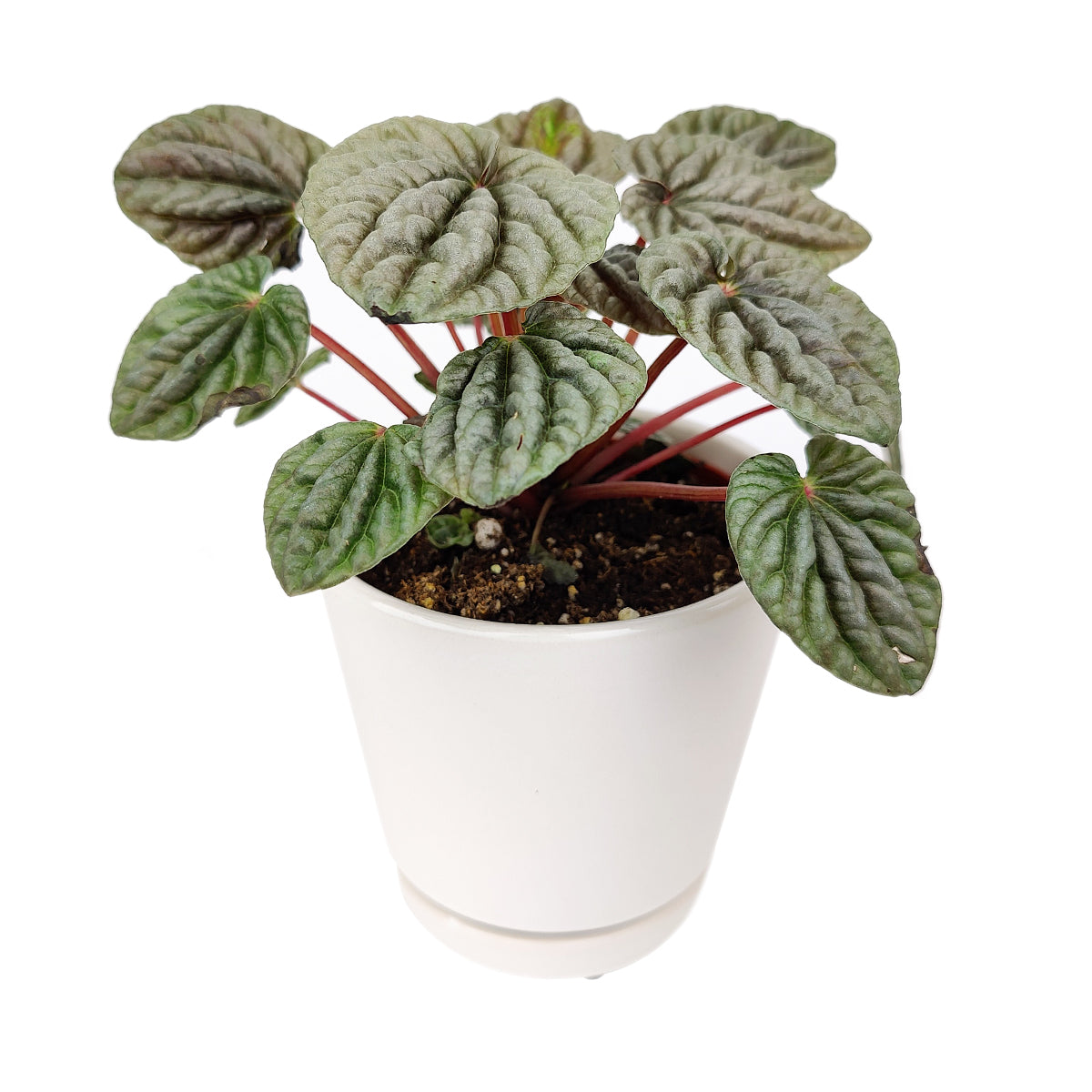
pepper succulent Peperomia Caperata - Care Tips for Growing Peperomia CaperataDescription Light Soil Water Hardiness Peperomia Caperata, a tropical gem within the Piperaceae family, is widely recognized for its distinctive and rustic foliage. Commonly referred to as the ripple peperomia, this plant stands out with its deeply ridged, heart shaped leaves, showcasing captivating shades ranging from dark green to burgundy. Its foliage color pattern may resemble Peperomia Watermelon, but the prominent ripped green veins set Caperata
-
Peperomia Caperata, a tropical gem within the Piperaceae family, is widely recognized for its distinctive and rustic foliage. Commonly referred to as the ripple peperomia, this plant stands out with its deeply ridged, heart-shaped leaves, showcasing captivating shades ranging from dark green to burgundy. Its foliage color pattern may resemble Peperomia Watermelon, but the prominent ripped green veins set Caperata apart, showcasing its unique charm.
A compact and slow-growing plant, Peperomia Caperata takes its time to reach a full height of approximately 8-12 inches, making it a perfect choice for tabletops, windowsills, terrariums, and small living spaces.
Peperomias are easy-care and very tolerating plants, fitting in most indoor environments. Whether you're a beginner looking to cultivate your green thumb or an experienced grower seeking a visually captivating and undemanding plant, Peperomia Caperata can be a lovely addition to your indoor garden.
This plant’s versatility and easy-going nature make it a meaningful, lively gift for any occasion.
-
Peperomia grows best in medium to bright, indirect light, and it does not tolerate low light conditions. This plant should be protected from intense, direct sunlight.
This plant thrives in normal room temperatures (between 65°F-80°F) and humidity (30-50%). You can mist your plant and use a humidifier when the environment is too dry (humidity level falls below 40%).
This plant is sensitive to both overwatering and underwatering. You should keep your plant slightly moist but not soaked. Check the soil weekly and only water when the topsoil is dry to the touch. Drain well after each watering.
Caperata loves rich, well-draining soils that can retain some moisture. You can add some perlite to your general houseplant potting soil to increase drainage and aeration.
This plant should be fertilized once during the growing season (spring/summer) with diluted houseplant fertilizer.
Peperomia Caperata is non-toxic, but it is recommended that you keep it out of reach of children and pets to avoid possible allergic reactions and to protect your plant’s foliage.
-
USDA Zone 9a-11b
Shipping Notes
- Free Standard Shipping on $100+ Orders to the USA.
- Except Preorder products are shipped in 48 hours.
- Delivery to the USA:
- Standard Shipping : 3-10 business days
- If time is of the essence, please consider selecting expedited delivery for faster service.
Exchange/Return Notes
- We offer a 30-day return/exchange service after receiving.
- Final sale items are not eligible for returns or exchanges.
- To process your return/exchange, please contact us at [email protected]
- Please click here for more details>>> Return & Exchange Policy
4.8 ★★★★★
Based on 2072 reviews
Sort
Product Reviews
★★★★★ 5
Huge help...
This was a huge help to me as I put together a lesson for my church on the Resurrection. There are some very devotional, personal aspects to this work as well as very helpful apologetics information.
WAS THIS REVIEW HELPFUL?YesReportShare
Reviewed in the United States on August 8, 2014
★★★★★ 5
Five Stars
Great book by Josh
WAS THIS REVIEW HELPFUL?YesReportShare
Reviewed in the United States on December 19, 2015
★★★★★ 5
.thanks agai
Format: Hardcover
The book is hard to.good job thanks
WAS THIS REVIEW HELPFUL?YesReportShare
Reviewed in the United States on August 29, 2019
★★★★★ 4
Amazing compilation of historical facts that I never heard before
Format: Kindle
Our local priest quoted from this book on Easter Sunday and that made me curious to read it. The book starts slowly, but the second half is a great history lesson, loaded with information that I had never known. Compelling.
WAS THIS REVIEW HELPFUL?YesReportShare
Reviewed in the United States on April 6, 2016
★★★★★ 5
Excellent Introduction to Hemodynamics for a Resident or Fellow
Format: Paperback
Background: PGY-2 Internal Medicine Resident with no prior hemodynamic monitoring experience
Overall:
Fantastic introduction to the field.
The author will assume you know the following prior to starting the book:
- Moderate understanding of EKG’s
- Anatomical arrangement of the heart and its vessels
- Understanding some of the practical effects of atrial fibrillation (lack of an atrial contraction, etc)
Specifics:
The book can be picked up without significant prior knowledge of hemodynamic monitoring. I initially tried to read Hemodynamic Rounds, and the authors of that book did not introduce significant pieces of information, such as the normal pressures of the heart chambers, what each wave means on the monitor, and how is each chamber of the heart/vessel represented on the monitor (where do I look to see the left ventricular pressure?).
In contrast to that, Dr. Hanna provides a book that appears to be intended for residents/cardiology fellows or zealous pre-cardiology interns who are looking for an introduction to the field that maintains enough depth to be practical. Its first section goes over the relevant physiology and pathophysiology and the mechanical/hemodynamic representation. The second section is a series of practice problems with excellent explanations which reviews all of the prior concepts and helps to solidify them in the reader’s mind. The reader will learn to appreciate the relevant waveforms and their relevant representations, the normal values for the cardiac chambers and vessels, and eventually the changes to these normal values during pathologic states. As others have mentioned, it is concise, but this also makes it a bit dense initially when the reader encounters the basic four waveforms and attempts to memorize the normal pressures. Once you get over that initial learning curve, the rest of the first section goes a bit faster.
Overall, I’m very happy I purchased this book, and I feel that it has prepared me very well for time spent in the cardiac ICU.
WAS THIS REVIEW HELPFUL?YesReportShare
Reviewed in the United States on July 25, 2019