SKU: 7013490807
star plant succulent

star plant succulent Buy Stapelia Scitula | Small Succulent Plant

Sale price$25.03 Regular price$27.81
Save 10%

Pay in installments of $6.95 with ShopPay, AfterPay and Klarna

Shipping Estimate
USA
  • USA
  • CAN

Ships within 48 hours · Estimated delivery Aug 1 - Aug 6

Promo Codes Available:

For Your Every Summer RSVP, with Code: SUMMER15

Description

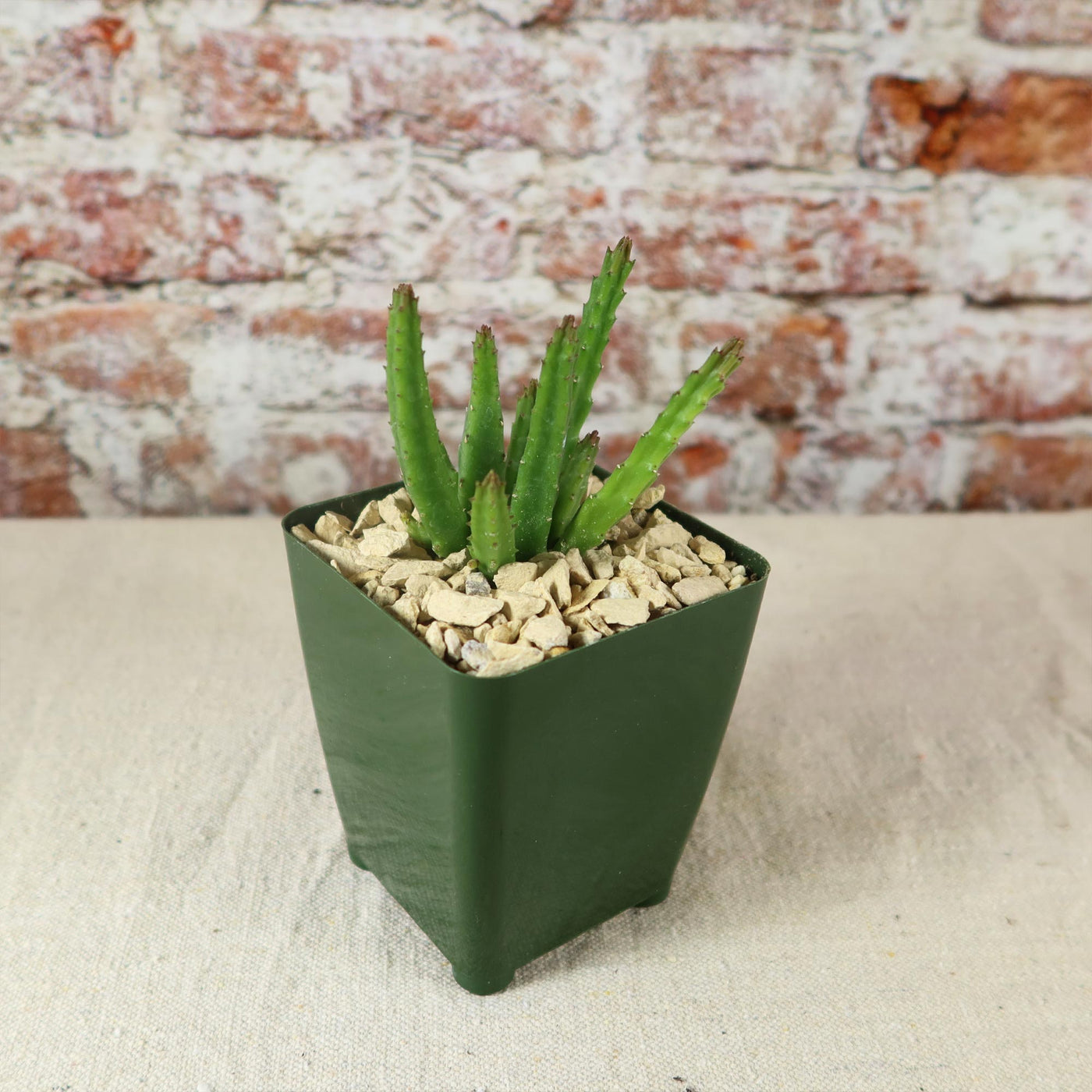
star plant succulent Buy Stapelia Scitula | Small Succulent PlantStapelia scitula, also commonly known as Small starfish flower, is a succulent plant with curvy, 4 angled, light green stems that reach a height up to 6 inches. Because this winter dormant plant is native to the Western Cape and belongs to the Asclepiadaceae family, blooming star shaped flowers usually necessitates warm, humid conditions or a specialized greenhouse environment. Growth Rate The Stapelia scitula plant has a fast growth rate. Flowering

Stapelia scitula, also commonly known as ‘Small starfish flower’, is a succulent plant with curvy, 4-angled, light green stems that reach a height up to 6 inches. Because this winter-dormant plant is native to the Western Cape and belongs to the Asclepiadaceae family, blooming star-shaped flowers usually necessitates warm, humid conditions or a specialized greenhouse environment.

Growth Rate

The Stapelia scitula plant has a fast growth rate.

Flowering

This plant produces stunning five-petaled flowers during the blooming season in late fall or early winter. The unpleasant fragrance attracts flies and other insects, which pollinate the flowers. Flowers are maroon/burgundy in color and maybe mottled with a couple of other colors.

Watering and Feeding

During the growing season, Stapelia scitula requires watering with fertilizer. Complete water withdrawal is recommended during the winter months.

Soil

As cactus roots are shallow of this succulent, use a cactus mix or add extra perlite, pumice to regular potting soil. A gritty, well-draining compost is appropriate, and clay pots allow the plants to dry out between waterings.

Hardiness

Small starfish flower has a frost tolerance of 10° C (50° F) and belongs to the hardiness zone of 10a to 11b.

Light

This variety of Stapelia prefers partial sun or light shade sun exposure and lives under shrubs in its habitat.

Propagation

From early to mid-summer, you can propagate Stapelia scitula by taking cuttings. Cut off healthy stems with a sharp knife.

The Small starfish flower is the most beautiful plant to own at your house. This plant is best as home decor or to plant in your garden. You can buy this plant before thinking twice.

Some of the information in this description has been found at desert-tropicals.com, llifle.com and cactus-art.biz

Shipping Notes
  • Free Standard Shipping on $100+ Orders to the USA.
  • Except Preorder products are shipped in 48 hours.
  • Delivery to the USA:
  1. Standard Shipping : 3-10 business days
  • If time is of the essence, please consider selecting expedited delivery for faster service.
Exchange/Return Notes
  • We offer a 30-day return/exchange service after receiving.
  • Final sale items are not eligible for returns or exchanges.
  • To process your return/exchange, please contact us at [email protected]
  • Please click here for more details>>> Return & Exchange Policy
SKU: 7013490807

Discover Niche Categories That Outsell star plant succulent

Top-Converting Item to Boost Your Average Order

4.2 ★★★★★
Based on 21 reviews
Sort
Highest Rating
Newest First
Oldest First
Product Reviews
I
Verified Purchase
Irving Dozier
West Palm Beach, US
★★★★★ 5
... true things that really went on to know very great
Format: Hardcover
lots of true things that really went on to know very great book
WAS THIS REVIEW HELPFUL?YesReportShare
Reviewed in the United States on October 13, 2016
A
A. Jimenez
Cuba, US
★★★★★ 3
Well intentioned but ignorant
It's clear that this author is well intentioned. He betrays his own ignorance in trying to justify why his book only addreses certain native nations, however. The author indicates that the book did not address the native peoples of the Caribbean because they are extinct. To state that the Taino and Carib are extinct is at best extremely ignorant and at worst racist. The Taino and Carib are very much alive. To begin with, there is a reservation of Carib Indians on the island of Dominica. These native people have retained their language and culture. Further, there is a Taino Revival movement happening throughout the major Antilles especially in the Dominican Republic, Puerto Rico and Cuba. It has been scientifically proven via DNA analysis that these people are of partial and in some cases total native descent. The Taino language is being heard and taught again in the Caribbean and Taino culture has always been an integral part of the the customs and culture of the major Antilles. It is very unfortunate to know that even this author is ultimately just another white guy bent on ignoring " incovenient truths ".
WAS THIS REVIEW HELPFUL?YesReportShare
Reviewed in the United States on September 25, 2012
T
Verified Purchase
Terry L.
Phoenix, US
★★★★★ 5
Recommend
Tells the other side of the story you didn't get in U.S. History class. Good read.
WAS THIS REVIEW HELPFUL?YesReportShare
Reviewed in the United States on May 15, 2015
G
Verified Purchase
George Vargas
Louisville, US
★★★★★ 5
Five Stars
Outstanding book on the general history of European barbarism.
WAS THIS REVIEW HELPFUL?YesReportShare
Reviewed in the United States on December 26, 2017
H
Verified Purchase
Howard
Alexandria, US
★★★★★ 5
By far, the best book of many I have read on this subject. Must read for anyone interested in this subject.
Format: Paperback
Best book I have yet read on the subject, and I have read many in research for the writing of my second novel. It relentlessly examines specific cases of lynching over time, but it is not a mere narrative of specific lynchings. It is an excellent analysis of the social, historical and cultural forces behind this horrendous practice. The book's discussion of the movie, Birth of a Nation, would by itself make this a valuable book, but the book's central theme is even more important. Its central theme, the public's desire for spectacle as fuel for lynchings, particularly after the abolition of legal public executions, is even more revealing. Also a good look at the social and cultural forces that over time led to the gradual demise of lynching as a phenomenon. A page turner for history readers. Warning -- man's inhumanity to man will make you simultaneously angry and sad.
WAS THIS REVIEW HELPFUL?YesReportShare
Reviewed in the United States on July 24, 2015

recommand products