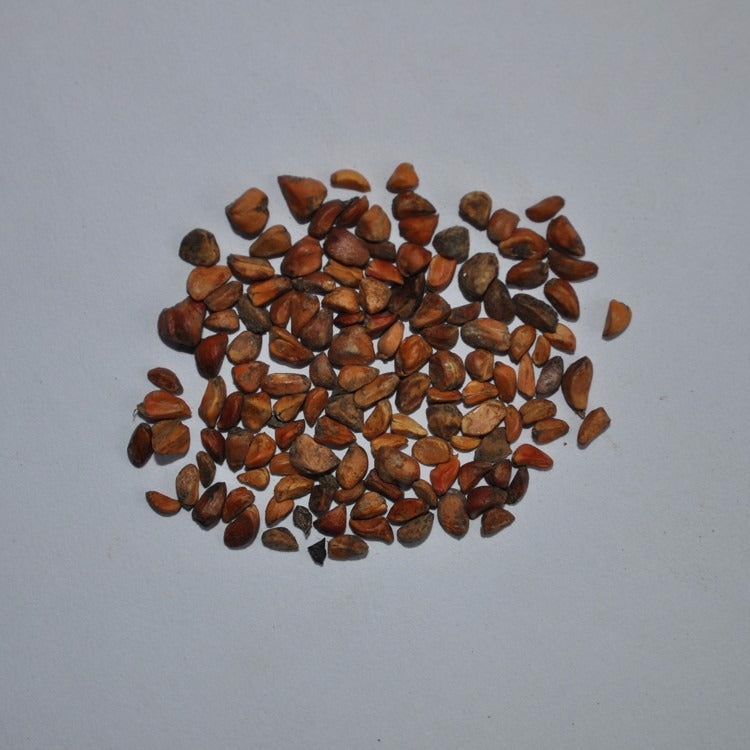
SKU: 67362495925
rose bush seeds

rose bush seeds Black Bush Rose Seedlings Flower Seeds Perennial Growing Bonsai Corms Tubers Potted Planting Reblooming Fragrant Garden Roots Rhizomes Species Blooms Plant Bulbs Gardening Tree

Sale price$23.06 Regular price$25.62
Save 10%

Shipping Estimate
USA
  • USA
  • CAN

Ships within 48 hours · Estimated delivery Jul 12 - Jul 17

Promo Codes Available:

For Your Every Summer RSVP, with Code: SUMMER15

Description

rose bush seeds Black Bush Rose Seedlings Flower Seeds Perennial Growing Bonsai Corms Tubers Potted Planting Reblooming Fragrant Garden Roots Rhizomes Species Blooms Plant Bulbs Gardening TreeAbout this item How to Grow Roses from Seeds Step 1: Treat Rose Seeds Rose seeds need a much longer germination period than many flowers. If you arent careful, this extended moist storage can lead to the growth of molds that can threaten young rose seedlings. To prevent fungus spores from growing, you can destroy them with hydrogen peroxide. Add one half tablespoon of 3% hydrogen peroxide to one cup of water and soak the seeds in this solution for an

About this item

  • How to Grow Roses from Seeds

    Step 1: Treat Rose Seeds
    Rose seeds need a much longer germination period than many flowers. If you aren’t careful, this extended moist storage can lead to the growth of molds that can threaten young rose seedlings.
    To prevent fungus spores from growing, you can destroy them with hydrogen peroxide. Add one-half tablespoon of 3% hydrogen peroxide to one cup of water and soak the seeds in this solution for an hour.                                                                                                                                                                                      Step 2: Cold Germinate Seeds (Stratification)                                                        The natural rose germination process takes a few years. First, the rose hip needs to break down and decompose. After the seeds are fully exposed, they must undergo a period of stratification.Rose seed germination relies on a climate that experiences cold, moist winter months. You can simulate this winter environment using your home refrigerator.Place the rose seeds evenly spaced on a damp paper towel. Be sure to avoid overcrowding. Cover them with another layer of moist paper towels and seal the seeds in a plastic bag.Place the bag of seeds in a clean, empty crisper drawer. It would be wise to first sanitize the drawer with bleach and hot water to prevent mold contamination.Ensure the seeds remain moist throughout the entire stratification process. Add more clean water whenever they start to feel dry.Leave the seeds in the refrigerator for at least two months or until you are ready to sprout them.                                                                                                                                                                                                                     Step 3: Warm Germinate Rose Seeds
    Once the stratification process is complete, you can germinate rose seeds as you would other flowers. It is crucial to bring the seeds out of refrigeration into conditions warmer than 70 degrees.
    Ensure the seeds remain damp and leave them in a warm environment until they sprout. This can take up to a month, and it is likely that not all seeds will germinate.                                                                                                                                                                                                                                                  Step 4: Plant Rose Sprouts
    Add moistened seed-starter soil mix to seedling trays. Make a slight indentation for the rose seeds in each cell.
    The tiny tendrils that emerge are roots and must be handled very carefully. Gently remove the rose sprouts from the paper towel and place them root down in the seed trays.
    Cover the seeds with moist soil and leave the seed trays on a sunny windowsill. Use a clean spray bottle to mist the rose seedlings when they start to feel dry.
    For the best results, consider using Hoss Tools Deluxe Seed Starting Kit. This kit includes a 24-cell seed starting tray with a dome lid, seed-starter soil mix, fertilizer, and more.                                                                                                                                                                                                                                  Step 5: Transplant Rose Seedlings
    As the rose seedlings grow, pay close attention to the seed leaves so you know when to transplant. Wait until the true leaves develop, which take on the typical rose leaf appearance.
    Gently loosen the dirt from the tray cells and slide the seedlings free. Move them to individual containers and let them continue to grow for about a year before you transplant them outdoors.

  • Caring for Young Rose Plants

    Give your rose seedlings the support they need to grow strong stems and lush foliage. Add half-strength fertilizer to each planting location.
    Not all fertilizers are equal. Use a high-quality blend like Dry Fertilizer for guaranteed results.

    • How long does it take to grow a rose from seed

      Growing roses from seeds is a lengthy process. Without proper stratification, it can take multiple years for seedlings to emerge.
      Even the fastest-growing roses will likely take two full growing seasons to produce beautiful blooms.

    • Do roses grow true to seed

      Heirloom rose varieties grow true to the parent plants, while hybrid varieties are less predictable.
      The task of growing roses from seeds is very involved. For this reason, most gardeners prefer to grow roses from cuttings.
      If you want to experiment with cross-breeding unique roses, then you need to grow them from seed.
      To get predictable results, you must control pollination. This will ensure that your homegrown roses will grow true to color.

    • How to grow roses

      All you need to know about growing roses, in our detailed Grow Guide.Roses are some of the most beautiful and versatile garden plants. They come in a variety of forms, from patio roses to shrub roses, ramblers and climbers. Nearly all of them make an excellent cut flower. Single-flowered roses are great pollinator plants, while some species are used by leafcutter bees to make their nests. Most roses need sun and heavy soils to thrive, but some will grow well in partial shade and poorer soils. There really is a rose, or three, for every garden.Key points about growing roses
      Most roses thrive in full sun.Roses need rich, moist but well-drained soil.Water roses regularly so the soil stays moist but not waterloggedRoses are hungry plants. Mulch annually with organic matter such as well-rotted animal manure, and consider using a rose feed to promote flowering in summer.Prune roses annually to promote healthy growth, control the shape and encourage flowering
      Plant bare-root roses from November to March. Container-grown roses can be planted at any time of year.

    • How to grow shrub roses

      Shrub roses and English roses come in a huge range of sizes and colours âââ€?some can grow to 2m in height. Shrub roses are typically robust, healthy, repeat-flowering plants offering colour when other shrubs have finished flowering. Some shrub roses have a good fragrance, but if you want a scented shrub rose then English roses are for you. Shrub roses and English roses are perfect for growing in a mixed border, large container or as part of a rose garden. Some can also be trained as climbers or used to grow into a hedge.

    • How to grow climbing roses

      Climbing roses are the perfect plants to add height to a garden, without being too vigorous. There are climbing roses available in all the popular rose categories âââ€?hybrid tea roses, bourbons and English roses. Choose from double or single flowers, thornless or scented. Climbing roses can be grown up house walls, along garden fences, over pergolas or up large obelisks.

    • How to grow rambling roses

      Rambling roses are often confused with climbing roses. Ramblers are far more vigorous than climbers, and bear one fantastic flush of flowers, usually in June, followed by colourful hips. Climbing roses often repeat flower and have larger flowers.Rambling roses need plenty of space as they grow quickly. They’re ideal for growing up a tree or tumbling over a wall. They're perfect for covering an eyesore in the garden, such as an unsightly shed or out-building.A rambling rose looks great growing up into a tree, especially an apple tree, providing flowers after the apple blossom fades but before the fruits form. In this video guide from Gardeners' World, Monty Don shows you how to plant two different rambling roses âââ€?'Wedding Day' and 'Sander's White'. He details what conditions a rambling rose needs, how to prepare the soil, and how deep to plant it so it settles in well over autumn and gets off to a good start in spring. You'll also find out how far from the tree to plant the rose and how to encourage it to climb up the tree.

    • How to grow patio roses

      Patio roses are small enough to grow in pots. They are compact in habit and thrive in lighter soils than many other rose types. Patio roses are not as long lived as other types of rose, but they're easy to manage and remain compact if hard-pruned each spring.

    • How to grow ground cover roses

      Ground cover roses have a trailing or spreading habit. They're ideal for growing in a container, at the front of a border or on steep banks. Many are modern introductions have good disease resistance. If given the right conditions, ground cover roses can suppress weeds.

    • Roses to grow by colour

      Roses come in a huge variety of colours. Browse our lists of roses by colour, below, for the best one for your garden:
      Pink roses to grow
      Purple roses to grow
      Yellow roses to grow
      Beautiful red roses to grow
      Orange roses to grow

    • Growing roses in pots

      It's possible to grow roses in pots, meaning you can grow roses in even the smallest gardens. While all but rambling roses can be grown in pots, shorter growing bush varieties, or ‘patio roses', are ideal. They’ll do best in large, deep containers âââ€?an absolute minimum of 50cm in diameter and the same in depth âââ€?to keep their roots cool and moist during summer.In hot, dry weather, soak the compost every two to three days, and feed regularly.

    • What to grow with roses

      Many plants can be grown with roses to great effect. Climbing roses work well grown with clematis. Rambling roses can be trained to grow up a tree. Patio roses work well with a variety of other plants suitable for growing in pots, while shrub roses can be grown in a mixed ornamental border, alongside nepeta, lavender and other herbaceous perennials.

    • When to plant roses

      The best time to plant roses is in autumn, when the soil is warm and the water table is at its highest. Roses will establish quickly before becoming dormant, and then burst into life again in spring. Roses come as potted plants or as bare-root plants (sold without soil on the roots). Technically, you can plant a potted rose at any time of year and a bare-root rose from October to March, but autumn remains the best time to plant roses.

    • How to plant roses

      Plant roses in a well-prepared hole with added compost to improve soil structure and aid water retention. Back-fill with soil and firm in well, then water thoroughly.In this Gardeners' World programme clip, Monty Don shows you how to plant shrub roses. Watch as he plants the yellow-flowered, myrrh-scented rose 'The Pilgrim' in the Cottage Garden at Longmeadow. He explains how to prepare the soil and dig the hole, how and why you should add mycorrhizal fungi, and what rose care to provide to ensure the rose settles in well.

    • How to plant bare-root roses

      Planting bare-root roses during the dormant season is cheaper than planting container-grown roses, because the growers don't need to water and feed the plants when they're dormant, and they weigh less and take up less room when shipping. What's more, there's a far greater selection of bare root roses available to buy than container-grown roses, giving you more choice.You can plant bare-root roses at any time between October and the end of March, but planting them in autumn helps them establish more quickly because the soil is still warm from summer, and is typically moist.

    • Pruning roses

      Pruning is essential for the overall health, vitality and appearance of roses. Winter is the key time to cut back most varieties, except rambling roses, which are pruned in summer immediately after flowering.The basic principles of pruning are the same: cutting back hard will promote the strongest growth, while light pruning will result in less vigour. The other basic rules include cutting to an outward-facing bud to prevent compacted growth, and removing closely positioned stems that might rub or compete for space. Also remove stubby ‘snagsâââ€?(short, dead lengths of stem with no growth on them) and thin, twiggy stems, which are unlikely to produce anything worthwhile in terms of growth and flowering potential.

    • Growing roses: problem-solving

      Roses suffer from many problems, including black spot, aphids, die-back and bloom balling. In this Quick Tips video, Richard Jones explains why you shouldn't worry about leafcutter bees damaging your rose leaves:Find more solutions to rose growing problems, below.
      Rose problems solved
      Trouble-free roses
      How can I stop die-back on roses?
      Rose black spot
      Rose bloom-balling

    Why Seedsplant ?

    • Experts in the field
    • Family owned and operated - 100 years
    • Rigorous quality control
    • We strive for your success by offering the bulb size you need
    • Affordable quality

    Flower Bulb Facts of Life

    Bulbs: Beauty In a Bottle:

    Bulbs are a natural product. And, as such, follow a natural cycle of growth and rebirth. Enjoying their fabulous flowers means planting ahead in one season then results the next. Bulbs are among the easiest flowers to grow, not only are they affordable, but bulbs offer the most stunning colors available. Even the most novice gardener can create a breathtakingly beautiful spring garden with bulbs.

    What's a Bulb?

    A flower bulb is really a self-contained flower factory. Within this marvelous little package is nearly everything the flower needs to come to life! Split a bulb open, for instance, and you'll see its baby flower bud, leaves, roots, stem and food supply. All bulbs need from you is to be placed in the ground at the appropriate season of year, given a liberal drink of water then left to work their magic.

    Variety:

    Flower bulbs come in seemingly limitless varieties which makes them perfectly suitable for any garden design you can dream up.

    Is It a bulb ?

    The Difference Between Bulbs, Corms, Tubers, Roots,Today, people commonly us the term 'bulb' to refer to any plant that stores its own food underground. But, in truth, many popular 'bulbs' are not true bulbs at all. These include corms, tubers and roots and, while they all produce beautiful flowers, technically the plants are different

    When To Plant

    In fall, after soil temperatures are below 50ºF/10ºC. These bulbs bloom the following spring and require the cold winter temperatures for development. But let's say winter arrives and your bulbs are still in their bag. Not to worry! Bulbs are pre-programmed to grow so even if you have to plant through snow, plant your bulbs!

    How To Plant

    Most bulbs thrive in either full or partial sun and in almost any location with good drainage. Avoid planting at the base of hills or under drainage pipes where water collects and will rot the bulbs.

    • Dig a hole
    • Drop in the bulb
    • Water thoroughly

    Tips For success

    • A larger grouping of flower bulbs are far more fab than just a few planted here and there. Think clumps of color.
    • Buy the largest bulbs you can find.
    • Note the flowering times. Not all bulbs will bloom at the same time. A little planning will greatly increase the number of months you will enjoy bulb flowers.

    Passionate About bulbs

    Generally speaking, the best predictor for gardening success is bulb size. Almost always, the larger the initial bulb size planted, the larger and stronger the plants will be, producing more flowers. The first year end result will be noticeable to anyone.The best predictor for gardening success is bulb size.

    Shipping

    All items are shipped usually within 2 working days (usually sooner) except plug plants. Plants only dispatch Monday-Thursday to avoid problems with live plants sitting in a postal depot over the weekend. During busy periods , due to the nature of product and extra care needed when packing and preparing for post, please allow up to 7 days for delivery (depending on day purchased). Plants are only dispatched when crops are ready to travel , therefore some multi orders may be delivered separately and occasionally it may be necessary to hold back dispatch until plants are ready. Shipping is either via Post  or 24/48 Hour courier depending on order size/weight etc. at our discretion. Please be patient when ordering plants as you cannot rush nature. Please be aware delivery dates shown by Seedsplant are estimates only and do not apply to live plant orders. Any orders returned to us by Post or Courier will incur a further postage charge to resend.

    Returs

    You may return all unopened items within 14 days of delivery for a full refund less P&P charges. Any items received damaged in transit must be notified in writing/email within 24 hours of receipt. Live plants should arrive in perfect condition , If however for some reason they do not please contact us immediately upon receipt. A full refund including original P&P will be made for any items not as described or wrong part no etc. All returns must include your full details with a copy of original receipt. You may cancel any transaction as long as notice is received before item(s) are / have been dispatched.

    Contact us

    You can message us through Seedsplant messages , otherwise You can write to us by email :[email protected]

    Shipping Notes
    • Free Standard Shipping on $100+ Orders to the USA.
    • Except Preorder products are shipped in 48 hours.
    • Delivery to the USA:
    1. Standard Shipping : 3-10 business days
    • If time is of the essence, please consider selecting expedited delivery for faster service.
    Exchange/Return Notes
    • We offer a 30-day return/exchange service after receiving.
    • Final sale items are not eligible for returns or exchanges.
    • To process your return/exchange, please contact us at [email protected]
    • Please click here for more details>>> Return & Exchange Policy
    SKU: 67362495925

    Discover Niche Categories That Outsell rose bush seeds

    Top-Converting Item to Boost Your Average Order

    4.5 ★★★★★
    Based on 796 reviews
    Sort
    Highest Rating
    Newest First
    Oldest First
    Product Reviews
    K
    Verified Purchase
    Kevin Mack
    Draper, US
    ★★★★★ 5
    The Three (3) Pillars of my bedrock testimony have been destroyed
    Format: Paperback
    Having been born and reared in the Church, it was not merely a "church," but it was "The Only True Church on the Face of the Earth." It was my identity, I served a misson, Branch President, H.P., Stake Mission President, sending my son on his mission next week, so imagine my sense of betrayal, and the helplessness and confusion I felt after reading this book. My three (3) pillars were: (1) a young man may spawn a lie, for personal motivations, but he can still be a Prophet, and nobody would carry a lie so far as to be killed for it; (2) No man could have written the Book of Mormon; and (3) the Temple Ceremony is so sacred and unusual that it could not have been imagined or contrived. Well, this most carefully documented, carefully written, carefully researched book, has all but destroyed my pillars. Fawn Brodie, Niece of the Prophet, David O. McKay, has done meticulous research and I have searched for but never found or read an official LDS Church response or debunking of it; I've searched the BYU F.A.R.M.S. site hoping for an academic, honest review of her evidence and hoping to find that Ms. Brodie's research was flawed or dishonest. But despite my motivations and wide-spread search, I have never read a criticism of her sources, or documented proof that her research is false, or that her conclusions are false, only that she had an agenda and some of her conclusions are specious and not well supported. Well, that is simply disengenuous criticism. To say that Ms. Brodie can only prove "A, B, C, and D," but "jumps" to a conclusion that "E" exists, is simply blind faith ignorance and dishonest academia. This book constitutes the "mysteries," that the Church teaches its members to stay away from. But it is hardly a mystery. This book explains with a clarity and insight never-before heard by an LDS member, how Joseph Smith wrote the Book of Mormon, how he practiced polygamy before receiving the alleged revelation; why he was tarred and feathered; exactly where the Temple signs and symbols came from; the extent Joseph would go to protect his power and authority, and many more "mysteries." No active member of the Church should read this book lest their eyes be opened. It hurts! Truth is not pleasant sometimes, why should it be. I just wanted it "straight," I didn't want to be lied to any longer. If the Church simply said, "we're a good church, doing good deeds, helping the poor, please give your tithes to help us, I would most certainly go. But the Church says, "we are the only true and living church on the face of the earth." To me, that's a challenge to find out for myself, which I did. Now, I am a "mormon in recovery." My entire belief system, every single word I've ever been taught, is a lie. I am undone. Now I must look to God, for answers that I thought only the LDS Church had.
    WAS THIS REVIEW HELPFUL?YesReportShare
    Reviewed in the United States on August 3, 2006
    J
    Verified Purchase
    John E. Mack
    Port Orchard, US
    ★★★★★ 5
    Everyone interested in Mormon History or Mormonism should read this book.
    Format: Paperback
    This book is a classic, and is generally recognized as such. The topic, which is the life of Joseph Smith, found its ideal author in Fawn Brodie, a Mormon who was on the verge of excommunication and who as about as sympathetic to Smith as an honest historian could be. One is tempted to say that Smith is presented, warts and all. But it would be more helpful to say that Smith is presented, virtues and all, because a man who concocts what purports to be holy scripture, who fakes divine revelation, who organizes three Waco-type compounds, who institutes militias and secret societies to kill his enemies, who decrees polygamy to satify the lusts of himself and his male colleagues, who orders the destruction of his enemies and who lies about most of these things probably has more warts than virtues. Brodie wrestles constantly with the issue of how a man of such limited education and rather obvious fraudulent intent could attract thousands of dedicated followers. It is no wonder that Brodie in her later works became so attracted to psycho-history. She advances a rather attractive hypothesis which suggests how Smith could have deluded himself into believing his own nonsense: Since all our thoughts are the product of previous states of mind, and since these states include all the factors which go into our perceptions, concepts and mental "programs", there is no essential difference between our control over our waking thoughts and our control over our dreams, reveries, and other semi-conscious states. We just think there is, because the illusion of control is part of the nature of the mental state we call "consciousness." If that is so, then it can be argued that a "revelation" which derives from our past state of mind is no more originated by our own will than the conscious perception that we are being visited by the angel Moroni. Of course, this line of thought comes dangerously close to solipsism, and solipsism comes dangerously close to autotheism (if there is nothing else in the universe but oneself, then everything there is must be an extension of oneself, and hence one must be God). Toward the end of his life, Smith's megalomania was indeed headed in this direction. Brodie does a wonderful job describing how Charismatic Smith must have been. To have persuaded people of real intelligence and ability like Brigham Young and his own wife Emma into believing and supporting him throughout his career, and to have, as she puts it, "Caused men to see visions" is no mean feat. And to have created a religion which, for all its faults, is far more admirable than its own founder bespeaks one of the most fascinating characters in American history. Everyone interested in religion, psychology, and American History should read this book.
    WAS THIS REVIEW HELPFUL?YesReportShare
    Reviewed in the United States on July 14, 2007
    R
    Verified Purchase
    R. M. Peterson
    Charlottesville, US
    ★★★★★ 4
    "The definitive work on the Mormon prophet"
    Format: Paperback
    When a Mormon girl joined our school when I was in the fifth grade, I became curious about Mormonism, though never enough to read much about it. That curiosity eventually morphed into curiosity about Joseph Smith, its founder. How does one go about establishing a new religion? In nineteenth-century America, no less? One salient point in Fawn Brodie's biography of Smith (b. 1805, d. 1844) is that the years of his youth and early manhood "were the most fertile in America's history for the sprouting of prophets." William Miller, John Humphrey Noyes, Jemima Wilkinson, Joseph Dylks. Smith, then, was not an isolated phenomenon. Another salient point: before the angel Moroni directed him to the book of golden plates that he then translated and published as the Book of Mormon, Smith was a practitioner of necromancy and advertised his ability to divine buried deposits of gold and money. Brodie seems to like Smith. She portrays him as gregarious, imbued with great personal charm, having a quick mind, and genuinely fond of people. She also writes that "embedded in [his] character was the commonplace Yankee mixture of piety and avarice," which "he developed to a special flowering." That special flowering was a religious con man, one who eventually inhabited the fabulous castles of his own devising. By the 1840s and the settlement of Nauvoo, Smith was using his position as spiritual and political head of the Mormon community for his own, secret, monetary gain. And then there was his concupiscence. In his later years, he took somewhere between twenty-seven and fifty wives; not all but many of those marriages were consummated sexually. The practice of "plural wives" of course received theological blessing (or rationalization), but even so Smith could be both sneaky and high-handed in pursuing it. For example, in April 1843 his wife Emma went to St. Louis on business with Lorin Walker, one of Smith's business aides. During their absence Smith asked Walker's seventeen-year-old sister Lucy to become his wife. According to Lucy, his proposal/seduction went like this: "I have no flattering words to offer. It is a command of God to you. I will give you until tomorrow to decide this matter. If you reject this message, the gate will be closed forever against you." In many respects, Joseph Smith seems to have been a quintessential American. Similarly, his Mormonism seems a fittingly American religion. Along the same lines, Brodie sees the Book of Mormon as "one of the earliest examples of frontier fiction, the first long Yankee narrative that owes nothing to English literary fashions. Except for the borrowings from the King James Bible, its sources are absolutely American. * * * Its matter is drawn directly from the American frontier, from the impassioned revivalist sermons, the popular fallacies about Indian origin, and the current political crusades." NO MAN KNOWS MY HISTORY quells my curiosity regarding Joseph Smith. It also serves as a history of the early Mormon Church and a window on the United States circa 1820 to 1845. The book's style is somewhat old-fashioned (it originally was published in 1945), and as history it is more scholarly than popular. There is a lot of detail, much more than I really wanted. (Smith would make an ideal subject for a pithy two-hundred-page biography.) Most importantly, I sense that the biography is objective. In that regard, it should be noted that before becoming an esteemed professor of history at UCLA, Fawn Brodie grew up a devout Mormon in a small hamlet outside Ogden, Utah. In 1946, she was summarily excommunicated from the Mormon Church as a heretic. In 2012, James Reston, Jr. wrote that NO MAN KNOWS MY HISTORY "remains today the definitive work on the Mormon prophet."
    WAS THIS REVIEW HELPFUL?YesReportShare
    Reviewed in the United States on May 13, 2016
    A
    Verified Purchase
    Allen Johnson
    West Palm Beach, US
    ★★★★★ 5
    Raises a 100 questions for conscientious Mormons
    Format: Paperback
    If you want a good understanding of the history of the Mormon church, this is the book. Mormons don't like it and wont read it because they have been told not to read it. But Brodie was a solid historian and I think any courageous Mormon should read it and challenge their own beliefs (or if you will, there own inculcations). I have a number of good friends who are Mormon, I don't criticize their compassion and commitment to family. I do question their theology. Here are the questions that occurred to me after reading Brodie's book. Preamble: In order for something to be valid, the source and the content need to be credible. If the source is not credible, the content is held suspect. If the content is not credible, the source is held suspect. Would I trust someone who spoke of peace and preached bloodthirsty war? Would I trust someone who called drinking a sin but set up bar in his own house? Would I trust someone who said he was faithful to his wife, when all the while committing adultery? Would I trust someone who has so-called revelations from God that are clearly self-serving? Would I trust someone who claims that he is reading Egyptian when the text is really Greek? Would I trust someone who said he was given golden tablets from God—tablets that were conveniently returned to heaven? Would I trust someone who declared he was the only prophet on earth? REVELATIONS (Can we follow a prophet who is so self serving?) 1. Changes Genesis to include a prophesy of the coming of Joseph Smith. Isaiah made to refer to the book of Mormon and the witnesses. 2. Doesn’t want to be a farmer. “In temporal labors thou shalt not have strength, for this is not thy calling.” Book of Commandments, Chapter 25, verse 14 3. Emma wants JS to be a farmer. New revelation: “Thou needest not fear, for thy husband shall support thee from the Church. Continue in the spirit of meekness and beware of pride. Let thy soul delight in thy husband…And except thou do this, where I am you cannot come.” Book of commandments Chapter 26, pp58-59 FB90 4. Cowdrey thought that others should share in revelations (including Hiram Page who was trying to get revelation with a black stone). JS has a new revelation: “”behold, I say unto thee, Oliver…no one shall be appointed to receive commandments and revelations in this Church, excepting my servant JS, Junior, for he receiveth them even as Moses. Thou shalt take thy brother Hiram page, between him and thee alone, and tell him that those things which he had written from that stone, are not of me, and that Satan deceiveth him.” FB92 5. Revelation to give all property to JS: “Behold, thou shalt consecrate all thy properties, that which thou hast unto me, with a covenant and a deed which cannot be broken and they shall be laid before the bishop of my church” Book of Commandments. Later revised.FB106 6. In Kirtland, Ohio, JS tries to heal a man with a withered hand, a lame man, a dead child. Fails. New revelation: “Thirty men to leave at once for Missouri” Why? The miracles could not be performed in Ohio, because it was not consecrated ground, that only in the Promised Land could the blind be made to see, the lame to walk, and the dead be quickened. Doctrines and Covenants, sec 52 FB112 7. Resentment in Zion (Independence Missouri) against Joseph’s absence: “Cease wearying me concerning this matter.” Doctrine and Covenants, Section 90. FB122 8. Arguments about how to parcel out the community property. So JS has a revelation giving him the temple lot. FB141 9. JS revelation directing Cowdery to go to Toronto where they would find a man anxious to buy the book of Mormon. Didn’t happen. FB81 10. JS revelation to deal with Martin Harris. “And again, I command thee that thou shalt not covet thine own property, but impart it freely to the printing of the Book of Mormon…And misery thou shalt receive if thou wilt slight these counsels, yea, even the destruction of thyself and property…Pay the printer’s debt! Release thyself from bondage.” (Book of commandments, Chapter 16) Thoroughly scared, he sold his farm and the book was printed in 1830. FB82 11. In Missouri on a high bluff overlooking Grand River someone discovered the ruins of what seemed to be an altar. JS: “This Upon this very altar Adam himself offered up sacrifices to Jehovah. Here Adam shall come to visit his people.” The Far West is probably where Cain killed Abel. FB211 12. Polygamy. Revelation: Destroy Emma and give me 10 virgins. FB 341 Doctrine and Covenant 132 13. The president presides over the whole church. Doctrine and Covenants 107 14. JS revelation to build a hotel with a suite of rooms in the hotel for JS and his posterity “from generation to generation for ever and ever.” FB263 15. Revelation to bless Bennett FB268. Later Bennett is excommunicated when both Bennett and JS lusted after Nancy Rigdon See JS’s letter to Nancy: FB310 In The History of the Church. Unsigned letter—nice use of artifice. PROBLEMATIC THEOLOGY (Can theology so convoluted and false be believed?) 1. Nephi and his brothers and father Lehi (as in Lehigh River) leave Jerusalem in 600 BC. Nephi’s brothers, Laman and Lemuel were evil-tempered brothers, God cursed them and all their descendants with a red skin. (So indians are cursed?) Nephi and his pious younger brothers begat white children (although they must have married evil redskins to multiply). 2. JS has Jared bringing horses, swine, sheep, cattle, and asses to America. The Nephites produce wheat and barley rather than the indigenous maize and potatoes. FB72 3. Revisionist. 2500 BC Jared sailed in barges that could sail anyside up. The Book of Ether. (FB p 71) 4. Witness of the plates. In the Lord’s name, “It is by your faith that you shall obtain a view of them…And ye shall testify that you have seen them…And if you do these last commandments of mine, which I have given you, the gates of hell shall not prevail against you.” (FB 76) 5. Lorenzo Snow: “As man is, God once was; and as God is, man may become.” (FB300) 6. Paul had said that in heaven there would be no marriage or giving in marriage, but Joseph taught that this would not apply to his Saints. That which he and his elders sealed on earth would be binding also in heaven. There a man would have not only his wives and children, but also the prerogative of procreating more, until, as he expressed it to Parley Pratt, “the result of our endless union would be offspring as numerous as the stars of heaven. This was the road to godhood. (FB299) 7. Three levels of heaven: Celestial (three levels), terrestrial, teletrial. 8. If a man went to heaven with ten wives, he would have more than tenfold the blessings of a mere monogamist, for all the children begotten through these wives would enhance his kingdom. The man with only one wife, on the other hand, would be denied even her and forced to spend eternity as a ministering angel rather than a god. (FB300) 9. Martin Harris, one of the witnesses, is having his own visions: Seen Jesus in the shape of a deer and talked with him. The devil resembled a jackass with short hair similar to a mouse. He prophesied that by 1838 Joseph’s church would be so large that there would be no need for a president of the US. [No surprise given that he is one of the credulous witnesses.] 10. JS goes to Canada for 5 weeks. When he returns, his three witnesses (Harris, Cowdrey, and David Whitmer—all later excommunicated) had turned their loyalty to a young girl seer of a black stone. Patterning herself after the Shakers, the new prophetess would dance into exhaustion, fall upon the floor, and burst forth with revelations. Harris is cutoff. FB205 QUESTION: Don’t you question the veracity of the witnesses who are so easily duped? SPURIOUS ASSERTIONS (Can we give credence to so many discrepancies and inconsistencies?) 1. Of the 11 witnesses of the Book of Mormon only Joseph’s father and brothers were left in the church. The others either left or were excommunicated. 2. View of the Hebrews. Oliver Cowdery, transcriber, came from Vermont; mother and sister were members of Ethan Smith’s church. Ethan Smith, author of View of the Hebrews (1823) and lectured in JS’s town. B.H Roberts Mormon apologist, wrote his opinion in 1922, but not published until 1985 (Roberts died in 1933). 1985 Dallin Oaks “The fact that something is true is not always a justification for communicating it. Some things that are true are not edifying or appropriate to communicate.” 3. 1835, exhibition of mummies. JS pronounces the papyrus writings of Abraham and the Joseph of Egypt. They were ordinary funeral documents as found on thousands of Egyptian graves. FB171, 175 4. Cowdery excommunicated for accusing JS of adultery. FB182 5. 1836 JS goes to Salem on a Treasure hunt for gold as ordered by God. There is none to be found. FB 192 Doctrine and Covenants 111 6. JS has three versions of first visit from angels: 1. The lord 2. Two persons 3. God and Jesus. And his age changes from 14 to 16. The last version was the only one known by believers until 1965. FB409 JOSEPH SMITH’S CHARACTER (To quote Matthew, “By their fruits you will know them.” Joseph Smith’s behavior shows him to be petulant, imperious, arrogant, hypocritical, belligerent, bellicose, irascible, manipulative, fraudulent, adulterous, and mendacious. (Can we put our trust in someone with so many character flaws?) 1. Arrogant: Character: Requested and received from the Governor the commission of lieutenant-general. He often preferred the title of “General,” even to “president,” and used it in his correspondence. His uniform included gold braid, military boots and chapeau topped with ostrich feathers. On his hip a sword and two big horse pistols. Seated on a magnificent black stallion. FB272 2. Arrogant: Runs for president of US for publicity and respect.FB262 3. Arrogant: He was not only a US presidential candidate, but also mayor of Nauvoo, judge of the municipal court, merchant of the leading store, hotel keeper, official temple architect, real estate agent, contractor, recorder of deeds, steamboat owner, trustee in trust for all the finances of the church, lieutenant general of the Nauvoo Legion, spiritual adviser and Lord’s communicant to the true church, King of the new Kingdom of god (see FB356), and husband of almost 50 wives.” In Joseph Smith’s words: “I want the liberty of thinking and believing as I please. It feels so good not to be trammeled.” FB366 4. Hypocritical: Permitted the construction of a brewery and advertised in the Nauvoo Neighbor. FB289 5. Hypocritical: JS sets up a bar in his hotel until Emma protests FB 332 6. Petulant and irascible: Sylvester Smith and the bulldog “I’ll whip you in the name of the Lord. And if you continue in the same spirit and don’t repent, that dog will eat the flesh off your bones and shall not have the power to resist!” History of the Church, Vol II, pp 150-160. FB 150 7. Bellicose: War Speech “We will trample down our enemies and make it one gore of blood from the Rocky Mountains to the Atlantic Ocean.” FB230 (Source Affidavits from seven followers. FB229) 8. Bellicose: War cry: “If mobs come upon you any more here, dung your gardens with them” FB352 History of the Church.Vol 5, pp 465-73 9. Bellicose: JS empties all six barrels of a pepperbox gun in the prison cell. FB393 10. Imposter: He doesn’t know Greek from Egyptian FB290 11. Fraudulent and Mendacious: JS forces leaders to perjure themselves, swearing that polygamy does not exist. These sworn statements were published in Times and Seasons, Vol III in October 1842. JS had already been married to Sarah Ann Whitney 3 months earlier—and 19 others. FB320-21, 335. 12. Fraudulent: To take care of debt, he creates an illegal bank and starts stamping out money, designating himself as cashier. History of the Church, Vol 11, p 471 FB194 13. Manipulative (and criminal): He had the city council pass an ordinance providing that if any officer came to Nauvoo with a writ for his arrest based on the old Missouri difficulties, he should be arrested, tried, and if found guilty sentence to life imprisonment in the city jail. He could only be pardoned by JS. FB355 7. Manipulative and mendacious. William Laws (mentioning no names but swearing that he had read the revelation of every man granted 10 virgins) of The Expositor reports story of polygamy. JS proclaims that the press must be destroyed and so it was. FB374-377 (Reminds me of Dallin Oats: “The fact that something is true is not always a justification for communicating it. Some things that are true are not edifying or appropriate to communicate.” 14. Mendacious: 1844: “What a thing it is for a man to be accused for committing adultery, and having seven wives, when I can find only one. I am the same man, and as innocent as I was fourteen years ago, and I can prove them all perjurers.” History of the Church, Vol VI, pp 408-412. FB 374 He had 48 wives as early by 1844. FB335
    WAS THIS REVIEW HELPFUL?YesReportShare
    Reviewed in the United States on July 31, 2015
    J
    Verified Purchase
    James Larsen
    Houston, US
    ★★★★★ 5
    Good to work with
    Format: Paperback
    Very fast shipping the book I ordered was much better than descripted good company to work with.
    WAS THIS REVIEW HELPFUL?YesReportShare
    Reviewed in the United States on June 3, 2026

    recommand products