SKU: 66421268439
philodendron grandipes

philodendron grandipes 15

Sale price$19.62 Regular price$21.80
Save 10%

Pay in installments of $5.45 with ShopPay, AfterPay and Klarna

Shipping Estimate
USA
  • USA
  • CAN

Ships within 48 hours · Estimated delivery Jul 15 - Jul 20

Promo Codes Available:

For Your Every Summer RSVP, with Code: SUMMER15

Description

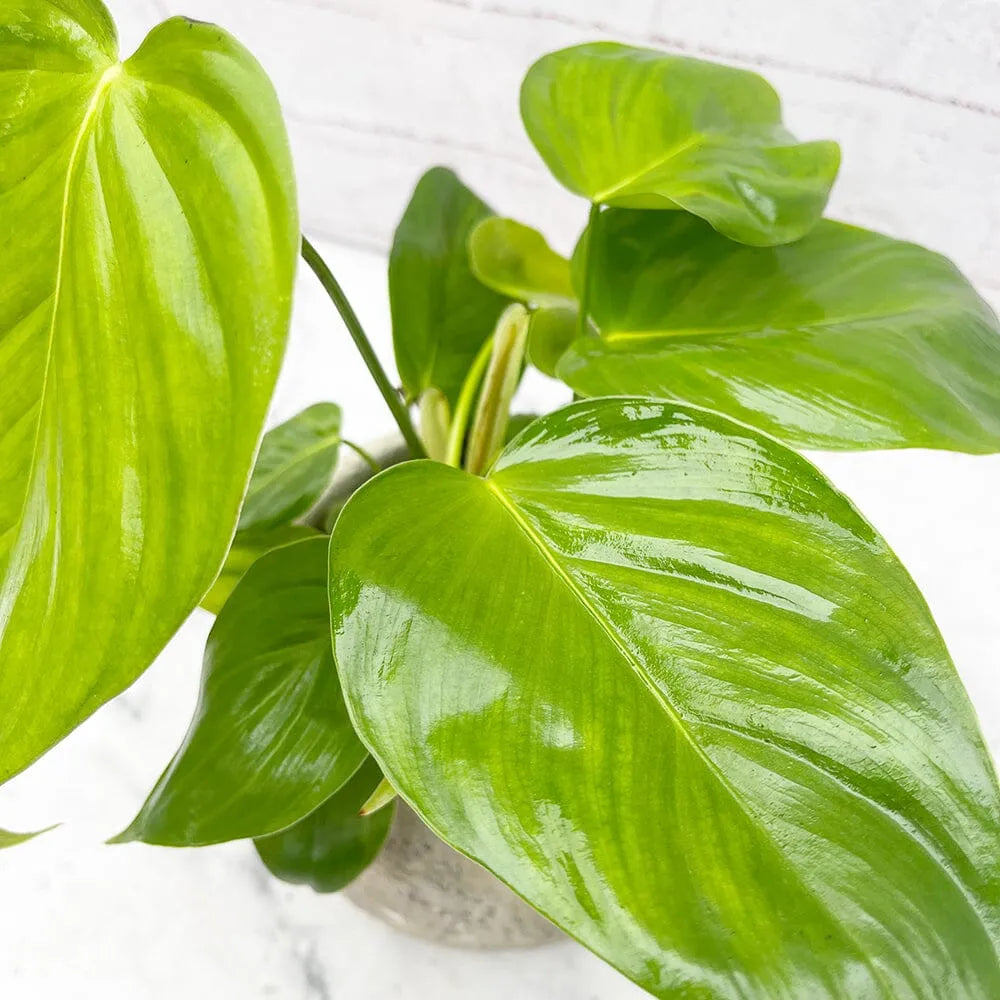
philodendron grandipes 15Philodendron grandipes is a rare and elegant climbing aroid species from the tropical rainforests of South America, belonging to the Araceae family. Known for its glossy, heart shaped foliage and graceful vining habit, this species offers understated beauty and tropical charm. The leaves are large, leathery, and rich green with a subtle sheen, typically displaying a soft, velvety texture on the upper surface and lighter undersides. Each leaf has a

Philodendron grandipes is a rare and elegant climbing aroid species from the tropical rainforests of South America, belonging to the Araceae family. Known for its glossy, heart-shaped foliage and graceful vining habit, this species offers understated beauty and tropical charm.

The leaves are large, leathery, and rich green with a subtle sheen, typically displaying a soft, velvety texture on the upper surface and lighter undersides. Each leaf has a classic Philodendron heart shape with slightly elongated tips, exuding a refined, natural symmetry. As the plant matures and climbs, the leaves increase in size, creating a lush, layered canopy of vibrant foliage.

Perfect for growing indoors on a moss pole or as a trailing feature from a hanging planter, Philodendron grandipes combines easy care with quiet sophistication — a must-have for collectors seeking a rare species that embodies the timeless beauty of the Philodendron genus.


Philodendron grandipes – Care Guide

Light

Thrives in bright, indirect light. Too little light may slow growth and cause smaller leaves, while direct sunlight can scorch the glossy foliage. A bright room with filtered light is ideal.

Watering

Keep the soil lightly moist, watering when the top 2–3 cm feels dry. Do not let the plant sit in water, as this can cause root rot. Reduce watering slightly in winter, allowing the soil to dry a bit more between waterings.

Temperature and Humidity

  • Temperature: Prefers warmth, 20–28°C. Protect from draughts and temperatures below 16°C.

  • Humidity: Moderate to high humidity (60–80%) encourages lush growth and healthy leaves. Mist occasionally or place near a humidifier for best results.

Soil and Potting

Use a chunky, well-draining aroid mix — peat-free compost blended with orchid bark, perlite, and coco coir. This provides the perfect balance of moisture retention and aeration. Repot every 1–2 years in spring to refresh the substrate and accommodate root growth.

Feeding

Feed every 4–6 weeks during spring and summer with a balanced liquid fertiliser, diluted to half strength. Do not fertilise in winter when growth slows naturally.

Pruning and Maintenance

Remove any yellowing or damaged leaves at the base to encourage new growth. Wipe the foliage with a damp cloth to remove dust and enhance its natural shine. Trim vines as needed to maintain a compact shape or to encourage branching.

Growth and Maturity

A moderate to fast-growing climber, capable of reaching 1.5–2 metres indoors with proper support. Mature plants produce larger, more deeply veined leaves, developing a lush, tropical appearance as they climb.

Common Issues

  • Yellow leaves: Overwatering or poor drainage.

  • Leggy growth: Insufficient light or lack of pruning.

  • Brown tips: Low humidity or inconsistent watering.

  • Pests: Occasionally spider mites, thrips, or mealybugs — inspect regularly and wipe leaves clean.

Background and Benefits

Native to tropical regions of Brazil and neighbouring countries, Philodendron grandipes thrives in humid understories where it climbs trees using its aerial roots. Its name, “grandipes,” translates to “large foot,” likely referring to its strong petioles and climbing strength.

This rare species has gained popularity among collectors for its elegant simplicity, resilience, and classic tropical look. Like other Philodendrons, it is also an excellent air purifier, helping to remove toxins and refresh indoor air.


Quick Care Summary

  • Light: Bright, indirect; tolerates medium light

  • Water: Lightly moist; allow topsoil to dry slightly

  • Temperature: 20–28°C; avoid below 16°C

  • Humidity: Moderate to high (60–80%)

  • Soil: Chunky, well-draining aroid mix

  • Feed: Every 4–6 weeks in spring/summer

  • Growth: Climbing plant, 1.5–2 m; glossy heart-shaped green leaves with a soft sheen


⚠️ Toxicity Note: Like all Philodendrons, Philodendron grandipes is toxic if ingested and may cause mild skin irritation. Keep away from pets and children.


🌿 Styling Tip:
Train Philodendron grandipes up a moss pole or trellis to encourage large, mature leaves, or let it trail from a shelf for a more relaxed look. Pair with lighter green or variegated species such as Philodendron ‘Paraiso Verde’ or Epipremnum ‘Marble Queen’ for contrast.

    Shipping Notes
    • Free Standard Shipping on $100+ Orders to the USA.
    • Except Preorder products are shipped in 48 hours.
    • Delivery to the USA:
    1. Standard Shipping : 3-10 business days
    • If time is of the essence, please consider selecting expedited delivery for faster service.
    Exchange/Return Notes
    • We offer a 30-day return/exchange service after receiving.
    • Final sale items are not eligible for returns or exchanges.
    • To process your return/exchange, please contact us at [email protected]
    • Please click here for more details>>> Return & Exchange Policy
    SKU: 66421268439

    Discover Niche Categories That Outsell philodendron grandipes

    Top-Converting Item to Boost Your Average Order

    4.6 ★★★★★
    Based on 29 reviews
    Sort
    Highest Rating
    Newest First
    Oldest First
    Product Reviews
    L
    Verified Purchase
    Lynne Summers
    Cuba, US
    ★★★★★ 4
    Good quality
    Color: yellow
    Perfect, just what I needed
    WAS THIS REVIEW HELPFUL?YesReportShare
    Reviewed in the United States on November 28, 2025
    K
    Verified Purchase
    Kelvin
    Cuba, US
    ★★★★★ 5
    Nice addition
    Color: yellow
    These aren’t the most gentle but a good gentle exfoliation. They are thick enough to keep the soap in. Fits a normal bar soap easily. With the quantity included you’ll be able to share as you’ll not need many yourself since they hold up to washing very well. The color is a nice off white- natural looking.
    WAS THIS REVIEW HELPFUL?YesReportShare
    Reviewed in the United States on May 11, 2026
    C
    Verified Purchase
    Cortney D. Olsen
    Grantham, US
    ★★★★★ 5
    All natural alternative to loofas
    Color: yellow, Color: yellow
    I love that they are all natural, plant based, and exfoliating. Mine is already starting to stink a little, so I’ve started making sure that I’m squeezing all the water and soap out after using and it doesn’t smell anymore lol. I prefer these over using loofa with microplastics. They are effective, strong, thick, and size is for small or regular sized soaps. If u have a bigger soap just use the soap first and then lather with this. You will still have to switch out every once in a while (like a loofa). Amazing value for price ⭐️
    WAS THIS REVIEW HELPFUL?YesReportShare
    Reviewed in the United States on February 9, 2026
    G
    Verified Purchase
    Greg Taylor
    Waukegan, US
    ★★★★★ 5
    Why aren't people reading this and discussing it?
    Format: Paperback
    This book should be read by everybody on any side of the current debate as to what are future Iraq (Iran?, N. Korea?- w/ the current set of maroons you never know) policy should be. Ikle was Undersecretary of Defense for the Reagan administration. He is one of the original neocons. This book had an enormous influence on how Bush I and Powell decided to end our first Gulf War. He revised this book in 1991 and revised it again and wrote a new intro in 2005. My point is that this man is no cut and run liberal (and I should admit that, right now, I am leaning toward just that position). However, what makes Ikle stand out from his demented neocon brethren is that he is willing to face up to ALL of the possibilities, the difficulties and the ambiguities that are inherent in any foreign policy, let alone a war. He mentions many of the wars and theatres of those wars in the twentiety century and points out how many times politicians and generals went wrong because they would not 1. clearly set out the goals they were trying to accomplish in a war and 2. constantly reevaluate those goals in light of the developing situation. Ikle outlines a few of the difficulties that are obstacles to such a course. Rather prophetically, he talks about how difficult it is to get good intelligence to base your policies on. Sources from within the country of your opponent may mislead you for their own purposes. Agencies within your own government are posturing with the intelligence to protect their influence. Does any of this sound familiar? In one of my favorite chapters of this book, Ikle talks about a tendency that occurs when things start to get difficult in a war. Those who are supporters of the war will start posturing as patriots and referring to the opponents of the war as traitors (or, in the parlance of the editorial page of the Wall Street Journal, as "surrender monkeys"). Again does this sound at all familiar? Here is another one for ya. Ilke argues that it is essential to know why exactly you are fighting. Otherwise, you will never really know when you have won. It is very clear that the whole WMD was just what Rumsfeld or Cheney (I have forgotten which- neither one of them has said anything about the war that is worth remembering in a positive sense) said it was-the one justification they "could all agree on." The role of America as the Great Democratizer has faded into memory. Now we are left with The MisDecider telling us that it is all about leaving Iraq with "a viable government" What does that mean? How is that different from what they had under Sadam? Here is my main point. Here is what makes me so angry. Powell, Rumsfeld, and Cheney all read this book back before the first Gulf War. Nothing has changed in the world to make the recommendations of this book any less vital. These men and women were supposed to be the most experienced foreign and military people the Republicans had produced (which should blow all claims to the Republicans being the party of security out of the water). They ignored these lessons because they choose to and went ahead and made what may be the most serious strategic error since Hitler invaded the Soviet Union. I am hopeful that the Dems now have more power but only slightly so. We need to have a serious discussion now. Not posturing. It may be that we should simply leave at this point because the decline of Iraq into chaos is inevitable. But as someone who is an internationalist, I think we need to look long and hard at the results of doing that before we simply do so. We owe it to the people of Iraq and the surrounding area to do whatever we can to minimize their suffering, to restore a working infrastructure and government to their country and to restore peace to their daily lives. Facing up and discussing the issues as suggested by Ilke is our duty as a democratic polity. There are no easy answers here except for the obvious fact that we cannot rely on Bush and his minions to do what needs to be done. Give this book a read. It is not gracefully written but it is short and direct. You may find it one of the strangest ironies of our time that one of the most telling critiques of the administration comes from someone who is their ally. The main difference between Ikle and people like Bush is that Ikle takes the world more seriously than his ideology.
    WAS THIS REVIEW HELPFUL?YesReportShare
    Reviewed in the United States on February 4, 2007
    J
    Verified Purchase
    James 634685
    Lowell, US
    ★★★★★ 5
    Good book. Insightful but an easy read
    Format: Paperback
    Good material in international relations.
    WAS THIS REVIEW HELPFUL?YesReportShare
    Reviewed in the United States on June 4, 2024

    recommand products