Shipping Estimate
USA
- USA
- CAN
- USA
- CAN
Ships within 48 hours · Estimated delivery Jul 10 - Jul 15
 Promo Codes Available:
For Your Every Summer RSVP, with Code: SUMMER15
Description
zz plant sun or shade Chameleon ZZ Plant – Plant DetectivesChameleon ZZ Plant (Zamioculcas zamiifolia 'Chameleon') Chameleon ZZ Plant is an easy care houseplant that adds a shifting, two tone look to indoor spaces without demanding much attention. New growth emerges a bright, golden green, then gradually deepens to richer green as it matures, so the plant naturally looks highlighted without flowers. It handles low light and missed waterings, making it a reliable choice for offices, entry tables, and busy
Chameleon ZZ Plant (Zamioculcas zamiifolia 'Chameleon')
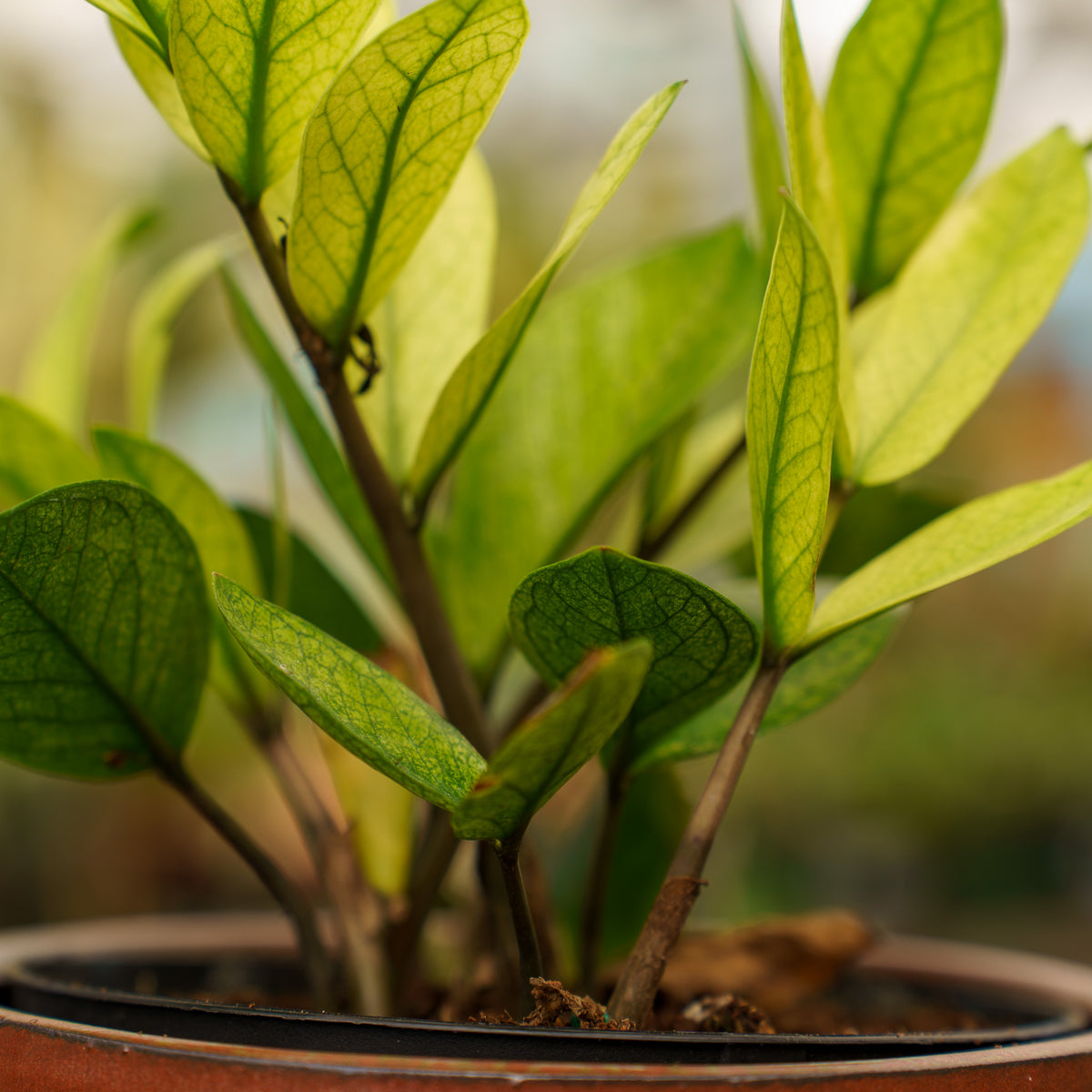
Chameleon ZZ Plant is an easy-care houseplant that adds a shifting, two-tone look to indoor spaces without demanding much attention. New growth emerges a bright, golden green, then gradually deepens to richer green as it matures, so the plant naturally looks highlighted without flowers. It handles low light and missed waterings, making it a reliable choice for offices, entry tables, and busy homes. If you want a clean, architectural plant with built-in color change, this ZZ plant fits the role.
Distinctive Features
This cultivar is valued for its changing foliage color, with fresh leaves appearing chartreuse to golden green before maturing to deeper green on the same plant. Thick, glossy leaflets sit on sturdy, upright stems that grow from water-storing rhizomes, which supports strong drought tolerance indoors. The habit stays compact and clumping in containers, creating a dense, polished silhouette that works well in modern interiors. Flowers are rare indoors and not a main feature, so the interest is the foliage color progression and form.
Growing Conditions
- Sun: Bright indirect light is best for stronger growth and clearer color contrast, but it tolerates low light.
- Soil: Use a well-draining potting mix, and add extra perlite or similar drainage material if the mix stays wet.
- Water: Water thoroughly, then let the potting mix dry out completely before watering again.
- USDA Zones: Grown as a houseplant in all zones, or outdoors in frost-free climates around Zones 9 to 11.
- Mature Size: Typically 18 to 30 inches tall and 18 to 30 inches wide in a container.
- Habit: Upright, compact, and clumping with sturdy stems.
- Foliage: New growth is golden green to chartreuse, maturing to deeper green.
Ideal Uses
- Focal Point: Use it as a focal point on a desk or side table where the golden new growth can brighten the room naturally.
- Low Light Rooms: Place in offices, hallways, or bedrooms where many plants struggle, keeping expectations realistic for slower growth.
- Modern Interiors: Pair with simple pots and clean lines for an architectural look that complements contemporary spaces.
- Grouping Plant: Combine with darker foliage plants to emphasize the fresh chartreuse new leaves.
- Easy-Care Gift: Use as a reliable gift for beginners who want a plant that looks good without frequent watering.
Low Maintenance Care
- Watering Routine: Water every 2 to 3 weeks in many homes, adjusting based on light, pot size, and season.
- Light Management: Keep out of harsh direct sun to avoid leaf scorch, and move closer to brighter indirect light for stronger growth.
- Rotation: Rotate the pot occasionally so stems grow evenly and the plant stays balanced.
- Cleaning: Wipe leaves with a damp cloth to remove dust and keep the foliage glossy.
- Repotting: Repot only when crowded, and always use a pot with drainage holes to reduce the risk of rot.
Why Choose Chameleon ZZ Plant?
- Color Change Interest: Golden new growth that matures to green creates a natural two-tone display.
- Low Water Needs: Rhizomes store moisture, so it forgives skipped waterings better than most houseplants.
- Low Light Tolerance: Handles lower light settings while staying attractive and upright.
- Clean Structure: Sturdy stems and glossy leaflets create a polished silhouette for modern rooms.
- Easy Indoor Durability: Tough, steady growth makes it a reliable long-term houseplant with simple care.
Chameleon ZZ Plant performs best with good drainage and a simple watering rhythm that lets the soil dry between soakings. Brighter indirect light helps it grow more quickly and keeps the new growth color more noticeable, while lower light keeps it slow and steady. Keep it out of reach of pets and small children, since ZZ plants are not meant to be eaten.
Shipping Notes
- Free Standard Shipping on $100+ Orders to the USA.
- Except Preorder products are shipped in 48 hours.
- Delivery to the USA:
- Standard Shipping : 3-10 business days
- If time is of the essence, please consider selecting expedited delivery for faster service.
Exchange/Return Notes
- We offer a 30-day return/exchange service after receiving.
- Final sale items are not eligible for returns or exchanges.
- To process your return/exchange, please contact us at [email protected]
- Please click here for more details>>> Return & Exchange Policy