SKU: 56527558045
terrarium hanging air plants

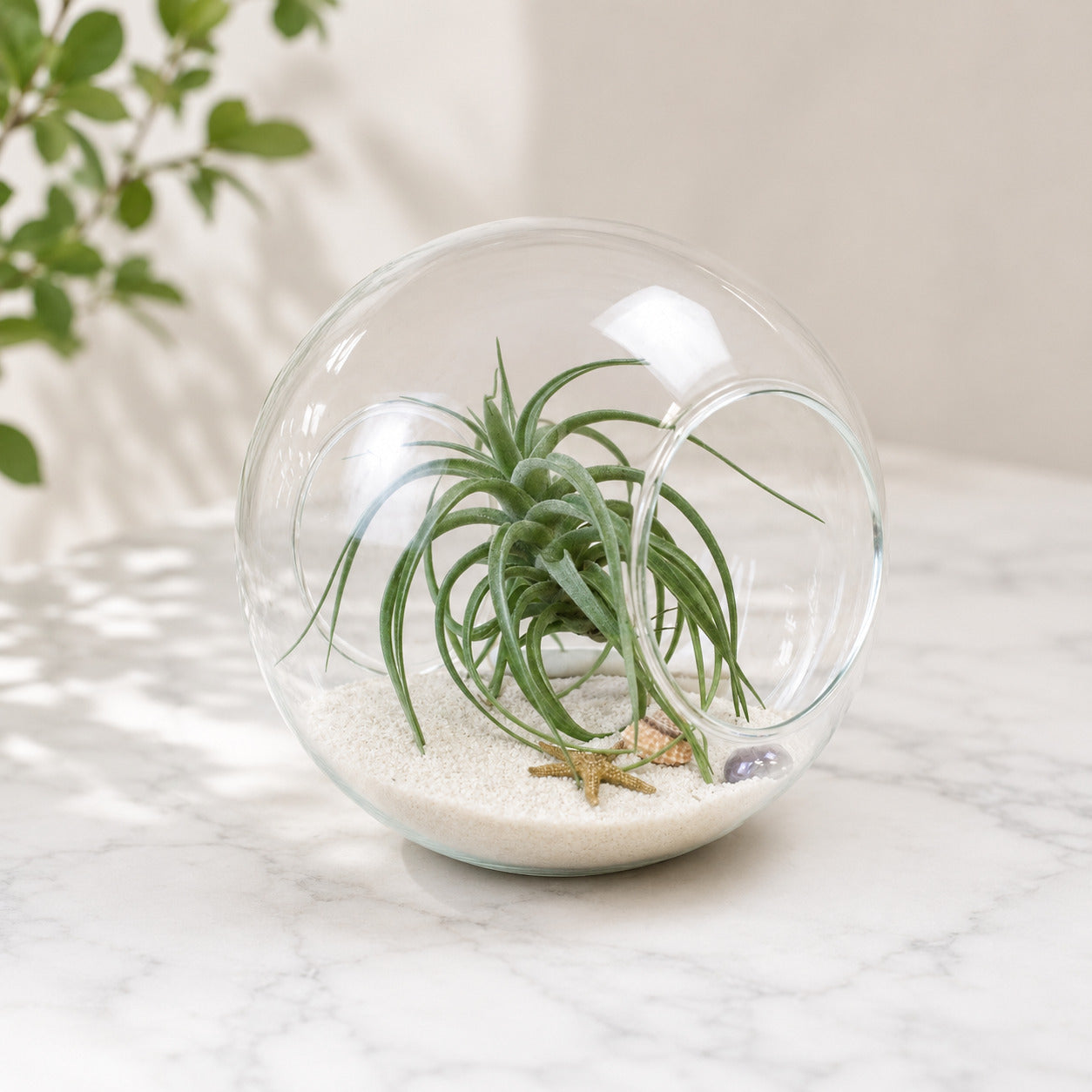
terrarium hanging air plants Large Beach Terrarium with Tillandsia Air Plant & White Sand

Sale price$18.60 Regular price$20.67
Save 10%

Shipping Estimate
USA
  • USA
  • CAN

Ships within 48 hours · Estimated delivery Jul 13 - Jul 18

Promo Codes Available:

For Your Every Summer RSVP, with Code: SUMMER15

Description

terrarium hanging air plants Large Beach Terrarium with Tillandsia Air Plant & White SandDescription Light Soil Water Hardiness The Large Beach Terrarium with Tillandsia Air Plant and White Sand is a ready to display indoor arrangement built around Tillandsia, a genus of epiphytic plants in the Bromeliaceae family native to the forests, mountains, and deserts of Central and South America. Commonly called air plants, Tillandsia species absorb water and nutrients through their leaves rather than their roots, making them one of the most

  • The Large Beach Terrarium with Tillandsia Air Plant and White Sand is a ready-to-display indoor arrangement built around Tillandsia, a genus of epiphytic plants in the Bromeliaceae family native to the forests, mountains, and deserts of Central and South America. Commonly called air plants, Tillandsia species absorb water and nutrients through their leaves rather than their roots, making them one of the most unique and conversation-starting houseplants available today.

    The air plant nestled in this terrarium features soft, arching silvery-green leaves with a fine, hair-like texture created by tiny scales called trichomes. Set against a bed of bright white sand inside a large glass vessel, the arrangement creates a clean, coastal aesthetic that suits both modern and natural home styles. The generous size of the terrarium gives the plant plenty of room to be displayed as a standalone centerpiece on a coffee table, shelf, or windowsill.

    This terrarium makes a thoughtful gift and an effortless decorative accent for any room in the home. Tillandsia air plants are pet friendly, so you can place this display anywhere without worry. As with all decorative arrangements, it is best placed out of reach of young children to keep the sand and glass vessel undisturbed.
  • Tillandsia air plants thrive in bright, indirect light. Place the terrarium near a window that receives several hours of filtered sunlight each day, such as an east or west-facing sill. Avoid direct midday sun through glass, which can intensify heat and scorch the delicate leaves.

    Water your air plant by gently misting it two to three times per week, or by removing it from the terrarium and soaking it in room-temperature water for 20 to 30 minutes once a week. After soaking, shake off any excess water and allow the plant to dry completely before returning it to the glass vessel. Standing water at the base of the leaves can cause rot, so good air circulation after watering is important.

    Tillandsia are true epiphytes and require no soil to grow. The white sand in this terrarium is purely decorative and provides a stable, attractive base. No repotting or substrate changes are needed, making this one of the easiest houseplant displays to maintain long term.

    Air plants prefer indoor temperatures between 50 and 90 degrees Fahrenheit (10 to 32 degrees Celsius). They enjoy moderate to good air circulation and handle average household humidity well. Keep the terrarium away from cold drafts, air conditioning vents, and heating registers, as extreme temperature fluctuations stress the plant.

    Fertilizing is optional but encourages growth and blooming. Use a bromeliad or air plant fertilizer diluted to one quarter strength and add it to your misting or soaking water once a month during spring and summer. Reduce feeding in fall and winter when growth naturally slows.
  • USDA Hardiness Zones 9-11 | Minimum temperature: 50°F (10°C)

    Tillandsia air plants can be grown outdoors year-round in warm, frost-free climates within Zones 9 through 11. In cooler regions, this terrarium is best kept indoors as a permanent houseplant display. If temperatures dip below 50 degrees Fahrenheit, bring any outdoor arrangements inside promptly, as air plants have no frost tolerance and cold exposure can damage their leaves quickly.

Shipping Notes
  • Free Standard Shipping on $100+ Orders to the USA.
  • Except Preorder products are shipped in 48 hours.
  • Delivery to the USA:
  1. Standard Shipping : 3-10 business days
  • If time is of the essence, please consider selecting expedited delivery for faster service.
Exchange/Return Notes
  • We offer a 30-day return/exchange service after receiving.
  • Final sale items are not eligible for returns or exchanges.
  • To process your return/exchange, please contact us at [email protected]
  • Please click here for more details>>> Return & Exchange Policy
SKU: 56527558045

Discover Niche Categories That Outsell terrarium hanging air plants

Top-Converting Item to Boost Your Average Order

4.9 ★★★★★
Based on 2227 reviews
Sort
Highest Rating
Newest First
Oldest First
Product Reviews
T
Verified Purchase
TH
Belleville, US
★★★★★ 5
The destruction of racism
Format: Paperback
This is a very open and candid view of racism in the early 19th century
WAS THIS REVIEW HELPFUL?YesReportShare
Reviewed in the United States on May 22, 2026
B
Verified Purchase
Benguet Bill
Lake Worth, US
★★★★★ 5
good read
Format: Paperback
classic work on imperialism
WAS THIS REVIEW HELPFUL?YesReportShare
Reviewed in the United States on January 11, 2026
A
Verified Purchase
A. Kassahun
Louisville, US
★★★★★ 5
Must read book on African colonial sociology and politics
Fanon describes the character of (European) colonialists, the colonised Africans (the "masses" - rural and urban, the elites, the nationalists, the tribalists) wonderfully. The book is wonderfully written - Fanon must have been a good writer. Fanon is a psychiatrist, and worked in Algeria as psychiatrist, but he many have travelled other African countries too. His book shows his deep knowledge of both African and European sociology, psychology and politics. The book is still relevant; his analysis as to what will happen after the liberation of African countries is amazingly valid. He is in a way one of the most important African (though he is born in Latin America) sociologist and political scientist. Fanon's book starts on "violence", he doesn't shy away from prescribing violence in the struggle for liberation. Some find Fanon advocating violence, but that is not the case. He puts in perspective the violence perpetrated by colonists against the resulting reaction that culminates in the violence of the colonised. His clear analysis demystifies the violence that still grips Africa. Unfortunately Fanon seems to put all European in Africa as colonists. Many cases from South Africa show that that should not be the case. But his views may be due to the brutal repression he has to witness and experience in Algeria by the French government and French citizens there.
WAS THIS REVIEW HELPFUL?YesReportShare
Reviewed in the United States on March 13, 2010
R
Verified Purchase
Roman P.
Fort Morgan, US
★★★★★ 5
Colonialism not dead yet
This is a review of the 2004 Grove paperback edition of Frantz Fanon’s The Wretched of the Earth The Wretched of the Earth is the most famous work of Algerian revolutionary Franz Fanon (1925-1961) finished and published shortly before his death (he died of leukemia). Fanon is known above all as a theorist of revolutionary violence and a champion of its therapeutic good for the oppressed. However, this book is not about armed struggle only; it covers many other topics: theory of class conflict in colonies, revolutionary process and subjects of social change in the Third World, the future of new independent states (former colonies), strategies of building Third World—First World relations in a right way, the relationship between the struggle for national culture and national liberation struggles, consequences of colonialism for both the colonizer and the colonized, etc. It’s a book of an angry man; the author's revolutionary pathos and standing with the oppressed (‘the wretched of the earth’) are noticeable. Though Fanon wrote his book drawing on the experience of the Africa of the 1950s an acute reader can easily notice similarities and parallels with what’s going on in the underdeveloped countries all over the world. The book can be of particular use for anthropologists, historians, philosophers, sociologists, as well as for those interested in cultural studies. I prefer Richard Philcox’s translation to the one published in 1963. Citizens of the global South can skip Jean-Paul Sartre’s preface; let the author speak for himself.
WAS THIS REVIEW HELPFUL?YesReportShare
Reviewed in the United States on September 17, 2019
R
Verified Purchase
R. Schwenk
Birmingham, US
★★★★★ 4
Influential and Insightful
Frantz Fanon's The Wretched of the Earth is an important document in the history of imperialism capturing the state of the Algerian revolution and the struggle for independence in the Third World at a crucial time. The year was 1961, and the book was published just before Fanon's premature death. Algeria was a year away from independence. The Congo had just achieved a travesty of independence. The Cuban revolution was still fresh. Fanon was born in Martinique but was fully committed to the Algerian cause by the end of his life. His insights into the pitfalls threatening newly-independent nations have proved to be uncannily accurate. His voice is of his time and ahead of his time. I would recommend this book to those wanting to learn more about the Algerian War and to those curious about the huge effect of this book on the leftists of the 1960s.
WAS THIS REVIEW HELPFUL?YesReportShare
Reviewed in the United States on September 28, 2013

recommand products