Shipping Estimate
USA
- USA
- CAN
- USA
- CAN
Ships within 48 hours · Estimated delivery Jul 13 - Jul 18
 Promo Codes Available:
For Your Every Summer RSVP, with Code: SUMMER15
Description
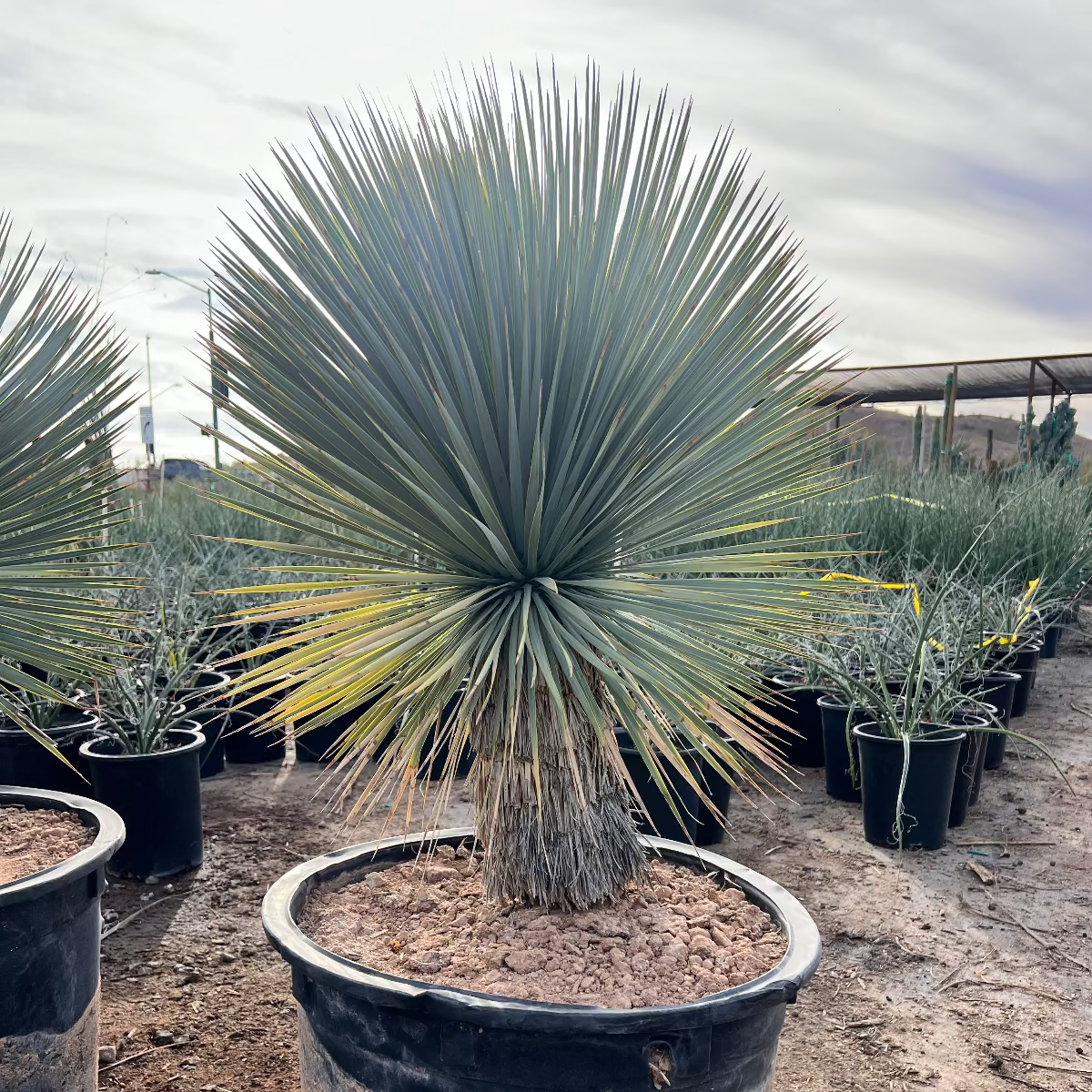
staggered yucca cane Buy Beaked Yucca Phoenix, AZ | Yucca rostrataPhoenix's Most Dramatic Sculptural Desert Tree for Modern Landscapes Beaked Yucca (Yucca rostrata) is the crown jewel of desert landscaping a stunning, single trunked tree topped with a symmetrical pom pom of silvery blue green leaves that catches every eye in the neighborhood. Growing 815 feet tall, this architectural powerhouse is the go to specimen tree for modern desert homes across Scottsdale, Paradise Valley, Chandler, and Mesa. It handles
Phoenix's Most Dramatic Sculptural Desert Tree for Modern Landscapes
Beaked Yucca (Yucca rostrata) is the crown jewel of desert landscaping — a stunning, single-trunked tree topped with a symmetrical pom-pom of silvery blue-green leaves that catches every eye in the neighborhood. Growing 8–15 feet tall, this architectural powerhouse is the go-to specimen tree for modern desert homes across Scottsdale, Paradise Valley, Chandler, and Mesa. It handles brutal Phoenix summers, reflected heat, caliche soil, and extreme drought without breaking a sweat. If you want one plant that transforms your entire landscape, Beaked Yucca is it.
Beaked Yucca Plant Details
| Attribute | Detail |
|---|---|
| Scientific Name | Yucca rostrata |
| Common Names | Beaked Yucca, Big Bend Yucca, Silver Yucca |
| Mature Height | 8–15 feet (can reach 20 feet) |
| Mature Width | 4–6 feet |
| Growth Rate | Slow to moderate — 6–12 inches per year in Phoenix |
| Sun | Full sun (6+ hrs). Thrives in reflected heat from walls and pavement. |
| Water | Very low once established. Extremely drought-tolerant. |
| USDA Zones | 5–11 (Phoenix is Zone 9b–10a) |
| Soil | Well-draining. Thrives in rocky, sandy, and Arizona caliche soils. |
| Foliage | Evergreen — silvery blue-green symmetrical rosette year-round |
| Bloom Color | Creamy white — large showy clusters on tall stalks in spring |
| Trunk | Single or multi-trunk; develops character with age |
Beaked Yucca Uses in Phoenix Landscapes
Signature Specimen Tree
Nothing commands attention like a mature Beaked Yucca. Its perfect pom-pom crown on a textured trunk creates an instant focal point in front yards, courtyards, and entryways. Plant one as a standalone specimen near your front door or driveway for maximum curb appeal in Scottsdale and Paradise Valley homes.
Modern Desert Design
Beaked Yucca's clean, architectural silhouette is tailor-made for contemporary desert landscapes. Use it alongside concrete planters, steel edging, and decomposed granite for a high-end modern look. Plant in groups of 3 at staggered heights for a designer desert grove effect. Pair with Agave, Desert Spoon, and ornamental grasses for textural contrast.
Pool-Friendly Landscaping
The upright, contained form and minimal leaf drop make Beaked Yucca an excellent poolside plant. Its non-invasive root system won't damage hardscaping, and the dramatic silhouette looks stunning reflected in pool water, especially when uplighted at night.
Drought-Tolerant Streetscape
Beaked Yucca is increasingly popular for Phoenix streetscapes, medians, and commercial properties. Its extreme drought tolerance means virtually zero irrigation once established, and its striking form elevates any commercial landscape in Tempe, Gilbert, or Mesa.
Best Time to Plant Beaked Yucca in Phoenix
Fall (October–November) is the ideal planting window. Warm soil promotes root establishment while cooler air temperatures reduce transplant stress, giving your Beaked Yucca 6–8 months to settle in before its first Phoenix summer. Spring (February–April) is the second-best window. Avoid planting in peak summer if possible, especially for larger specimens.
How to Plant Beaked Yucca
- Dig wide, not deep — 2–3x the root ball width, same depth as the container.
- Check for caliche — break through any hardpan layer for drainage. Beaked Yucca will rot in standing water.
- Backfill with native soil — no amendments needed. Lean, well-draining soil is ideal.
- Spacing — 6–8 feet apart for grouped plantings; 10+ feet from structures for mature spread.
- Water basin — build a 3–4 inch ring of soil around the planting hole to direct water to roots during establishment.
- Mulch — 2–3 inches of gravel or decomposed granite. Avoid organic bark mulch near the trunk to prevent rot.
Watering Beaked Yucca in Phoenix
First Year Watering Schedule
- Weeks 1–2: Every 3–4 days, deep and slow (20–30 min)
- Month 1–2: Every 5–7 days
- Month 3–6: Every 10–14 days (7–10 days in peak summer)
- After Year 1: Every 3–4 weeks in summer; little to no supplemental water in winter
Drip Irrigation
Place one 2-GPH emitter 18–24 inches from the trunk. Beaked Yucca is extremely drought-tolerant once established — overwatering is the number one killer. Established plants in the ground rarely need supplemental irrigation in the Phoenix Valley.
How fast does Beaked Yucca grow in Phoenix?
Expect 6–12 inches of trunk height per year in optimal conditions. Larger nursery specimens (25 gallon and 30" box) give you a head start with an already-developed trunk and crown.
Is Beaked Yucca drought tolerant?
Extremely. Once established, it can survive on rainfall alone in most Phoenix Valley locations. It's native to the Chihuahuan Desert of Texas and Mexico — one of the most arid regions in North America.
Will Beaked Yucca develop a trunk?
Yes. Over time, the lower leaves naturally dry and can be trimmed to reveal a beautiful textured trunk. Larger nursery sizes (25 gallon and 30" box) already have visible trunk development.
Can Beaked Yucca handle full reflected heat?
Absolutely. It thrives against south- and west-facing walls where reflected heat would stress most plants. It's one of the toughest ornamental trees for extreme Phoenix heat.
What's the difference between Beaked Yucca and Beaked Yucca with trunk?
Both are the same species (Yucca rostrata). "With trunk" specimens are older, more established plants that already show significant trunk development — perfect if you want instant height and character without waiting years.
You May Also Like
- Beaked Yucca with Trunk — Pre-trunked specimens for instant dramatic impact.
- Desert Spoon — A silvery-blue rosette that pairs beautifully with Beaked Yucca in desert groupings.
- Blue Palo Verde — A native desert tree that provides filtered shade alongside Beaked Yucca's vertical form.
- Banana Yucca — A compact ground-level yucca that complements Beaked Yucca's height.
- Agave Americana — Bold blue rosettes that echo Beaked Yucca's color palette at ground level.
How Many Beaked Yucca Do I Need?
Beaked Yucca is a specimen tree, so plan around grouping and clearance rather than a hedge. At a mature width of 4 to 6 feet, use this guide:
| Planting Goal | Spacing & Count |
|---|---|
| Single focal point | 1 specimen, 10 ft from walls and structures |
| Designer desert grove | Group of 3 at staggered heights, 6 to 8 ft apart |
| Repeating streetscape rhythm | About 1 plant every 7 ft along the run |
The upright form and clean trunk keep it well clear of walkways, making it one of the few yuccas that suits tight, high-traffic spaces.
Beaked Yucca Season-by-Season in Phoenix
- Spring (Feb–Apr): Tall stalks of creamy-white flower clusters rise above the silver crown, drawing pollinators. A strong second planting window before summer.
- Summer (May–Sep): Thrives in extreme and reflected heat against south and west walls. Needs only an occasional deep soak through the hottest months.
- Fall (Oct–Nov): The prime planting season. Warm soil and mild air let roots settle before the next summer. Steady trunk growth continues.
- Winter (Dec–Jan): Fully evergreen and exceptionally cold-hardy (USDA Zone 5). The silver pom-pom crown holds all winter and never needs frost protection in the Valley.
At a Glance
✔ Heat-Loving (Reflected-Heat Tolerant) ✔ Drought-Tolerant ✔ Pool-Friendly (Low-Litter) ✔ Evergreen ✔ Low-Maintenance ✔ Pollinator-Friendly ✔ Deer & Rabbit-Resistant ✔ Cold-Hardy to -10°F
Plant It With
- Beaked Yucca with Trunk: a pre-trunked specimen to add instant height and staggered character.
- Desert Spoon: a silver-blue rosette that echoes the crown color at ground level.
- Banana Yucca: a compact blue yucca that fills in beneath the tall trunk.
- Red Yucca: coral flower spikes for color and motion around the base.
Is Beaked Yucca Right for Your Yard?
Beaked Yucca thrives in full sun and reflected heat, needs sharply draining soil (break through caliche), and asks for almost no water once established. Its clean upright form and low litter make it a rare yucca that works poolside and in tight modern beds. Not a fit if your site stays wet or poorly drained, since the roots and trunk base will rot in standing water.
Shipping Notes
- Free Standard Shipping on $100+ Orders to the USA.
- Except Preorder products are shipped in 48 hours.
- Delivery to the USA:
- Standard Shipping : 3-10 business days
- If time is of the essence, please consider selecting expedited delivery for faster service.
Exchange/Return Notes
- We offer a 30-day return/exchange service after receiving.
- Final sale items are not eligible for returns or exchanges.
- To process your return/exchange, please contact us at [email protected]
- Please click here for more details>>> Return & Exchange Policy