Shipping Estimate
USA
- USA
- CAN
- USA
- CAN
Ships within 48 hours · Estimated delivery Jul 10 - Jul 15
 Promo Codes Available:
For Your Every Summer RSVP, with Code: SUMMER15
Description
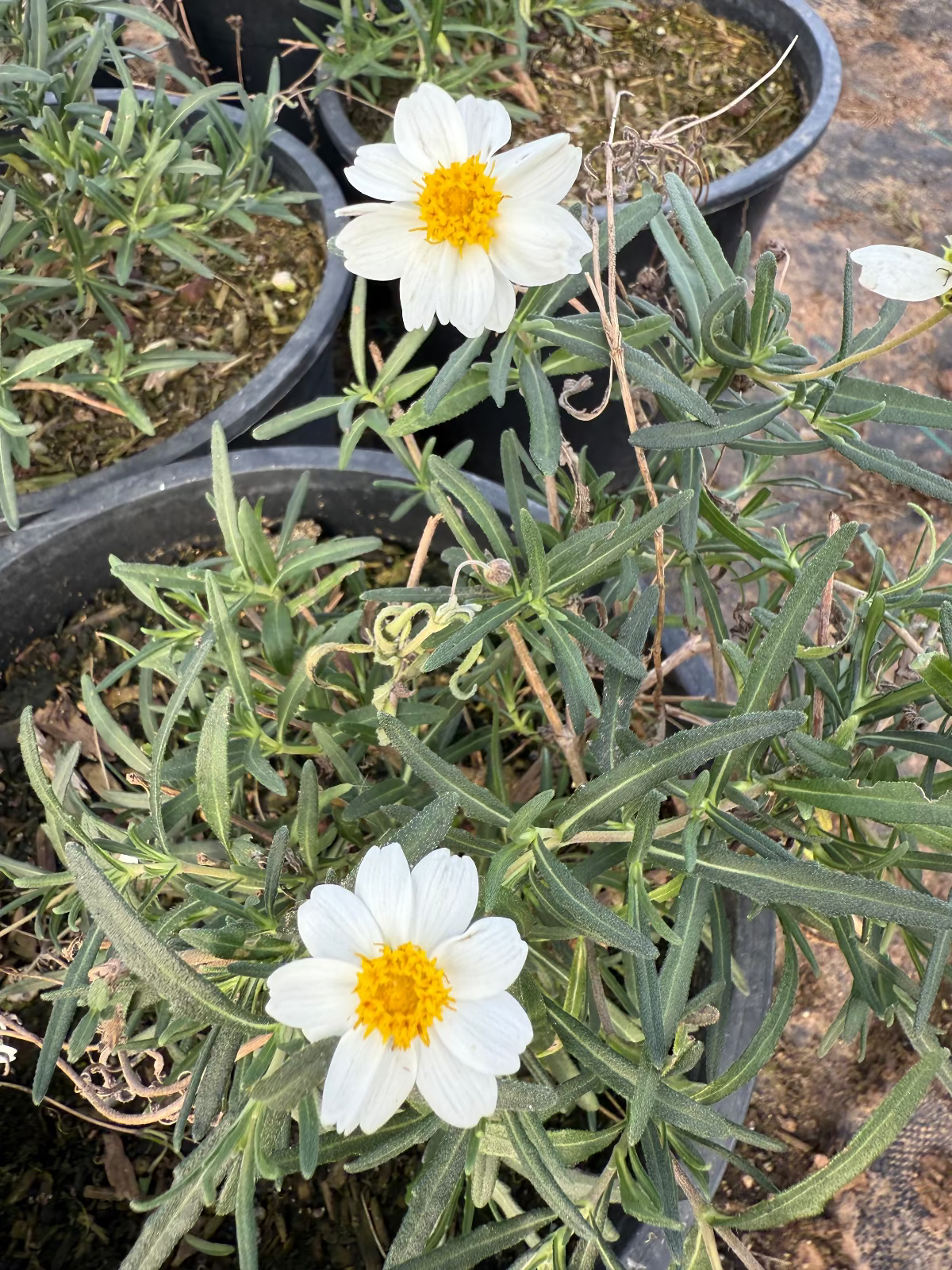
desert daisy succulent Blackfoot Daisy Phoenix, AZ | Melampodium leucanthumArizona's Favorite Native Flowering Groundcover Blackfoot Daisy Blackfoot Daisy (Melampodium leucanthum) is Arizona's most beloved native perennial for drought tolerant color. Growing just 612 inches tall with a cheerful spread of 1224 inches, it produces non stop white blooms with golden centers from spring through fall with minimal water. Whether you're designing a xeriscape border in Scottsdale, adding pollinator color along a Chandler walkway, or
Arizona's Favorite Native Flowering Groundcover — Blackfoot Daisy
Blackfoot Daisy (Melampodium leucanthum) is Arizona's most beloved native perennial for drought-tolerant color. Growing just 6–12 inches tall with a cheerful spread of 12–24 inches, it produces non-stop white blooms with golden centers from spring through fall — with minimal water. Whether you're designing a xeriscape border in Scottsdale, adding pollinator color along a Chandler walkway, or filling in a rock garden in Gilbert, Blackfoot Daisy delivers season-long beauty without the fuss.
Blackfoot Daisy Plant Details
| Attribute | Detail |
|---|---|
| Scientific Name | Melampodium leucanthum |
| Common Names | Blackfoot Daisy, Rock Daisy, Plains Blackfoot |
| Mature Height | 6–12 inches |
| Mature Width | 12–24 inches |
| Growth Rate | Moderate — fills out to full size in one season in Phoenix |
| Sun | Full sun (6+ hrs). Thrives in reflected desert heat. |
| Water | Very low once established. One of Phoenix's most drought-tolerant perennials. |
| USDA Zones | 8–10 (Phoenix is Zone 9b–10a) |
| Soil | Well-draining. Perfect for Arizona's rocky, caliche soils — prefers lean, mineral-rich ground. |
| Foliage | Semi-evergreen — stays mostly green year-round in Phoenix |
| Bloom Season | Spring through fall; nearly year-round in mild Phoenix winters |
Blackfoot Daisy Uses in Phoenix Landscapes
Xeriscape Borders and Low-Water Gardens
Blackfoot Daisy is the go-to flowering perennial for Phoenix xeriscapes. Its tight mounding habit makes it perfect for edging pathways, framing entryways, or filling rock garden pockets between boulders. Plant in groups of 3, 5, or 7 for natural-looking mass color — spacing 18–24 inches apart allows each plant to fill out fully. It pairs beautifully with Texas Sage, Desert Marigold, and Agave for an all-native xeriscape palette.
Planting density for a border: 4-foot border — 2–3 plants / 8-foot border — 4–5 plants / 15-foot border — 7–10 plants
Pollinator Gardens
The simple daisy form and golden centers make Blackfoot Daisy irresistible to native bees, butterflies, and other pollinators. It blooms through the long Arizona spring and summer when pollinators need food most. Plant alongside Ruellia, AZ Blue Bells, and Penstemon to create a pollinator corridor that runs from February through November. It's also pet-friendly and non-toxic — a safe choice for homes with dogs and cats.
Poolside and Patio Planting
Blackfoot Daisy is one of Phoenix's most pool-friendly flowering perennials. Its compact size keeps it from overwhelming pool coping, and its low water needs mean no irrigation runoff near pool equipment. The white blooms reflect beautifully against dark gravel or decomposed granite. Pair with Blue Bells and Desert Marigold for an all-season color trio around outdoor living spaces in Tempe, Mesa, or Peoria.
Rock Gardens and Naturalized Desert Landscapes
As a native of rocky limestone hills in the Sonoran and Chihuahuan Deserts, Blackfoot Daisy thrives in the gravelly, rocky conditions common in Cave Creek, Queen Creek, and Fountain Hills landscapes. Tuck it between boulders or let it cascade over retaining walls for a naturalistic look. Once established, it practically maintains itself — no deadheading required.
Best Time to Plant Blackfoot Daisy in Phoenix
Fall (October–November) is the ideal planting window in Phoenix. The soil stays warm enough to encourage root development while cooler air prevents transplant stress — giving plants 4–6 months of establishment before their first intense Phoenix summer. Spring planting (February–April) is your second-best option. Avoid summer installation during Phoenix's brutal June–August heat wave; newly transplanted perennials can struggle without consistent daily irrigation in triple-digit temperatures.
How to Plant Blackfoot Daisy
- Dig wide, not deep — excavate 2–3x the root ball width at the same depth as the container
- Check for caliche — break through any hardpan layer to ensure drainage; Blackfoot Daisy will rot in standing water
- Backfill with native soil — this plant prefers lean soil; avoid heavy organic amendments that retain moisture
- Spacing — 18–24 inches apart for a natural border; 12 inches for faster coverage in a mass planting
- Water basin — build a 3–4 inch earthen ring around the plant to direct water to the root zone during establishment
- Mulch — 2 inches of gravel or decomposed granite mulch suits this desert native better than bark
Watering Blackfoot Daisy in Phoenix
First Year Watering Schedule
- Weeks 1–2: Every 1–2 days, deep and slow (15–20 minutes)
- Month 1–2: Every 3–4 days
- Month 3–6: Every 7–10 days (every 5 days during peak summer heat)
- After Year 1: Every 14–21 days in summer; winter rainfall is often sufficient
Drip Irrigation
Place a 1 GPH emitter 12–15 inches from the plant's base. Once established, Blackfoot Daisy is one of the lowest-water perennials you can grow in the Phoenix Valley — many homeowners let mature plants thrive on rainfall alone, supplementing only during extreme summer heat events.
How fast does Blackfoot Daisy grow in Phoenix? It fills out to its full 12–24 inch spread in one growing season. Spring-planted daisies are typically mature and blooming heavily by summer, and plants installed in fall will be lush and established by their first spring bloom season.
Is Blackfoot Daisy drought tolerant once established? Yes — it is one of Arizona's most drought-tolerant flowering perennials. Native to rocky desert hillsides in the Southwest, it is biologically adapted to survive on minimal supplemental water after its first full growing season in the ground.
Does it bloom all year in Phoenix? Blackfoot Daisy blooms spring through fall and often continues through mild Phoenix winters. In warm years you may see nearly year-round color. It slows down only during the hottest weeks of July and August, then rebounds strongly in September.
Is Blackfoot Daisy pet-friendly? Yes — Melampodium leucanthum is considered non-toxic to dogs and cats, making it one of the safest flowering perennials for Phoenix homeowners with pets.
What's the difference between Blackfoot Daisy and regular daisies? Blackfoot Daisy is a native Sonoran Desert perennial that has evolved to handle Phoenix's extreme heat, alkaline soil, and drought. Standard daisies like Shasta or African Daisy struggle in Arizona's summer heat and require much more water. Blackfoot Daisy actually performs better in lean, rocky soil than it does in rich garden soil.
You May Also Like
- Texas Sage (Leucophyllum frutescens) — drought-tolerant native with purple blooms; perfect for pairing with Blackfoot Daisy in low-water borders.
- AZ Blue Bells (Eustoma exaltatum) — native Arizona wildflower with vivid blue-purple blooms; an excellent companion in pollinator gardens.
- Ruellia (Mexican Petunia) — low-water flowering perennial with purple blooms that complements white Blackfoot Daisy in mixed color borders.
- Purple Hopseed Bush (Dodonaea viscosa 'Purpurea') — dramatic purple-bronze foliage provides a stunning contrast backdrop for Blackfoot Daisy groupings.
How Many Blackfoot Daisy Do I Need?
Blackfoot Daisy mounds 12 to 24 inches wide, so space plants about 18 inches on center for a natural-looking carpet of white bloom. Use the coverage guide below to estimate your count:
| Bed area | Plants needed (18 in spacing) |
|---|---|
| 10 sq ft | 5 plants |
| 25 sq ft | 11 plants |
| 50 sq ft | 22 plants |
| 100 sq ft | 44 plants |
For a tidy walkway edge, plant in odd-numbered groups of 3, 5, or 7 at 18 inches apart. For faster coverage in a mass, tighten spacing to 12 inches.
Blackfoot Daisy Season-by-Season in Phoenix
- Spring (Feb to Apr): A heavy flush of white daisies that feeds native bees and butterflies. A strong second planting window before the heat.
- Summer (May to Sep): Keeps flowering through triple-digit heat and reflected heat off rock and walls. Bloom slows only in the hottest weeks of July and August, then rebounds with monsoon moisture in September.
- Fall (Oct to Nov): The ideal planting season, with blooms continuing strong. Warm soil and cool air give roots a fast, low-stress start.
- Winter (Dec to Jan): Stays mostly green and often blooms right through mild Valley winters. Hardy to about 15 degrees, so frost protection is rarely needed here.
At a Glance
✔ Arizona Native ✔ Pollinator-Friendly ✔ Heat-Loving (Reflected-Heat Tolerant) ✔ Drought-Tolerant ✔ Pool-Friendly (Low-Litter) ✔ Low-Maintenance ✔ Cold-Hardy to 15°F
Plant It With
- Desert Marigold: a native yellow wildflower that contrasts beautifully with the white blooms.
- Angelita Daisy: another low, long-blooming native for a layered yellow-and-white groundcover.
- Texas Sage: a purple-flowered shrub that gives height and structure behind the daisies.
- Desert Ruellia: low-water purple bloom that complements the white in a mixed border.
Is Blackfoot Daisy Right for Your Yard?
Blackfoot Daisy thrives in full sun and reflected heat, in lean, rocky, well-draining caliche soil, on very little water once established. It is ideal for xeriscape borders, rock gardens, pollinator beds, and tidy poolside plantings. It is not a fit in rich, heavily watered beds or low spots that stay wet, where the plant is prone to crown rot.
Shipping Notes
- Free Standard Shipping on $100+ Orders to the USA.
- Except Preorder products are shipped in 48 hours.
- Delivery to the USA:
- Standard Shipping : 3-10 business days
- If time is of the essence, please consider selecting expedited delivery for faster service.
Exchange/Return Notes
- We offer a 30-day return/exchange service after receiving.
- Final sale items are not eligible for returns or exchanges.
- To process your return/exchange, please contact us at [email protected]
- Please click here for more details>>> Return & Exchange Policy