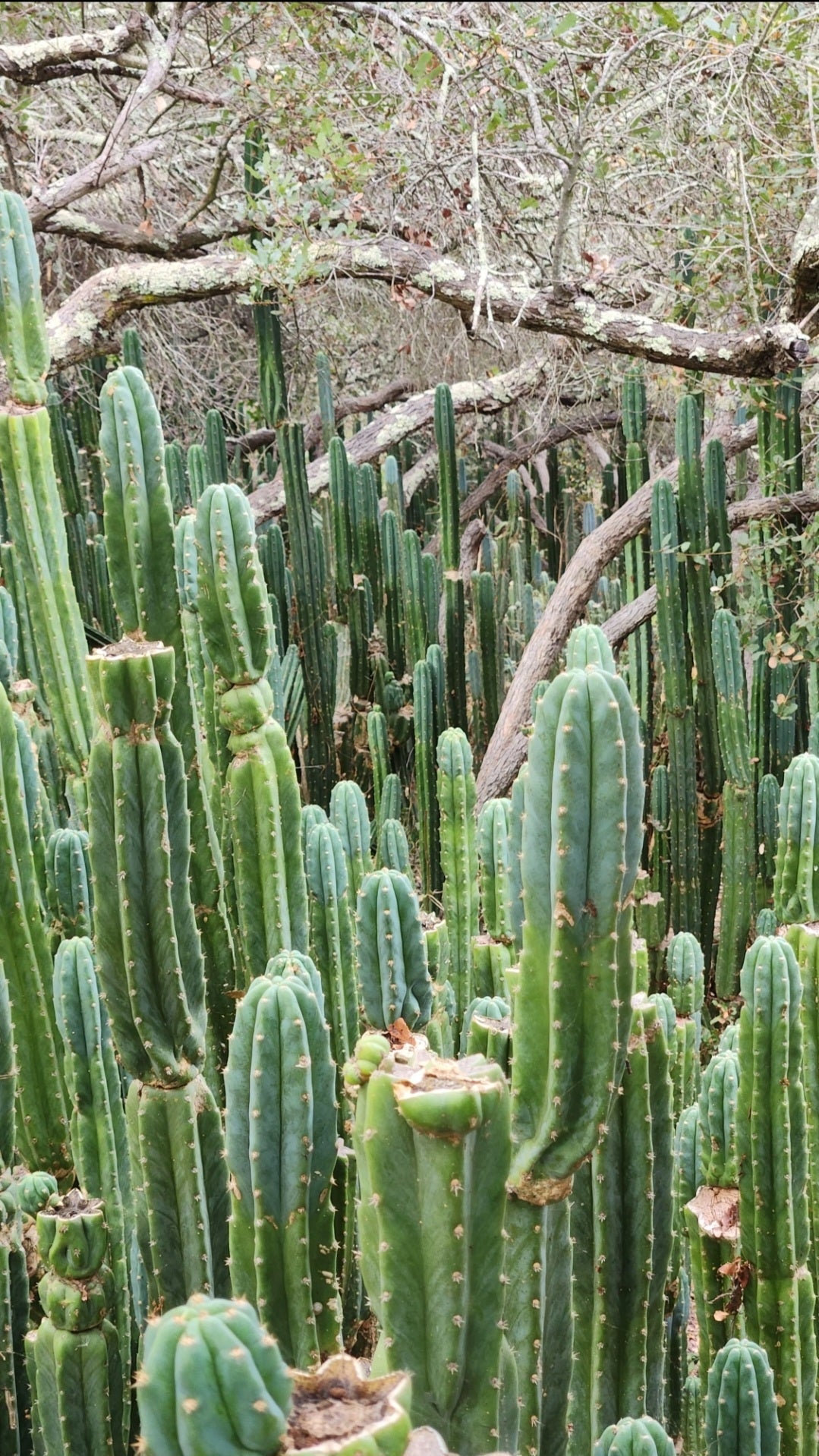
succulent source cuttings Trichocereus Pachanoi Common San Pedro PC Ornamental Grafting Cactus Cuttings and Potted Two 10-12" Trichocereus PC Ornamental Cuttings
SKU: 52890703280
succulent source cuttings

succulent source cuttings Trichocereus Pachanoi Common San Pedro PC Ornamental Grafting Cactus Cuttings and Potted Two 10-12" Trichocereus PC Ornamental Cuttings

Sale price$22.12 Regular price$24.58
Save 10%

Shipping Estimate
USA
  • USA
  • CAN

Ships within 48 hours · Estimated delivery Jul 8 - Jul 13

Promo Codes Available:

For Your Every Summer RSVP, with Code: SUMMER15

Description

succulent source cuttings Trichocereus Pachanoi Common San Pedro PC Ornamental Grafting Cactus Cuttings and Potted Two 10-12" Trichocereus PC Ornamental Cuttings**Please Read Everything and Educate Yourself** *On potted PC I usually include a blank aluminum ID tag, some customers buy these to graft on, and some buy to add to their collection, you can write whatever name youd like using a pen or pencil on the tags, leaving this up to you. * Winter rainy months expect snail nibbles on most tips, this time of year they are out and about, and we don't spray anything. Scars will simply move down w new growth, or

**Please Read Everything and Educate Yourself**
*On potted PC I usually include a blank aluminum ID tag, some customers buy these to graft on, and some buy to add to their collection, you can write whatever name you’d like using a pen or pencil on the tags, leaving this up to you.

* Winter rainy months expect snail nibbles on most tips, this time of year they are out and about, and we don't spray anything. Scars will simply move down w new growth, or if grafting sliced off!

*READ & LEARN, and what to expect with your order**

Trichocereus Pachanoi "PC" cactus are by far the most commonly grown, and sold Trichocereus in the United States.  What does PC mean? PC is short for Predominant Cultivar. This means they were and are the most widely commercially grown trichs within the nursery business here on the west coast of the states. Why?  They are prolific flower bloomers. AWESOME majestic flowers, great for all the critters that will be attracted to their fragrant scent from bees to bats and of course people! They are great as landscape specimens. If you are driving around the West Coast and encounter giant cactus growing in front of a library, restaurant or office building, it's a good chance it's Trichocereus PC. Same goes for the thousands and thousands of other homes and buildings that take advantage of their unique columns to add that special touch in creative landscaping.  They are popular within both the nursery and landscaping world for their ability to thrive in a variety of environmental conditions. They are one of the easiest, and therefore one of the most common columnar cactus propagated by nurseries in the United States, often used in commercial and residential landscaping, oops I already said that! Occasionally but not often, some of the big box stores across the country may offer them, often labeled as San Pedro, the common name for many Trichocereus cactus associated with South American origins. We're happy to say we sell and ship our cactus all over the states all year round!

 PC is also highly popular amongst cactus grafters, that's where an expensive, rare and or super slow growing cactus specimen is grown on top of another cactus. Super cool and interesting growing technique that has been popular all over the world by both hobbyists and commercial growers. Even my kids like to graft! 

PC is a great cheaper entry level Trichocereus into the collection hobby, but there are so many other super cool trichs like spiny Bridgesii, smoother Pachanoi, bluer Peruvianus, exotic hybrids and on and on.  Never hesitate to ask questions, we're here to support ya!

Below is more info and options we have, and we're always open to custom and wholesale pc orders too.

**Large and heavy middle cuts are sold approx. 15-20 lb lots. You may get 2-5 pieces based on stock. If pieces appear dehydrated, it means you’ll get more cutts and you’re not paying for water! If youd prefer more smaller, or less and bigger, please make a note during checkout. These will likely be discolored, scarred, sunburned, marked etc. Often one side will be heavily discolored if it's been laying on its side for too long, simply cosmetic,  and even sunburned cutts may appear bad, they will still push out new pups. *Best practice is to place the sunburned side away from sun, allowing other side to better photosynthesis. Just repeating, grafting stock doesnt need to be pretty, especially in the bulk weight listings  They are not show plants!  They are from hard grown areas and will greatly benefit from Fresh soil and shade and consistent watering. Colors will return to darker green over time if given some tlc as just mentioned.  The bigger and heavier the cutting, the more growth you can expect on your grafts. Lots of great videos out there on youtube etc. 

** PC tips potted in 4” containers will vary by heights and width, some may show stretched tips which is normal during winter slower growth here, they’re gonna get sliced off regardless, just an fyi per a customer was expecting all fat tips.

Generally, if you are new to grafting, tip cutts are preferred as they're soft and easy to work with. Some like mids because they will wait for new tips to form and graft on those.  Have fun, grafting is relaxing and rewarding!

Check other listings for Exact potted options, as well as Bulk Lots. 

These are Not Show Specimens, they likely have flaws, scars, dings, dents and spots, normal outdoor grown blemishes, they are mainly grafting stock, but that being said, PC are cool!

These ornamental Trichocereus cuttings are ready to be potted and rooted.  Give cacti propagation a start, you don't have to be a crazy smart botanist to grow beautiful cactus from cuttings! Why cuttings vs potted?   Time and cost!  Propagating via cutting cactus is the fastest and most economical way for commercial nursery growers to expand stock.  It eliminates months and years of waiting for seedlings to grow to appropriate selling size. This cost in growing can then be passed onto the seller.  You simply do the work on rooting and you learn a valuable lesson in growing and caring for cacti!

These specific cuttings will come from a variety of locations on our nursery, some in full sun, some partial, some in shade all day.  Sunlight, shade, soil, watering, fertilizer etc. are all factors  that determine the color of these cuttings, full sun tend to be lighter, full shade are darker.  They are not perfect, they will have blemishes, spots, splotches, scratches, mark's, scars, etc.  They are cactus!  Please check out our exact potted cactus if you are looking for collection specimens.

Generally will be cut fresh after sale is completed, but often we have cut and readied as our turnover can be very quick at times.  Please allow us a week or so to allow proper drying for safe shipping(sometimes during colder/wetter months this may take longer than warm/dry months).  Please see our Blog on propagating cactus cuttings to help get your investment rooted.

https://thesucculentsource.com/blogs/succulent-cactus-news/83530881-rooting-san-pedro-cactus-and-other-trichocereus-planting-instructions

*** The following is not the norm but it's always a possibility.  Times and success with rooting can vary based on multiple factors including time of year, temps, soil etc.  Sometimes ends may arrive discolored, not an issue if its DRY. If a little mushy, follow our blog and slice off small section and start drying process all over. If some mold on the end, read our Blog and wash and dry and slice if needed.  Your cactus cutting is not ruined because of any of these reasons, it's an opportunity to learn and become an experienced propagation expert.   If this is too overwhelming for you, we kindly and respectfully ask that you not order from us as we want all of our customers to be happy!

Handle with CARE  and please see our FAQ for basic care info.

More info.    https://thesucculentsource.com/pages/cactus-cuttings-faq

**Cactus are not perfect, they may have small flaws, we try and photograph all sides of a cactus including any flaws that catch our attention, but please do not expect every spine to be perfect, these are growing cactus and like people, they have character!

Shipping Notes
  • Free Standard Shipping on $100+ Orders to the USA.
  • Except Preorder products are shipped in 48 hours.
  • Delivery to the USA:
  1. Standard Shipping : 3-10 business days
  • If time is of the essence, please consider selecting expedited delivery for faster service.
Exchange/Return Notes
  • We offer a 30-day return/exchange service after receiving.
  • Final sale items are not eligible for returns or exchanges.
  • To process your return/exchange, please contact us at [email protected]
  • Please click here for more details>>> Return & Exchange Policy
SKU: 52890703280

Discover Niche Categories That Outsell succulent source cuttings

Top-Converting Item to Boost Your Average Order

4.8 ★★★★★
Based on 2193 reviews
Sort
Highest Rating
Newest First
Oldest First
Product Reviews
W
Verified Purchase
William
Draper, US
★★★★★ 5
Good information
Format: Paperback
Outstanding
WAS THIS REVIEW HELPFUL?YesReportShare
Reviewed in the United States on April 2, 2026
M
Verified Purchase
Mary T
Massapequa, US
★★★★★ 5
Great read!
Format: Kindle
In addition to being an engaging lecturer, Stoermer writes beautifully! “Again and again, people confronted the distance between the compact as advertised and authority as exercised.” Gorgeous prose and achingly painful history.
WAS THIS REVIEW HELPFUL?YesReportShare
Reviewed in the United States on June 3, 2026
F
Verified Purchase
Francis J. Casper
Lowell, US
★★★★★ 3
No Index or footnotes
Format: Paperback
I have been following Prof Stoermer’s videos preceding this book and pre-ordered it on that basis. I to read it but am a bit disappointed and disturbed that there is nothing by way of an index or footnotes, and no reference I can find that they are available elsewhere. My 3 therefore, has nothing to do with the substance and will update this review after I read it. But I don’t understand the absence of such material.
WAS THIS REVIEW HELPFUL?YesReportShare
Reviewed in the United States on June 4, 2026
K
Verified Purchase
Kindle Customer
Houston, US
★★★★★ 5
Every american should be encouraged to read this text
Format: Kindle
This book had a profound impact on me. It has changed how I view all political discussions, history discussions, policy discussions, and race discussions. As a Hispanic Caucasian, I was acutely unaware of much of America's racist history. I knew the obvious examples, but this book really shows how extensive the racism is and its profound effects that are still heavily in effect today. Kendi's thesis is short and simple: racist ideas were created to justify racist policies. This is counter to the common argument that ignorance and racism spurs racist policies. Kendi lays out his main thesis at the beginning of the book and follows it up with example after example to back it up. Keeping the thesis and definition of racism simple really helps emphasize Kendi's point throughout the book. This book is also thorough; so much history is covered by this book. I spent a lot of time looking up some historical events or figures in more detail on Wikipedia to get a fuller picture. If you are unfamiliar with American history, then expect to move very slowly through the text as you look everything up for proper context. I absolutely love this book and strongly encourage everyone to read it. However, I do have a few gripes with it: - Kendi often misled me with his wording or juxtaposition of statements. I understand he is trying to make a statement, but I wish he wouldn't do this. One example that comes to mind is Roosevelt's naming of the White House. Kendi makes it seem like Roosevelt named it the White House after the public uproar over his invitation of Booker T. Washington over for dinner. However, there doesn't appear to be any evidence to support this, and there is some indication the White House was already referred to by that name well before the dinner. To Kendi's credit, he doesn't explicitly say the naming was done to appease the public, he just points out that it happened and people were still upset. Another example is his mention of black unemployment rates rising sharply in the early 1980s. This is true, but all unemployment rates rose during that time due to the recession. Yes, the black unemployment rate was worse, but he doesn't make that point: he only mentions the black unemployment rates. So as a reader you have to be careful of the facts you internalize from the book. - The organization of the book didn't really do anything for me. He tries to break down the text into 4 main sections, each focusing on a different historical figure. However, the focus on the figures didn't really contribute much, in my opinion, to his thesis. It brought some organization to his book, but not much. I would have preferred he spent more of the book going into details of some of the more significant policies or events than to keep looping the historical figure back in. - Text can read a bit haphazardly at times. There are certain sections of the book where I feel Kendi is jumping around history pretty quickly to different events and it becomes difficult for me to follow. Eventually he gets around to making a point, but it usually takes too long for me to fully grasp it at the moment. I have to often re-read these sections a second time to really get it. Again, please buy this book and read it. We would all be better off to know this history and the racist policies behind it.
WAS THIS REVIEW HELPFUL?YesReportShare
Reviewed in the United States on April 4, 2018
A
Verified Purchase
A. H. Wagner
Fort Morgan, US
★★★★★ 5
A very painful but highly illuminating must-read on how racism took root and persists in the US
Format: Kindle
About halfway through reading this book, I realized I was highlighting almost every single page and had to start color-coding my highlights so as to make a little more sense of why certain passages struck me—a visual testimony of how illuminating Stamped from the Beginning is. With a primary focus on racism toward African-Americans and people identified as Black, this book is a thoroughly researched, sweepingly comprehensive survey of racism from its first traceable roots in ancient Greece when Aristotle said Africans had “burnt faces” to the start of the African slave trade in 15th century Europe, to the first recorded slave ship arriving in colonial America in 1619, all the way through the Civil War, the Jim Crow laws, the 1960s Civil Rights movement, and up to the present day. In order to help readers navigate this extensive timeline, author Ibram X. Kendi divides the book into five parts, featuring one historical figure as a sort of tour guide or anchor for each part. Very few individuals or institutions mentioned in this book come off as completely free of racist thinking; even many abolitionists and civil rights activists are revealed to have held racist ideas that contradicted their cause. This made me realize the extent to which racism has ensnared the United States in its pernicious roots. In Stamped from the Beginning, Kendi presents two main ideas about racism that helped me understand its influence and progress over the centuries. First, he explains that “Hate and ignorance have not driven the history of racist ideas in America. Racist policies have driven the history of racist ideas in America.” The author admits, “I was taught the popular folktale of racism: that ignorant and hateful people had produced racist ideas, and that these racist people had instituted racist policies. But when I learned the motives behind the production of many of America’s most influentially racist ideas, it became quite obvious that this folktale, though sensible, was not based on a firm footing of historical evidence.” As Kendi explains further, “Racially discriminatory policies have usually sprung from economic, political, and cultural self-interests, self-interests that are constantly changing.” Now that I understand self-interest—not hate or ignorance—has been the driving factor behind racist policies, I can better understand why racism hasn’t died out with the Emancipation Proclamation or desegregation or any of the Civil Rights Acts passed in this country. Tragically, racism persists and continues to evolve according to the current self-interests of people and institutions in power. It’s why, after slavery was abolished, segregation and the Jim Crow laws rushed in to replace it, and long after segregation has been outlawed, African-Americans continue to be oppressed by disproportionate mass incarceration as well as disadvantaged by fewer, inferior housing and employment opportunities. Second, Kendi points out that racism is not simply a debate between those who support racist ideas and those who oppose racist ideas. Throughout history, three–not two–viewpoints on racism have persisted: “A group we can call segregationists has blamed Black people themselves for the racial disparities. A group we can call antiracists has pointed to racial discrimination. A group we can call assimilationists has tried to argue for both, saying that Black people and racial discrimination were to blame for racial disparities.” As much as I would like to believe I am firmly in the antiracist camp, reading this book made me realize I have held a lot of racist ideas from an assimilationist viewpoint that I need to correct. Kendi gives many examples of well-meaning civil rights activists, including some African-Americans, who upheld assimilationist ideas. Some persisted with these ideas their entire lives, others realized their error and later self-corrected to an antiracist viewpoint, and still others upheld both antiracist and assimilationist ideas, often not realizing the contradiction. Thus, a tragic pattern that has repeated itself throughout American history is the persistence of many assimilationists in seeking to abolish racist policies and ideas with the same flawed strategies that never work. Indeed, the African-American author admits, “Even though I am an African studies historian and have been tutored all my life in egalitarian spaces, I held racist notions of Black inferiority before researching and writing this book.” I think it’s crucially important that Kendi tells readers about his mistaken notions of race—not to make readers feel better about their own ignorance, but to demonstrate how deeply racist ideas have taken root in American culture. Hopefully this admission on the author’s part will ease readers out of their defensive mode and open their minds to the disturbing truth that racism is a lot more pervasive among us Americans than we would like to believe. If you want to understand exactly how racism took root in the United States and why it has persisted through the present day, if you are prepared for a very sobering, very painful, and often highly disturbing look at the many flaws, hypocrisies, and atrocities in the American notions of democracy, exceptionalism, and “liberty and justice for all,” then Stamped from the Beginning is a must-read. Ultimately, what the author conveys with copious examples is that “Black Americans’ history of oppression has made Black opportunities—not Black people—inferior.” An absolutely necessary emendation to the traditionally accepted canon of American history.
WAS THIS REVIEW HELPFUL?YesReportShare
Reviewed in the United States on April 26, 2017

recommand products