SKU: 49273452606
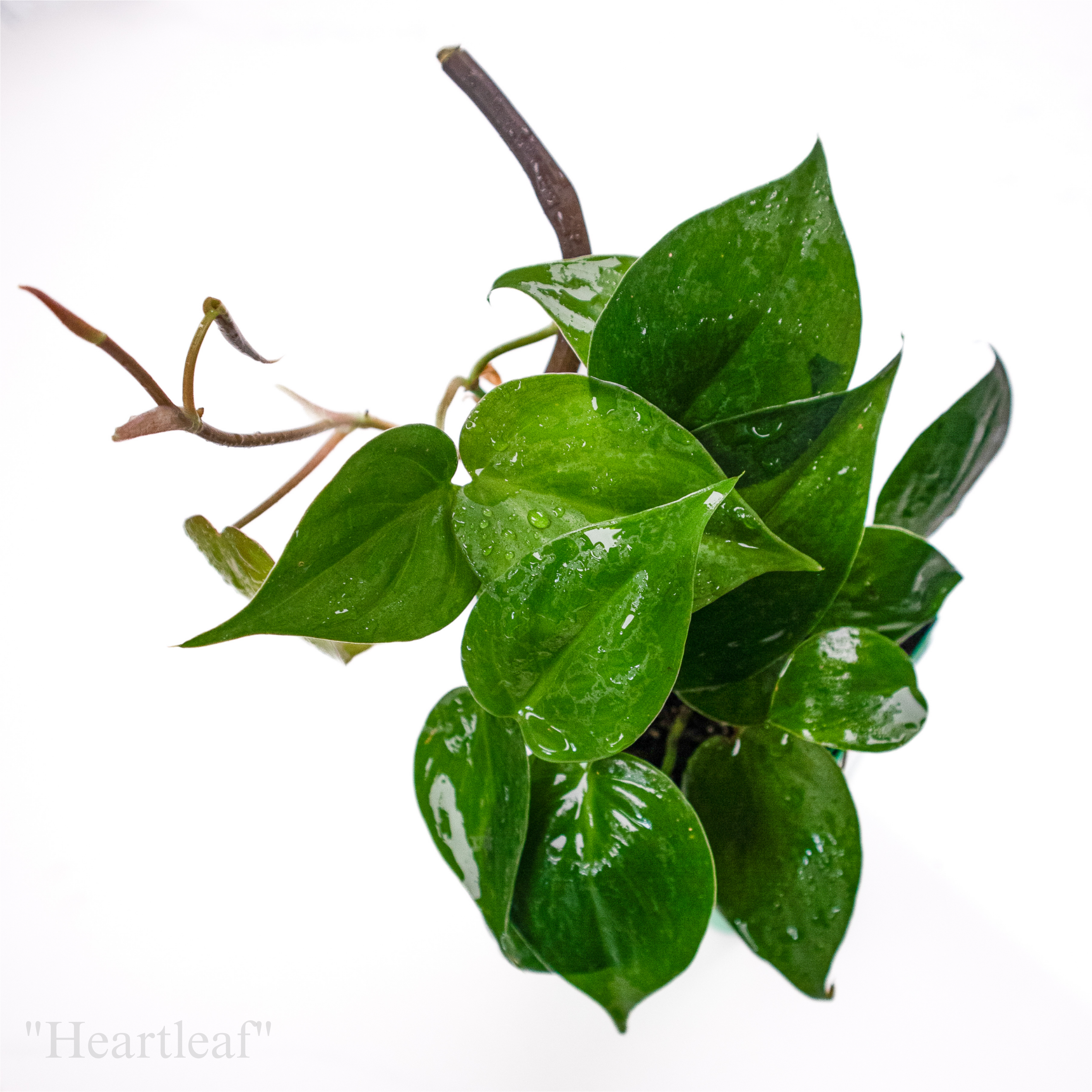
heart leaf pothos

heart leaf pothos Philodendron hederaceum “Heartleaf”

Sale price$25.37 Regular price$28.19
Save 10%

Shipping Estimate
USA
  • USA
  • CAN

Ships within 48 hours · Estimated delivery Jul 11 - Jul 16

Promo Codes Available:

For Your Every Summer RSVP, with Code: SUMMER15

Description

heart leaf pothos Philodendron hederaceum “Heartleaf”The Heartleaf Philodendron (Philodendron hederaceum) is a popular, low maintenance vining plant known for its glossy, heart shaped, solid green leaves. It is perfect for adding a lush, tropical feel to any space and makes a fantastic addition to bioactive setups for terrariums, vivariums, or paludariums due to its easy care nature and ability to thrive in various conditions. Care Instructions LIGHT. Prefers bright, indirect light but can tolerate

The Heartleaf Philodendron (Philodendron hederaceum) is a popular, low-maintenance vining plant known for its glossy, heart-shaped, solid green leaves. It is perfect for adding a lush, tropical feel to any space and makes a fantastic addition to bioactive setups for terrariums, vivariums, or paludariums due to its easy-care nature and ability to thrive in various conditions.

Care Instructions

LIGHT. Prefers bright, indirect light but can tolerate lower light levels. However, its growth may slow, and the leaves might lose some of their vibrancy in low light. In a bioactive setup, place it near a light source but avoid direct sunlight, which could scorch the leaves.

SOIL. A well-draining, loose soil mix is ideal. A blend of coconut coir, perlite, and orchid bark will help maintain aeration and proper drainage, which is essential for healthy root growth. In a bioactive environment, this mix will also allow decomposers like isopods and springtails to thrive by breaking down organic matter and enriching the substrate.

WATERING. Keep the soil consistently moist but not soggy. Let the top 1-2 inches dry out between waterings. In bioactive setups, the decomposers (springtails and isopods) will help balance moisture levels by consuming excess organic matter, which helps prevent over-watering. Avoid leaving the soil overly wet for extended periods.

HUMIDITY. Being a tropical plant, the Heartleaf Philodendron thrives in high humidity, making it ideal for bioactive setups. Aim to keep humidity levels above 60% to encourage healthy, lush growth.

TEMPS. Prefers warm temperatures between 65°F and 80°F (18°C to 27°C). Avoid placing it in drafty areas or areas with cold temperatures to prevent stress.

FERTILIZATION. During the growing season (spring and summer), feed with a balanced liquid fertilizer every 4-6 weeks. You can also use our dissolvable Mealworm Frass, produced by our mealworm colonies and enriched with a variety of vegetation, as a nutrient-pumped fertilizer. In the winter, reduce feeding as growth slows down.

Cohabitation with Bioactive Organisms

ISOPODS. Isopods are ideal for a Heartleaf Philodendron setup. These decomposers will break down dead plant matter, fallen leaves, and uneaten food, helping to maintain soil health and nutrient levels. The plant also benefits from the organic material provided by the isopods.

SPRINGTAILS. Springtails are great companions for Heartleaf Philodendron in bioactive setups. They help maintain soil health by consuming mold, fungi, and decaying organic matter. Their constant activity helps keep the environment clean while benefiting the plant by breaking down organic matter into nutrients.

Soil and Maintenance Tips

SUBSTRATE. A loose, well-draining mix is crucial. Use a combination of coconut coir, orchid bark, and perlite to allow for root aeration while ensuring that decomposers have the proper environment to thrive. You can also add a layer of activated charcoal at the bottom for better filtration and odor control.

HUMIDITY CONTROL. If needed, increase humidity by incorporating a shallow water dish or misting lightly once a day. The springtails and isopods will help keep the soil moist, and your plant will benefit from the additional humidity.

TRIMMING. Heartleaf Philodendron grows quickly and can be easily trimmed to maintain a neat appearance or encourage fuller growth. Periodically trim the vines to keep them in shape. You can propagate cuttings in water or soil, which is a great way to expand your collection.

PEST CONTROL. This plant is generally pest-resistant, but in a bioactive environment, springtails and isopods will help control minor pests such as mealybugs or aphids by feeding on their eggs or larvae.


With its vibrant, glossy, heart-shaped leaves, the Heartleaf Philodendron is a beautiful and resilient addition to any bioactive setup. It thrives alongside decomposers like isopods and springtails, which contribute to a healthy, nutrient-pumped environment. By mimicking its tropical habitat with proper humidity, light, and well-draining soil, you’ll create a thriving ecosystem where both your plants and bioactive creatures can flourish.

Shipping Notes
  • Free Standard Shipping on $100+ Orders to the USA.
  • Except Preorder products are shipped in 48 hours.
  • Delivery to the USA:
  1. Standard Shipping : 3-10 business days
  • If time is of the essence, please consider selecting expedited delivery for faster service.
Exchange/Return Notes
  • We offer a 30-day return/exchange service after receiving.
  • Final sale items are not eligible for returns or exchanges.
  • To process your return/exchange, please contact us at [email protected]
  • Please click here for more details>>> Return & Exchange Policy
SKU: 49273452606

Discover Niche Categories That Outsell heart leaf pothos

Top-Converting Item to Boost Your Average Order

4.2 ★★★★★
Based on 1057 reviews
Sort
Highest Rating
Newest First
Oldest First
Product Reviews
G
Verified Purchase
Gregory Delaney
West Palm Beach, US
★★★★★ 5
All aspects of comic art lettering
Format: Paperback
This is the ultimate guide for comic book lettering, It will make any struggling lettering artist into a pro.
WAS THIS REVIEW HELPFUL?YesReportShare
Reviewed in the United States on January 5, 2026
A
Verified Purchase
A.M.
Lowell, US
★★★★★ 5
It truly is the most Essential Guide
Format: Paperback
I've worked as a professional comic book letterer for more than a decade. I've had to learn a lot through trial and error since there was so little written about this technical field of work. Finally, there is now a book for amateur letterers to have all they need to understand the craft and for professional letterers to both reference and pick up new ideas from. This book isn't just a tutorial on "how to letter comics." This also showcases creative ways to letter, interesting techniques that even experienced letterers might not know about, and - what I found to be the most helpful - the realities of a letterer's freelance life and ways the write had worked to develop a good workflow and healthy work schedule to avoid burnout or physical strain. This is an engaging book, so even if you know how to letter well or you know nothing about lettering and want to understand the kind of work that letterers do, I highly recommend this as a great read. Through my experience, I developed very different methods than what this guide described, but both are valid and I even picked up new ideas and tried out new ways of doing things while reading this book. If you want to learn how to letter, buy this book. If you want to be a better letterer, buy this book. If you don't want to letter but you want to know more about how comics are made or how one freelances in this industry, this guide is great for that too. The only thing missing is a thorough explanation on how to develop one's own comic book fonts, but like the author said, that would take up an entire book in itself. Here's hoping one day there's a companion guide to comic book font creation, because I would love to learn more about that too.
WAS THIS REVIEW HELPFUL?YesReportShare
Reviewed in the United States on November 3, 2021
A
Verified Purchase
Anon
Louisville, US
★★★★★ 5
Truly Essential! The perfect guide to Comic Book Lettering!
Format: Paperback, Format: Paperback
I'm completely new to Comic Book Lettering with some experience in Graphic Design but I picked this up just for my curiosity. After taking a quick flip with the book, It does not disappoint and lives up exactly to the title. It TRULY is the essential guide to Comic Book Lettering. This book comes from Nate Piekos who is the founder of BLAMBOT (one of the most professional comic book lettering companies to date). He drops every bit of wisdom and experience he's ever received / gotten through into this book and the result speaks for itself. All the tools, techniques, tips, discussions, etc are found here. He goes through what he uses / recommends for programs and tools, breaks down the structures of what goes into comic book lettering (balloons / dialogue / captions / fonts / etc), teaches you how to create a useful / time-saving templates, gives you pointers even at the most subtle aspects of lettering, covering / creating dialogue balloons, covering / creating sound effects, covering / creating logos, etc. There's so much information and visual imagery here within these pages that I can talk about this book day and night.. and again: I'm completely new to this. The book is honestly that inspiring. I recommend this, without a doubt. A master class in comic lettering! Truly thankful for Nate Piekos creating this book as well as those that helped bring it to publication.
WAS THIS REVIEW HELPFUL?YesReportShare
Reviewed in the United States on October 26, 2021
H
Verified Purchase
Honest Reviews
Fort Morgan, US
★★★★★ 5
Truly "essential" for any letterer, whether casual or serious about the profession!
Format: Paperback
When I first got this book, I was a bit disappointed. I thought it was going to be detailing lettering by hand. It didn't. But guess what? It's better for it. As the author, Nate Peikos, demonstrates, the bulk of lettering now is done digitally and with good reason. So not only is this book incredibly inspiring for any graphic artist / letterer -- with its many examples of great lettering; its demonstration of useful techniques -- the author is so open and honest in his writing. While reading it, you don't feel that he's putting the job of lettering out of the reader's reach. In fact, he's putting it right within reach through a humility that is coupled with his exceptional skills. If you're an up-and-coming letterer, someone on the outskirts of lettering wanting to delve into it more professional (like myself), or even if you've had some work doing lettering, there is something for each type in this book. It's a book that I'll cherish and reference frequently, especially with all the examples that just ooze inspiration. My only regret is that I didn't know about some of these techniques a few years ago! But, nevertheless, I started implementing some of the techniques the first day after reading just a few pages. It reinvigorated my own desire to become a better and even semi-professional letterer, a very under-appreciated profession.
WAS THIS REVIEW HELPFUL?YesReportShare
Reviewed in the United States on November 5, 2021
S
Verified Purchase
Simon C
Alexandria, US
★★★★★ 4
A great overall book, with one critical omission.
Format: Paperback
This is a great book to illuminate the mysterious art of comicbook lettering. It goes deep into the practical details and theory required to make a graphic novel, manga, or superhero comic with the look and feel of a professional product. But comicbook lettering is actually more than a purely aesthetic art form, it plays a critical role in conveying meaning, emotional mood, and tone of voice. Along with the artwork and panel composition, the layout of the lettering and dialogue balloons is also critical to help guide the reader's eyes naturally from panel to panel. If you're curious about how graphic design for visual narrative works, this is an interesting and inspiring book. My only criticism is the conspicuous omission of perhaps the one topic this author is uniquely qualified to illuminate, and that is: the actual creation of the fonts themselves. I've admired Nate's Blambot comic fonts for a long time (and have purchased licenses for some of them), so I was looking forward to at least getting an overview of how he approaches this seemingly critical aspect of comicbook lettering. But no. He doesn't go into it even slightly, which is a shame, because this would have been the perfect book on the topic if he had. I understand that font design is a huge topic unto itself, but was disappointed that in a book of this size, there weren't even a few pages dedicated to discussing the process of making fonts for comicbooks. Literally anyone reading this book would want to know that information. Having said that, it's a great book, and I still enjoyed it very much. You'll probably be surprised by how much more there is to learn about this topic than you may have thought. Reading it will deepen your appreciation for an art form that, like a great movie score, is basically invisible when done very well, yet amplifies the emotional impact of each contributing discipline, and profoundly contributes to the enjoyment of the final experience.
WAS THIS REVIEW HELPFUL?YesReportShare
Reviewed in the United States on September 22, 2022

recommand products