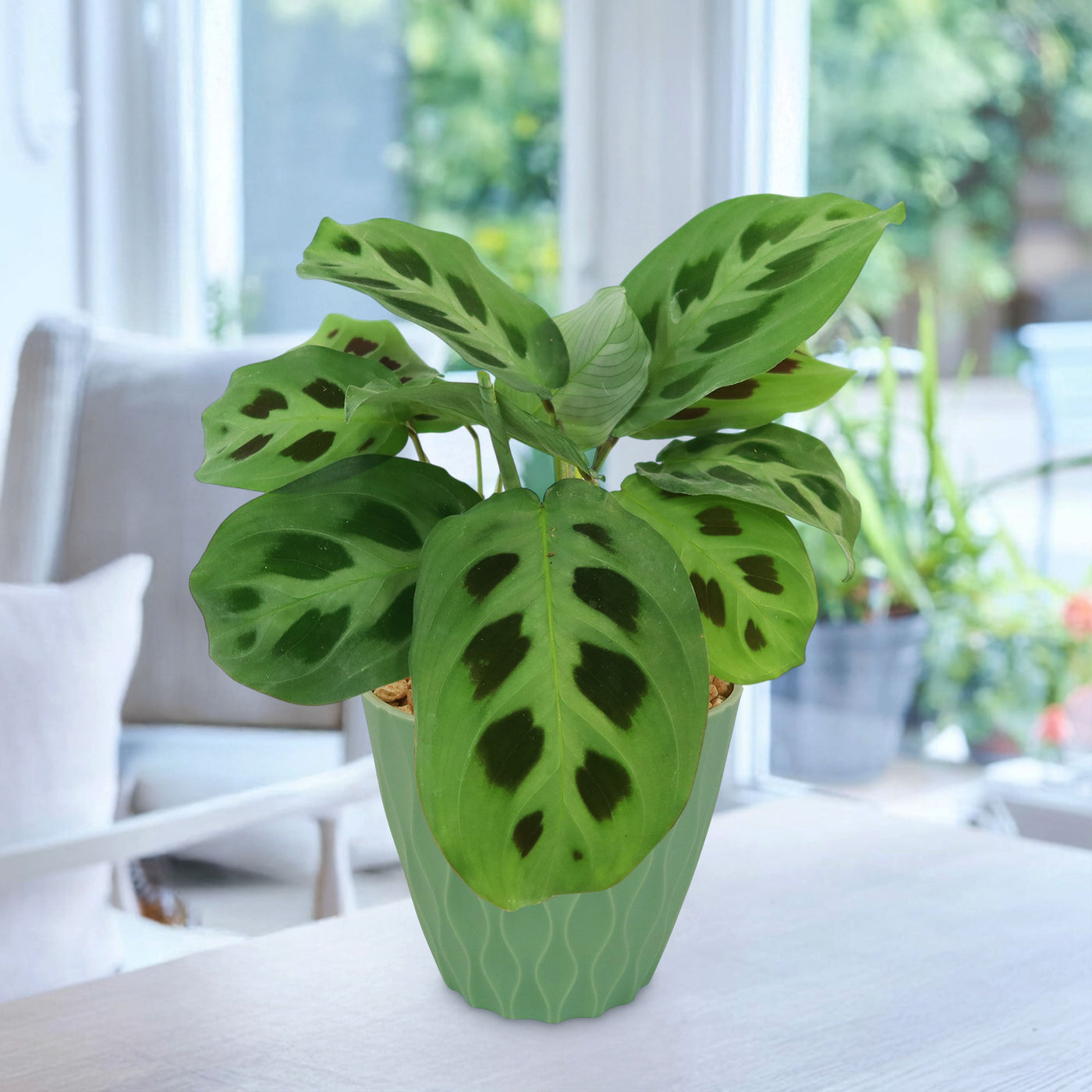
prayer plant indoor care Prayer Plant ‘Maranta leuconeura’
SKU: 40247565037
prayer plant indoor care

prayer plant indoor care Prayer Plant ‘Maranta leuconeura’

Sale price$22.71 Regular price$25.23
Save 10%

Shipping Estimate
USA
  • USA
  • CAN

Ships within 48 hours · Estimated delivery Jul 9 - Jul 14

Promo Codes Available:

For Your Every Summer RSVP, with Code: SUMMER15

Description

prayer plant indoor care Prayer Plant ‘Maranta leuconeura’The Prayer plant, known as Maranta leuconeura, is a popular choice among houseplant enthusiasts due to its stunning foliage and relatively easy care needs. Known for its uniquely patterned and colorful leaves, this plant adds a vibrant touch to indoor spaces, making it one of the most sought after houseplants. Those looking for a pet friendly plant will be pleased to know that prayer plants are non toxic to both pets and humans. The Prayer Plant is so

The Prayer plant, known as Maranta leuconeura, is a popular choice among houseplant enthusiasts due to its stunning foliage and relatively easy-care needs. Known for its uniquely patterned and colorful leaves, this plant adds a vibrant touch to indoor spaces, making it one of the most sought-after houseplants. Those looking for a pet-friendly plant will be pleased to know that prayer plants are non-toxic to both pets and humans.   

The Prayer Plant is so named for its unique habit of folding its leaves upward in the evening, as if in prayer. This remarkable movement is a natural circadian rhythm known as “nyctinasty,” in which the leaves respond to light levels by opening flat during the day and curling up at night. In addition to being closely related to the red prayer plant, this intriguing behavior gives any indoor garden a dynamic and lively feel. 

Native to South America, it is also called the “Rabbit Tracks” plant. The Green Maranta Prayer Plant is renowned for its unique patterned leaves, featuring light green backgrounds and dark green blotches along the central vein.

These distinctive spots create a visually appealing contrast and resemble animal tracks. This eye-catching foliage, combined with the plant's low-growing habit, makes it a perfect choice for table displays, shelves, or hanging baskets.

The Maranta leuconeura is a compact plant that typically reaches a mature size of 12 inches tall and 12 inches wide. In its natural environment, it grows as a ground cover, spreading low along the forest floor under the shade of taller trees.  

The Prayer plant flowers bloom in the spring with small, delicate, white, or pale lavender flowers on thin stalks. While not as showy as the foliage, these flowers add a delicate charm to the plant’s overall appearance. However, many people grow the Maranta green prayer plant primarily for its decorative foliage, as the blooms are typically short-lived and less prominent.  

When and How to Water Your Prayer Plant  

Even though your prayer plant can withstand some dry conditions, it still requires regular watering to thrive. These prayer plants are not highly drought tolerant, so do not allow them to completely dry out. It is critical to keep the soil moist but not soggy. Water the plant once the top inch of soil feels dry to the touch. Make sure the pot has a drainage hole to avoid waterlogging, which can lead to root rot. Avoid getting water on the leaves to prevent fungal diseases.

According to one theory, the prayer plant movement is intended to maximize water capture. During the day, they lower their leaves to absorb moisture and rain water, while at night, they move inward to retain water and direct any water to the center of the plant.   

In the spring and summer, during the growing season, you may need to water your prayer plant more frequently, possibly every 1-2 weeks, depending on the humidity levels in your home. In contrast, in the fall and winter, when the plant is in its dormant phase, you can reduce watering, allowing the soil to dry out slightly between waterings.

It's crucial to use room temperature water when watering your prayer plant, as cold water can shock the roots. Additionally, consider using distilled or filtered water to prevent the build-up of salts and chemicals from tap water, which can harm the plant over time. By following these watering guidelines and paying attention to your plant's moisture needs, you can help your Maranta leuconeura thrive and display its beautiful, patterned leaves.

Light Requirements – Where to Place Your Prayer Plant 

When growing indoors the prayer plant prefers bright, indirect light for at least 4-6 hours daily. Place your prayer plant near a window where it can receive filtered bright light or in a room with ample ambient light. Direct sunlight can scorch the leaves, so it's best to avoid placing them in harsh, direct light.

Additionally, they can tolerate low light conditions, though not extremely low ones. If your indoor space lacks natural light, you can supplement this houseplant with artificial grow lights to provide the necessary light intensity for your plant.

When considering outdoor conditions for your prayer plant, it's essential to replicate its preferred indoor environment.

If you choose to move your Maranta leuconeura outdoors, ensure it is placed in a shaded or partially shaded area. Direct sun light can be too intense for the prayer plant's delicate leaves and may lead to leaf burn.

By providing a sheltered spot with dappled sunlight or indirect light, you can create a suitable outdoor environment for your prayer plant to thrive. Remember to monitor the plant's response to its new outdoor location and adjust as needed to maintain optimal light conditions for healthy growth.   

Optimal Soil & Fertilizer Needs

The prayer plant thrives in well-draining, peat-based potting acidic soil that retains moisture without becoming waterlogged. A mix that includes peat moss, perlite, or sand can help maintain the ideal balance of moisture and aeration for your plant's roots. Instead, make or buy a well-draining potting mix, or ideally, use our specialized potting mix, opens in a new tab that contains 5 natural substrates and mycorrhizae to promote the development of a strong root system that helps your houseplant to thrive. Ensure the pot has drainage holes to prevent water from pooling at the bottom, which can lead to root rot. 

In terms of fertilizing your prayers plant, it's best to use a balanced, water-soluble NPK fertilizer with a ratio of 5-10-5. During the growing season in spring, you can fertilize your Maranta leuconeura once a year to provide essential nutrients for healthy growth. However, reduce fertilization frequency or stop altogether during the plant's dormant period in fall and winter. Over-fertilizing can cause salt build-up in the soil, leading to nutrient imbalances and potential damage to the plant.  

Hardiness Zones & More

For indoor growing prayer plants, they prefer average room temperatures ranging from 65-75°F. It's essential to avoid exposing the plant to temperature extremes or drafts, as they can stress the plant and affect its growth. Maintaining a consistent temperature within this range will help your plant flourish indoors. 

For outdoor cultivation, the prayer plant is typically suited for USDA zones 11-12, where temperatures remain consistently warm throughout the year. If you live in a region within these zones, you can consider growing your Maranta leuconeura outdoors in a shaded or partially shaded area. Ensure the plant is protected from direct sunlight to prevent leaf burn and maintain optimal growth conditions. By selecting a suitable spot in your garden or patio that mimics the plant's preferred indoor environment, you can provide a conducive outdoor setting for your prayer plant. 

When it comes to humidity requirements, the prayer plant thrives in moderate to high humidity levels. Indoor environments can often be dry, especially during the winter months when heating systems are in use. To increase humidity around your Maranta leuconeura, you can place a humidifier nearby, use a pebble tray filled with water, or group plants together to create a microclimate with higher humidity. Regularly misting the plant's leaves can also help increase humidity levels and prevent them from drying out.

Wildlife – Prayer Plant Attracts the Following Friendly Pollinators 

The prayer plant, Maranta leuconeura, attracts pollinators and insects through its unique and vibrant flowers. The plant produces small, white flowers with delicate purple spots that are visually appealing to pollinators like bees, hummingbirds, and butterflies. These insects are drawn to the flowers' nectar and play a crucial role in pollinating the plant, facilitating the production of seeds for future growth. Additionally, the plant's foliage, with its striking patterns and colors, can also attract other beneficial insects like ladybugs and lacewings, which help control pest populations in the surrounding environment. 

Butterflies
Bees
Hummingbirds
Lady Bugs
Multi Pollinators
Other Birds

Toxicity: According to the ASPCA, Maranta leuconeura is non-toxic to cats and dogs, and humans. This makes it a pet-friendly option for homes with pets, as it doesn’t pose a risk of toxicity if accidentally ingested by cats, dogs, or other pets. This feature, along with its beautiful foliage, makes the Prayer Plant a popular choice for pet owners who want to add greenery to their homes without worrying about harmful effects on their animals. 

How to Propagate a Prayer Plant 

To propagate the prayer plant, you can use division or stem cuttings. Division involves separating the plant at the roots into smaller sections, each with a healthy root system and growth points. When taking stem cuttings, select a healthy stem with several leaves and nodes, then place it in water or a moist potting mix to encourage root development. Ensure the cuttings have adequate humidity and warmth to support root growth. With proper care and attention, you can successfully propagate your prayer plant to expand your collection or share it with fellow plant enthusiasts. 

Key Takeaways

  1. The prayer plant, known for its striking foliage and unique leaf movements, is a popular indoor plant due to its vibrant colors and slow growth rate.
  2. According to the ASPCA, it is safe for homes with cats and dogs, as it is non-toxic.
  3. Its leaves fold up at night as if in prayer, a fascinating response to light levels.
  4. Though it does not prefer prolonged drought-tolerance, it can withstand short dry periods and prefers consistently moist, well-draining soil.
  5. It produces small, delicate white or lavender flowers, though it rarely blooms indoors.

The Bottom Line 

Overall, the prayer plant (Maranta leuconeura) is a captivating houseplant known for its stunning foliage with intricate patterns that fold up at night, resembling praying hands, hence its name. This plant not only adds a touch of elegance to indoor spaces but also attracts pollinators with its charming flowers. To care for your prayer plant, ensure it receives indirect light, consistent moisture, and high humidity levels. Avoid direct sunlight and overwatering to prevent root rot. Regularly misting these indoor plants and occasionally wiping their leaves with a damp cloth can help maintain their lush appearance. By providing the right conditions and attention, you can enjoy the beauty of the prayer plant while creating a healthy environment for it to thrive in your home. Order your very own prayer plant for sale today! 

Shipping Notes
  • Free Standard Shipping on $100+ Orders to the USA.
  • Except Preorder products are shipped in 48 hours.
  • Delivery to the USA:
  1. Standard Shipping : 3-10 business days
  • If time is of the essence, please consider selecting expedited delivery for faster service.
Exchange/Return Notes
  • We offer a 30-day return/exchange service after receiving.
  • Final sale items are not eligible for returns or exchanges.
  • To process your return/exchange, please contact us at [email protected]
  • Please click here for more details>>> Return & Exchange Policy
SKU: 40247565037

Discover Niche Categories That Outsell prayer plant indoor care

Top-Converting Item to Boost Your Average Order

4.7 ★★★★★
Based on 1248 reviews
Sort
Highest Rating
Newest First
Oldest First
Product Reviews
C
Verified Purchase
Chris Slayton
Grantham, US
★★★★★ 5
Excellent book on the historicity of the resurrection!
Format: Paperback
There are many books devoted to the resurrection of Jesus. Licona’s book is unique in that it takes “a new historiographical approach” to the resurrection by applying the principles of secular historical analysis to the question of whether Jesus rose from the dead. In applying the historical method, Licona seeks to understand the objective truth about what happened regardless of his subjective Christian beliefs on the matter. In fact, Licona readily admits his personal bias – or “horizon” – and his desire to see the historicity of the resurrection confirmed. However, as he points out, all historians have a “horizon” of some sort, and in his research and analysis, Licona is careful – some would say too careful perhaps – to set aside his “horizon” in order to objectively consider the evidence. Licona considers a variety of historical sources pertaining to the resurrection, both biblical and extra-biblical, weighing each source on a spectrum of historicity – from “certainly not historical” to “certainly historical.” Licona seeks to find the best explanation for the evidence according to five criteria: plausibility, explanatory scope, explanatory power, less ad hoc, and illumination. After examining the evidence, Licona concludes that there are three virtually undisputed facts that he calls “historical bedrock:” (1) Jesus died by crucifixion; (2) Jesus’ disciples had experiences that led them to believe that he had been resurrected; and (3) Paul converted after experiencing what he interpreted as a post-resurrection appearance of Jesus. Licona then weighs five naturalistic hypotheses for the resurrection, demonstrating how each of these views falls short of providing the best explanation for the historical bedrock. Licona ultimately concludes that the resurrection is the only hypothesis that meets all five criteria. In other words, Jesus’ resurrection from the dead provides the best explanation of the historical bedrock, and the historian is warranted in regarding Jesus’ resurrection as an actual historical event. Licona’s historiographical approach to the resurrection produces a very strong case for the resurrection of Jesus of Nazareth. I particularly appreciated Licona’s treatment of “horizon.” Licona is transparent about his Christian beliefs, but he demonstrates a willingness to go where the evidence leads and bent over backwards to remain objective. For example, Licona does not include the empty tomb as part of the historical bedrock since many scholars dispute the empty tomb. Some would take exception to this, but I believe it actually strengthens the case for the resurrection and leaves the skeptic with very little to argue. In other words, Licona is able to make a convincing case for the resurrection without considering what many Christians consider the best evidence – the empty tomb! I found the book very helpful, but keep in mind it is an academic work, and at over 600 pages, it is not necessarily an easy read. That being said, Licona’s book is outstanding and is a “must-read” for anyone seeking to understand the historical evidence for the resurrection or seeking to counter skeptical arguments against it. This is a great book to add to your library.
WAS THIS REVIEW HELPFUL?YesReportShare
Reviewed in the United States on November 19, 2021
J
Verified Purchase
Jamie N.Campbell
Boise, US
★★★★★ 5
A fresh historical perspective to the Resurrection! -by Jamie D.
Format: Paperback
Although there have been countless books written about the Resurrection of Jesus Christ from a theological perspective, few have successfully tackled the Resurrection from the historical perspective. Dr. Licona has successfully done just that, applying a historical methodology to the Resurrection of Jesus Christ. In his opening chapter, Dr. Licona begins by defining what is meant by history, the methods that one employs to study history as well as the limitations that comes when one studies history. It is here that he introduces useful terms to the readers that are re-introduce in subsequent chapter. Horizon, a synonym for bias, can play a critical role in how one perceives and presents history to others. To reduce horizon, Dr. Licona believes that there are six main principles that can help an historian maintain a more objective perspective when reporting history. One of these main principles is that of “historical bedrock” a consensus of what is majorly accepted and infrequently debated. Not only is a consensus important when one considers a hypothesis but a hypothesis that has a solid explanation is important as well. For a hypothesis to have the weight of believability, it must stand up to five different criteria as well. In chapter 2, Dr. Licona then turns his attention to the subject of miracles and their role in history and successfully debunks the most common presuppositions cited by the world’s most famous skeptics against the historicity of miracles. It is in chapter 3 that Dr. Licona employs the historical method to the Resurrection of Jesus Christ by examining both biblical and extrabiblical writings spanning within 200 years of the event. Upon the review of these various writings, he assigns a rating from “unlikely, possible-minus, possible, possible-plus, highly probably, indeterminate and not useful” to determine if they contain any historical weight in its regard to the independent testimony of the Resurrection of Jesus Christ. The historical bedrock principle is re-introduced into chapter 4 and is applied not only to the death of Jesus Christ but to His life as well. Dr. Licona notes that there many aspects of the Jesus’ life and death that are considered historical bedrock even among those with varied agendas. Dr. Licona concludes his book by examining some of the leading naturalistic hypotheses touted from the most prominent liberal and skeptics in this field. By employing the five criteria that gives the historian the most successful explanation, Licona concludes that it is not the naturalistic hypothesis which fits regarding the Resurrection, but the supernatural one. The supernatural hypothesis of the Resurrection is the most solid explanation since it fulfills both historical bedrock as well as meeting all five criteria for the best explanation and thus should be considered by any credible historian as a well attested event that occurred in the past. In summary, I highly recommend this book. As a believer of 40+ years, I learned things about my faith that I did not know about before. For example, I learned how the kerygma, an early Christian creed, lends historical weight to the Resurrection. My advice for believers is not to be intimidated by the voluminous size of this book. It was certainly well worth the read. Dr. Licona has done an excellent job in presenting the material through the perspective of a historian, so much so that one may temporarily forget that he is a theologian as well! Despite the myriad of footnotes peppered through the pages, the book was very easy to read and digest. In short, a must read for those who want to have a better understanding in how to engage skeptics from a different perspective when discussing the Resurrection of Jesus Christ. Get it! You’ll feel that much smarter and grounded in the faith once you’ve read the last page!
WAS THIS REVIEW HELPFUL?YesReportShare
Reviewed in the United States on December 5, 2021
J
Verified Purchase
John Keller
Whiting, US
★★★★★ 5
Don’t be intimidated...it's detailed, but systematic and rational
Format: Paperback
Don’t be intimidated by this 700-page tome. Once you factor in the bibliography, index and footnotes, the body of the work is only about 400 pages. Licona includes an all-important, detailed outline for quick reference back to key topics, and it’s valuable because of the variety of issues he tackles. I’d say, he does a wonderful job of giving us an objective, systematic approach to addressing the historicity of the events following Jesus’ crucifixion. Licona lays the groundwork for his examination of the issue by considering the philosophy of history and tackling things like what is truth, what makes something a historical fact, who has the burden of proof, and is history a science? As a needed addition to this philosophical introduction, he spends time outlining the methods he will use to approaching relevant texts, claims of miracles, and consensus facts. Most important, I think, to his methods was his self-examination of potential bias due to personal belief and worldview. He addresses what he calls a personal “horizon” that historians must be set aside in order to be objective and get at the truth. He certainly points it out in others along the way and makes it clear throughout the book that he is trying to identify and eliminate any potential bias he may bring to the process. In his investigation, he addresses the most important sources related to Jesus’ life, crucifixion and claims of the resurrection. He deals with both Christian and non-Christian sources that were written immediately following the events as well as within the following 200 years. Licona makes the case for authenticity and credibility of the most important sources, and where there have been challenges to these sources over the centuries, he addresses those challenges head on. Ultimately, he boils the events, claims, facts and sources down to what he calls the “bedrock” pertaining to the fate of Jesus. This bedrock consists of three facts that are well supported by authentic, textual evidence which enjoy nearly consensus support by all historians (both Christian and non-Christian). For Licona, the bedrock which need be answered are (1) Jesus’ death by crucifixion, (2) the claims Jesus appeared to individuals and groups following his burial, and (3) the conversion of the Church persecutor, Paul. Ultimately, Licona breaks down six different hypotheses which claim to explain the bedrock and he uses systematic criteria for weighing those hypotheses. He concludes that a resurrection is the best explanation but admits that it’s only by setting aside a naturalistic worldview that one can embrace the conclusion. I like Licona’s methodical approach but would offer two critiques. Do we really need all the Greek citations written out? I understand that there is nuance and variations in meaning for words that are used in the original sources, but to give us all the text and the translation seemed superfluous. Second, I think it was a cop-out to skim the importance of the empty tomb. Other historians put the fact of the empty tomb as one of their top facts to be explained, but Licona punted on it because he didn’t feel it received universal consensus. Consensus aside, the fact of the empty tomb does receive support by a strong majority of scholars, even ones that do not support the resurrection. This cross-section of scholarly support, along with the volume and type of textural evidence, namely the confirmation by Christian enemies, should have elevated the fact of the empty tomb to the “bedrock” which require explanation.
WAS THIS REVIEW HELPFUL?YesReportShare
Reviewed in the United States on April 12, 2021
E
Verified Purchase
Elly
Bozeman, US
★★★★★ 5
so helpful
Format: Paperback
got for school and used it a lot its been so helpful
WAS THIS REVIEW HELPFUL?YesReportShare
Reviewed in the United States on February 3, 2026
E
Verified Purchase
E
Battle Creek, US
★★★★★ 5
Great price...
Format: Paperback
Needed this for my EKG course. Price was right.
WAS THIS REVIEW HELPFUL?YesReportShare
Reviewed in the United States on February 1, 2026

recommand products