SKU: 39323472369
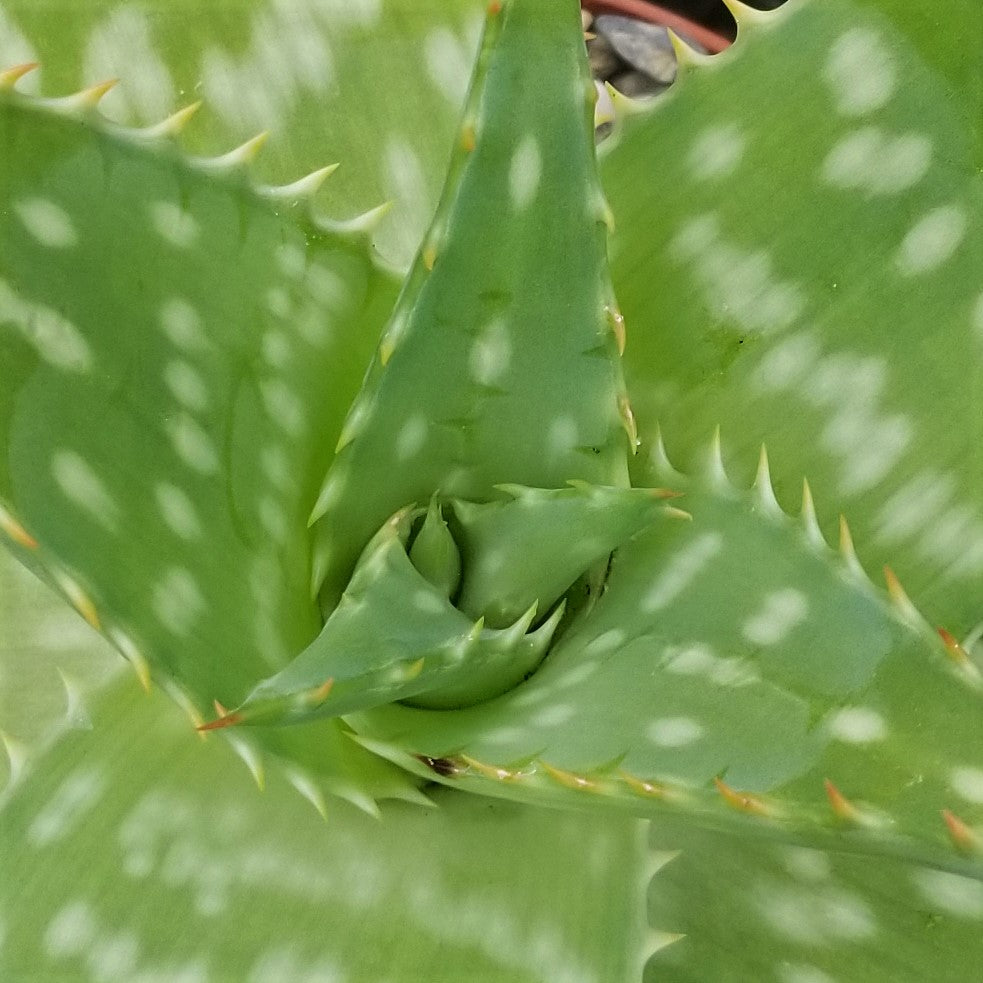
spotted aloe vera plant

spotted aloe vera plant Aloe maculata – Soap Aloe

Sale price$24.57 Regular price$27.30
Save 10%

Shipping Estimate
USA
  • USA
  • CAN

Ships within 48 hours · Estimated delivery Jul 11 - Jul 16

Promo Codes Available:

For Your Every Summer RSVP, with Code: SUMMER15

Description

spotted aloe vera plant Aloe maculata – Soap AloeIntroducing the Aloe maculata, known as Soap Aloe, which is the most popular type of ornamental Aloe plant. It gets its name 'soap aloe' because of its thick, gel like sap found in the leaves was traditionally used as a natural soap substitute for cleansing purposes. The Aloe maculate is also known as zebra aloe, an Aloe Saponaria. Like Aloe vera, Aloe maculate is closely related and is also traditionally used for treating skin complaints,

Introducing the Aloe maculata, known as Soap Aloe, which is the most popular type of ornamental Aloe plant.  It gets its name 'soap aloe' because of its thick, gel-like sap found in the leaves was traditionally used as a natural soap substitute for cleansing purposes. The Aloe maculate is also known as zebra aloe, an Aloe Saponaria.

Like Aloe veraAloe maculate is closely related and is also traditionally used for treating skin complaints, inflammation, respiratory, muscular-skeletal, poisoning, circulation, and endocrine system diseases.


Native to South Africa, this soap aloe has gained popularity worldwide for its striking foliage and beautiful flowers.

It features rosettes of thick, fleshy leaves that grow in a spiral pattern. The leaves are typically green, but they can develop reddish or brownish spots as the plant matures, giving it a unique and eye-catching appearance.

The leaves have toothed margins and are armed with small spines along the edges.

Aloe maculata can reach grow up to 2 feet tall and wide. However, the size can vary depending on the growing conditions and care provided. It is a relatively compact plant, making it suitable for both indoor and outdoor cultivation.

The Aloe maculate flowers produce tall, upright flower spikes that can reach up to 3 feet in height. The flowers are tubular and typically orange or red in color, attracting pollinators such as bees and butterflies. The blooming period usually occurs during the spring or summer months, adding a vibrant touch to your garden or indoor space. 

When and How to Water Your Aloe maculata

To keep your Aloe maculata happy and healthy, it's best to water it deeply but less frequently. Allow the soil to dry out between waterings to prevent overwatering, which can lead to root rot. A good rule of thumb is to water your Aloe maculata when the top inch of soil feels dry to the touch. 

In the spring and summer, during the growing season, you can water your Aloe maculata about once every two weeks. In the winter months, when the plant goes into a dormant period, you can reduce watering to once a month or even less, depending on the moisture level of the soil. 

Remember, it's always better to underwater than to overwater your Aloe maculata. These succulent plants are excellent at storing water in their fleshy leaves, so they can tolerate periods of drought quite well. Just make sure not to let the soil stay constantly wet, as this can lead to root issues. 

Light Requirements - Where to Place Your Aloe maculata

When growing indoors, the Aloe maculata thrives in bright, indirect light when grown indoors. Place it near a sunny window where it can receive several hours of bright, filtered sunlight each day. Avoid placing it in direct sunlight, as this can scorch the leaves. If you notice the leaves stretching or becoming pale, it may be an indication that the plant is not receiving enough light. Consider supplementing with artificial grow lights to provide the necessary light intensity. 

When grown outdoors, your soap aloe prefers full sun to partial shade. It can handle direct sunlight, but it's important to acclimate the plant gradually to prevent sunburn. Start by placing it in a partially shaded area and gradually expose it to more sunlight over time. This will help the plant adjust and avoid leaf damage. If you live in a region with hot, intense summers, providing some afternoon shade can be beneficial to protect the plant from excessive heat. 

Remember, finding the right balance of light is crucial for the health and growth of Aloe maculata. Observe how the plant responds to its current light conditions and make adjustments accordingly. With the right amount of light, your Aloe maculate soap aloe will thrive and display its beautiful, spiky green leaves throughout. 

Optimal Soil & Fertilizer Needs 

The soap aloe favors very airy, sandy soil that drains well. Planting them in ordinary soil will result in compacted roots, stunted growth, and most likely root rot. Instead, make or buy a well-draining potting mix, or ideally use our specialized succulent potting mix that contains 5 natural substrates and mycorrhizae to promote the development of a strong root system that helps your succulent to thrive. 

When it comes to fertilizing, Aloe maculata doesn't require heavy feeding. In fact, it's best to be conservative with fertilizer application. During the active growing season in spring, you can use a balanced (5-10-5), water-soluble NPK fertilizer diluted to half the recommended strength. Apply the fertilizer once a year to provide a gentle nutrient boost to the plant. 

However, it's important to note that Aloe maculata is a relatively low-maintenance plant and can do well even without regular fertilization. If you prefer a more hands-off approach, you can skip the fertilizer altogether and rely on the nutrients present in the soil mix. 

Remember, the key is to provide well-draining soil and be mindful of the fertilizer application. With the right soil conditions and occasional nutrient boost, your Aloe maculata will thrive and bring beauty to your space. 

Hardiness Zones & More 

When growing indoors, the Aloe maculata can tolerate a wide range of temperatures, ideally between 60°F and 85°F. It's important to avoid exposing the plant to extreme temperature fluctuations, such as placing it near drafts or heating vents. As for humidity, Aloe maculata is relatively tolerant and can handle average indoor humidity levels. However, it appreciates a slightly drier environment, so there's no need for extra humidity measures. 

When growing soap aloes outdoors, your soap aloe is generally suited for hardiness zones 9 to 11. It thrives in warm climates and can handle mild frost, but prolonged exposure to freezing temperatures can damage the plant. If you live in a region with colder winters, it's best to grow Aloe maculata in containers that can be brought indoors during the colder months or provide protection, such as covering the plant with a frost cloth. 

Remember, Aloe maculata is a resilient plant, but it's always a good idea to provide it with the optimal temperature range and protect it from extreme conditions. Whether indoors or outdoors, maintaining a comfortable temperature and avoiding prolonged exposure to freezing temperatures will help your Aloe maculata stay healthy and happy. 

Aloe maculata Propagation

Aloe maculata can be propagated through various methods, including offsets, seeds, or stem cuttings. Offsets, also known as "pups," are small plantlets that grow from the base of the mother plant. These can be carefully separated and replanted to establish new plants. Seeds can be collected from mature flowers and sown in well-draining soil. Stem cuttings can also be taken and allowed to dry before being planted in suitable soil. 

Key Takeaways 

  1. The Aloe maculate (Soap Aloe) is a stunning succulent plant native to the warm desert regions of South Africa.
  2. It features rosettes of fleshy leaves with eye-catching spots, and when mature, it produces tall flower spikes with vibrant bright red or coral-orange flowers.
  3. This plant is relatively compact, making it suitable for indoor and outdoor cultivation.
  4. For care, it thrives in well-draining soil, minimal watering, and soap aloes require bright light but can tolerate some shade.
  5. This plants gel is traditionally used for many medicinal properties by locals, including treating skin complaints, inflammation, respiratory, muscular-skeletal, poisoning, circulation, and endocrine system diseases.
  6. Don't miss out on this opportunity to add something truly exceptional to your garden. Order your very own Aloe maculata today!
Shipping Notes
  • Free Standard Shipping on $100+ Orders to the USA.
  • Except Preorder products are shipped in 48 hours.
  • Delivery to the USA:
  1. Standard Shipping : 3-10 business days
  • If time is of the essence, please consider selecting expedited delivery for faster service.
Exchange/Return Notes
  • We offer a 30-day return/exchange service after receiving.
  • Final sale items are not eligible for returns or exchanges.
  • To process your return/exchange, please contact us at [email protected]
  • Please click here for more details>>> Return & Exchange Policy
SKU: 39323472369

Discover Niche Categories That Outsell spotted aloe vera plant

Top-Converting Item to Boost Your Average Order

4.3 ★★★★★
Based on 86 reviews
Sort
Highest Rating
Newest First
Oldest First
Product Reviews
Z
Verified Purchase
Zen
Belleville, US
★★★★★ 5
Gripping & Enthralling
Format: Kindle
Get this book, and jump on the thrill ride. Savage war dogs in full plate armor, human sacrifice on an industrial scale, cannons firing grapeshot point blank into charging hordes of unsuspecting warriors, intense duels within the Spanish and Native groups... this book is graphic and hard to put down. Just be aware that as pt. 1 of a trilogy, it WILL leave you hanging, and wanting more. I suppose that is just the nature of the beast... and we must patiently await pt. 2. Far more historical than a fantasy, but more fantastic than a history... this novel falls almost perfectly into that middle ground, sweet spot. It is extremely well researched, with few liberties taken, so you really feel like you are observing things that could very well have transpired. However, it goes beyond a flat, boring recreation of the extant journals and histories of the conquest of New Spain, and introduces vivid characters, visions, dreams, and witchcraft to bring the tale to life. Historians might appreciate the graphic and accurate depictions of battles and intrigue, and fantasy buffs might dig the subplots involving mushroom visions, metaphysical "gods," and a young witch in Tenochtitlan (being stuff that couldn't be derived from source material and must come from the prolific mind of Mr. Hancock). Some might prefer these things stay separate and "never the twain shall meet," but there are books enough for purists out there. What Graham Hancock has done is present a page-turning story which fully draws the reader into a world which is a fairly good estimation of that world that existed when Cortez & his worldview met the Mexica & the Maya... and supplanted theirs. Given that most everyone on Earth already knows this story--and how it ends--it was IMHO a very wise decision for the author to add drama and tension by fleshing this out into a "fictional" novel. I would say the breakdown is 1/3rd non-fiction, 1/3rd logical extrapolations from what we know, and 1/3rd pure fantasy. I honestly can't say which part I prefer. Just do yourself a favor and read this.
WAS THIS REVIEW HELPFUL?YesReportShare
Reviewed in the United States on March 6, 2014
G
Verified Purchase
Gsorme
Natrona Heights, US
★★★★★ 4
Very impressive
Format: Paperback
I approached this one with caution and came away impressed, glad to have read it, and looking forward to the sequel. It's a fascinating and occasionally breathtaking novel. Hancock has a knack for writing compelling fiction. It's funny: often when people write reviews of his non-fiction books they'll say they read like good thrillers. This one is compelling as fiction but also had enough historical detail to keep me interested beyond the plot and to make me think about the Spanish conquest of Mexico in a different light. I was very grateful for the endnote by Hancock giving an overview of the types of "fictional" elements he introduced into the book (such as combining a couple of historical events into a single event in order to keep the appropriate pace for a novel) because this clarified things and allowed me to come away from the book with a deeper overall understanding of that period in history--which Hancock really does bring alive. Granted, this is Hancock's take on it--even non-fiction historical books have an author's "take" on events--but it seems to be a very well-informed take. Mixed in are supernatural elements and hints of the non-orthodox elements of history that Hancock is known for investigating in his non-fiction. For me, the blend was good. It's not a perfect novel. For example, the style of switching perspective from character to character from short chapter to short chapter was a bit jarring at first; I found it unnecessary and it ended up taking me out of the narrative for a few short moments. (Perhaps this was done to "hit the ground running" and introduce the large cast of characters and plot threads quickly; still, for me it was too much at first.) However, this stylistic approach shifts as the book goes on; the sequences become longer and occasionally blend together. Ultimately this worked, especially given the large cast and numerous plots the book juggles. If it hadn't worked, I would've put the book down; as it was, I did end up turning pages (on my Kindle) rather quickly and not getting bored. There is an immense amount of blood and gore. Very graphic. I won't pass judgment on it. It did give a pretty visceral impression of the whole human sacrifice element of the Mexica and other peoples, and of what battle was probably like at the time. Character-wise the book is diverse and interesting. There are a few semi-saccharine moments and lightly-drawn characters, but in general all are developed to help drive the story forward and to offer possible insights into their historical counterparts. Ultimately I guess we could call this a "sprawling epic," one that wraps up the first part of its story at the end but leaves a huge section to be developed in the next installment. I hope we don't have to wait too long. As I said at the beginning of this review, I didn't really know what to expect from this book but it really was quite fluid, exciting, surprising, and enlightening. Very impressive.
WAS THIS REVIEW HELPFUL?YesReportShare
Reviewed in the United States on August 3, 2013
J
Verified Purchase
Jason M.
Battle Creek, US
★★★★★ 5
Graham Hancock has woven a compelling tale of historical fiction that does not feel like history or fiction
Format: Kindle
This has been a relentless and compelling read from page one and comes from one of the most innovative thinkers of our time. Graham Hancock has woven a compelling tale of historical fiction that does not feel like history or fiction. Its characters are real and relatable for their humanity, their virtues, their vices, and their corruption. I especially enjoy his characterization of Montezuma and Cortes, two iconic characters from the pages of history who become living, breathing, understandable humans for the readers. The supernatural elements of the story are undeniably present, but they are handled in a way that blends into the tapestry of the story rather than as silly plot devices. Also, those same supernatural elements help throw into sharper relief the unimaginable brutality and horror of which both of these great civilizations on a collision course were capable. The violence is brutal and horrific, no doubt, but for me the gentleness and humanity of the author in describing it softens its impact. Also, even though the book ventures into some very dark, cruel times in human history, the goodness and humanity of many of the characters prevents the story from becoming a tale of despair or hopelessness. I am a fan of Graham Hancock's non-fiction work, and this book firmly cements him as a fiction author I will be revisiting. Superb!
WAS THIS REVIEW HELPFUL?YesReportShare
Reviewed in the United States on April 28, 2015
A
Verified Purchase
Amazon Customer
San Leandro, US
★★★★★ 5
Cortes sails out of Cuba with a few hundred men under bad circumstances. He brings a priest along who rapes ...
Format: Paperback
Graham Hancock's War God is a novel about Cortes, the Spanish conquistador, taking over Central America in the 16th century. Although fiction, the author tells most of the story through the eyes of the Mexicas, Aztecs, Mayans, and Tlascans in the 1520s. The book begins with Montezuma tripping out on mushrooms, praying to the god Hummingbird, and sacrificing thousands of people on his pyramid. He is preparing for the return of Quetzalcoatl and wants to be ready. Two of the main characters, Malinal and Tozi, escape to influence history. Cortes sails out of Cuba with a few hundred men under bad circumstances. He brings a priest along who rapes and murders children. Other generals and captains help him first take over Ponchantan by using cannons and guns which the Mayans believe are supernatural powers. They defeat tens of thousands of people with advanced weaponry. Disappointed the city doesn't have much gold, they loot nearby towns and come up with almost nothing. They find their way to Tenochtitlan and take over instantly. Montezuma believes Cortes is Quetzalcoatl, the plumed serpent god, and doesn't even put up a fight. My Review: I bought this book because I like Graham Hancock's work on aliens and Ancient Aliens. I thought the story would have more of a supernatural twist. Tozi, one of the supporting characters, could turn invisible, but that was the extent of magic. The book fits in better with historical fiction. The story was an amazing epic. Hancock researched every angle possible, and put it into a highly entertaining story while teaching the reader about Central American history. I really loved the character of Malinal, a young woman forced into being a sex slave. Tozi the teenage witch was also interesting as she escaped from the sacrifice of Montezuma. Cortes was portrayed as a thoughtful leader who sought new lands and gold. I really enjoyed the book, but I do have one criticism. Hancock can get very wordy per my reading tastes, especially in battle scenes. Otherwise, this was a terrific read for anyone who loves history. 4.5/5 Stars http://dinaraeswritestuff.blogspot.com/
WAS THIS REVIEW HELPFUL?YesReportShare
Reviewed in the United States on October 11, 2015
A
Verified Purchase
Alexander P. Simack
Houston, US
★★★★★ 5
Hancock continues his exploration of good and evil -- Spoiler alert!
Format: Paperback
In this his second historical novel Graham Hancock continues his epic saga of good and evil, ancient civilizations, religions, the paranormal, and more. His recounting here of the warfare and perversity in the time of Cortes and Moctezuma is unflinching. One wonders at times what holds him in balance against the madness and carnage he depicts. There are romantic elements in the story, and a great innocence presented in the points of view of several young people of the time, and even in the personality of Cortes there are winsome elements presented, of which he must have held several in order to have become the inspired leader he became. One fascination I found is the possibility that the evil demon god of the Mexicas (popularly but inaccurately known by most as the Aztecs), Hummingbird (I won't attempt the Mexica spelling here!) may simply have been another face of the Christian god Peter, not the Peter of the New Testament but the later Peter of the Inquisition and the New World conquest. And what is this demon god up to today? I have been unable to find an update as to when Part Two of this story may be published. It does seem that GH, from a perusal of his fascinating Facebook page (see Author.GrahamHancock) has been working on it. For me it almost seems Part One is sufficient. I can fill in the outlines and projections from my own imagination. But this book is a splendid attempt at finding a mass audience, toward gaining a readership of awakening souls to help renovate our present day logjam and remove the Moctezuma's of our time. But will we, as Cortez, find ourselves unable to truly create something better? For interested readers I recommend several writers -- Jim Marrs on the Nazis' continuation after WWII, also his "Alien Agenda," David Wilcock's (a good friend and interviewer of GH) and Wes Penre's works, much of which are free online. The only real revolution is in the human heart.
WAS THIS REVIEW HELPFUL?YesReportShare
Reviewed in the United States on February 5, 2014

recommand products