SKU: 38992223337
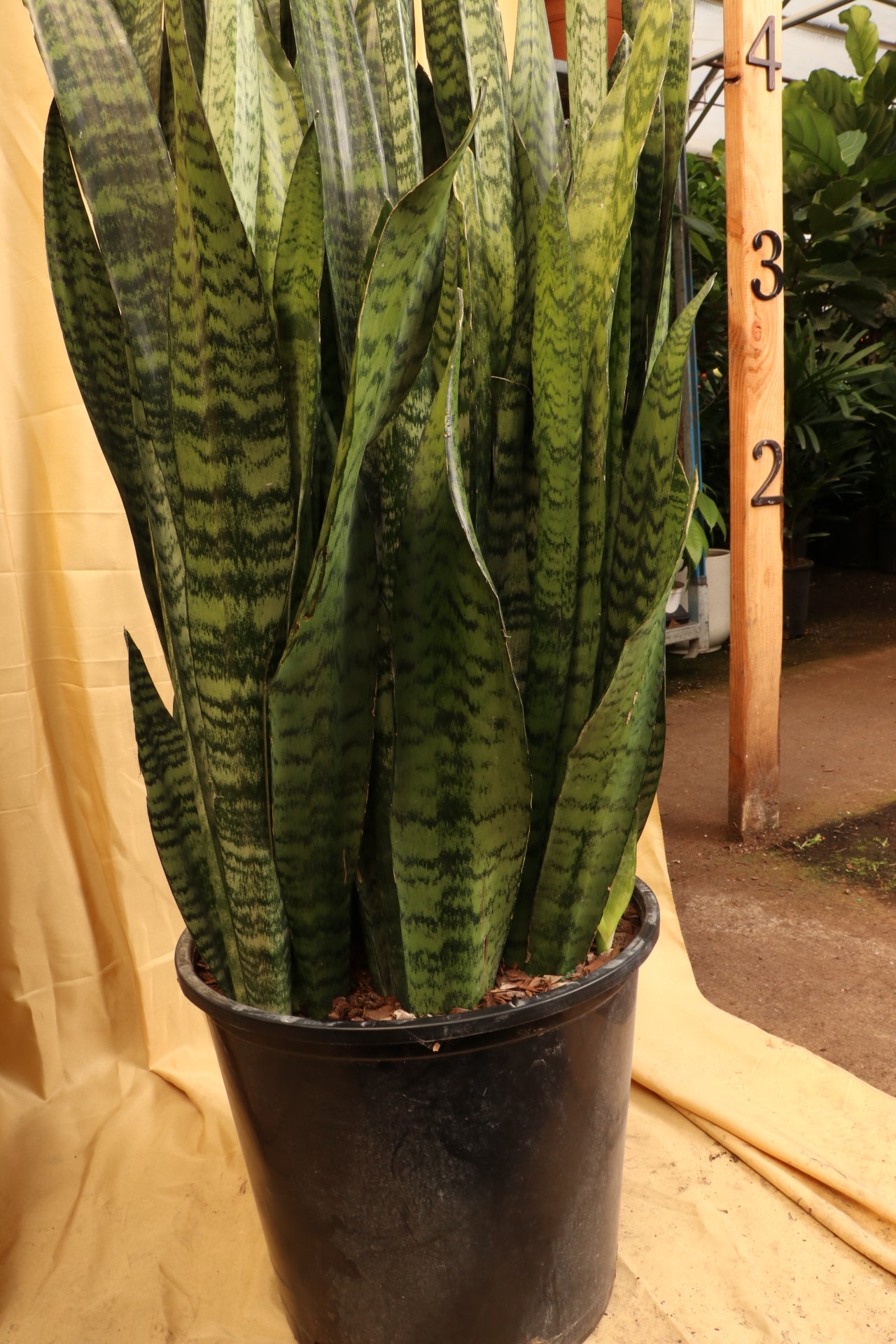
plain green snake plant

plain green snake plant Full Size Green Snake Plant (Zeylanica)

Sale price$26.50 Regular price$29.45
Save 10%

Shipping Estimate
USA
  • USA
  • CAN

Ships within 48 hours · Estimated delivery Jul 15 - Jul 20

Promo Codes Available:

For Your Every Summer RSVP, with Code: SUMMER15

Description

plain green snake plant Full Size Green Snake Plant (Zeylanica)Description The snake plant is a type of succulent thats extremely resilient and easy to maintain. Seriously, its hard to kill. It doesnt need to be watered often, and it can tolerate any lightingfrom full shade to full sun. He barely demands anything from you, but he actively offers you something. The Snake plant, aka Sansevieria trifasciata, can purify the air in your house! (NASA said so!) The plant really catches the eye with its vibrant hues and

Description


The snake plant is a type of succulent that’s extremely resilient and easy to maintain. Seriously, it’s hard to kill. It doesn’t need to be watered often, and it can tolerate any lighting—from full shade to full sun. He barely demands anything from you, but he actively offers you something. The Snake plant, aka Sansevieria trifasciata, can purify the air in your house! (NASA said so!)


The plant really catches the eye with its vibrant hues and unique leaves that look like blades. Blades of grass? Medieval swords? That’s up to you. With hunter greens, emerald splashes, and lime highlights, the Trifasciata is an eye-catcher that will spice up any space.


Snake plant wins the “low maintenance” award, permanently

 One time, a customer reached out to us after Covid. He was hoping to replace his plants that had died over the year when no one was in office. He said, "I want all snake plants!" I asked why.


He said, "Over the year and a half we weren't in office, no one was there to take care of the plants. Not surprisingly, ALL the plants in there died… EXCEPT for the few snake plants. They were chillin' like Bob Dylan. No light, no water, no care, no problem."


Snake plant benefits

Mr. Snake is resilient. It can tolerate drought, too much shade, too much light, or lack of fertilizer. This plant is great for beginners, no matter what color your thumb is! The Snake Plant also filters the air indoors.


By inhaling CO2 and converting it into oxygen, even overnight, the Snake plant helps encourage air flow. Snake plants remove allergens and toxins from the surrounding environment—like benzene, formaldehyde, and xylene, among others.


Order a snake plant today

Now that you're an expert in Snake Plantery (that’s the official terminology), order a big Snake plant by 7pm ET to get this plant out of our greenhouse in New Jersey tomorrow. Dahing delivers locally in the NJ/NYC area and ships as far as Chicago and Miami.


Hop on a video call to pick your EXACT big snake plant, and it will arrive just the way it looks in our greenhouse. (If you are wondering about the arrival time, check with the zip-code validator on top of the Add To Cart button.) Our plant shipping solution is truly protective and innovative to ensure your plants arrive safe and intact!


Hop on a video call to explore our greenhouse, and we WILL send out the EXACT plant that you pick out. Just like choosing a plant at a local nursery or garden center, except we have more and fresher plants to choose from—and you can't find our Pafe fine ceramic planter options anywhere else other than our website. :)


For any other questions or concerns, please don't hesitate to reach out to us at [email protected] or call/text (609)-968-7063!


Care


Are Snake plants hard to keep alive?

Snake plants are the easiest plant to keep alive. They’re totally ok in literally any lighting, from full sun to full shade. Put them anywhere you want. Water them occasionally, but it’s ok if you forget. They love to live.


What kind of lighting do snake plants need?

Snake plants are insanely flexible about lighting. Full shade? Bright indirect light? Full sun? It’s all good. It’s a master photosynthesiser who knows how to make do with very little sun and how to protect itself from lots of sun.


How often do you water a snake plant?

Snake plants are VERY drought tolerant. Do anything you want to it except water it. Ok, that was an exaggeration: You should not gift it to your cat and you should water the plant once every month or so.


If you are a regular reader, you're probably familiar with us being reluctant to give a schedule for watering. that's because we don't want to underquote it nor overquote it, and a bajillion factors go into the exact timing. (You don’t have to calculate those factors, just check the soil’s moisture level.)


But this is the only plant we can confidently give a schedule for, because we'll just under-quote it, because they're so drought tolerant. Water around once every month or so and you'll be fine.


If you want to go the scientific way, rather than the calendar method, then monitor the first 2-3 inches of the soil and only water when the first 2-3 inches are dry across a few spots of the soil.


Do Snake plants like bathrooms?

Snake plants love the bathroom! A Snake plant is happy in low lighting and comfortable in temperatures up to 90 degrees. It also purifies the air, and well, we’d bet you could use some air purification in that specific room.


Why are Snake plants so popular?

Snake plants are popular for two main reasons. First of all, they look epic. Zig-zaggy green swords, basically. Second, they’re unbelievably easy to keep alive, regardless of the color of your thumb. If you buy one, you’re kinda stuck forever.


How do I make my Snake plant happy?

Snake plants are inherently happy, like that girl in high school who got straight A’s, made the cheer team, and had supportive parents. Water when the soil’s dry. Put it wherever you want. Sing a lullaby at bedtime. That’s it.


Do Snake plants like their leaves misted?

Don’t mist your Snake plant! It comes from a dry climate, so it doesn’t need misting. In fact, misting can actively hurt your Snake plant. If the water drips down and collects near the roots, it can cause root rot.


Should a Snake plant be by a window?

A Snake plant is happy by a window—but it’s happy just about anywhere, including away from a window. It’s even happy in a dim room with little natural light. Basically, put your Snake plant wherever your heart desires.


Not pet-friendly


Are Snake plants toxic to dogs, cats, or kids?

Sadly, Snake plants are indeed toxic to dogs, cats, and babies—they contain saponins, which can cause nausea, vomiting, diarrhea. For cats, eating a Snake leaf could even hurt their red blood cells through a process called hemolysis.


Factoids


How tall is the snake plant?

Average Snake plants grow 2 feet tall and ½ foot wide—but our full-size snake plants are around 4 feet tall. If they were actual snakes, they’d be reticulated pythons (we looked it up, that’s the longest snake).


That height was measured when we wrote this—better to check with us over a live virtual shopping call. They might be even bigger!


What did NASA say about Snake plants?

The NASA Clean Air Study, led by NASA in association with the Associated Landscape Contractors of America, found that Snake plants are particularly good air purifiers. The study investigated which plants could keep a space habitat healthy. Snake plants could!


Is it good to sleep next to a Snake plant in the bedroom?

It’s beneficial to sleep next to a snake plant. First of all, it purifies the air and breathes out oxygen, helping you sleep peacefully. Second, it’ll make you smile when you wake up next to it in the morning.


Does the Snake plant make oxygen at night?

Most plants don’t release oxygen at night, but the Snake plant does. Most plants need light to photosynthesize—the process that takes in carbon dioxide and releases oxygen—but the Snake plant barely needs light, even during the day.


Can I touch my Snake plant, or is it poisonous to the touch?

The Snake plant’s sap can cause an itchy skin rash. We recommend wearing gloves when handling the Snake plant, unless of course you are in the market for an itchy rash. That would be strange, but you do you.


Do Snake plants smell good?

When a Snake plant flowers, it smells like vanilla. Some even say jasmine or banana. Unless you hate jasmine or banana (we refuse to believe anyone hates vanilla), it’s delightful. When it’s not flowering, it has a mild planty smell.


Does a Snake plant flower indoors?

A Snake plant can bloom inside, but it’s rare. It’s also not a good thing. Snake plants tend to flower when they’re afraid they’re dying, so they can send their progeny off into the world before they meet their fate.


If you’ve neglected your Snake plant so much that it freaks out and tries to make babies, you win a special medal for Plant Neglect. Snake plants hardly ever die, so they hardly ever flower. It does, however, smell really good. Win some, lose some.


Rumors


Why is the Snake plant called “mother-in-law’s tongue”?

The Snake plant is called “mother-in-law’s tongue” because the leaves look like sharp tongues, and . . . Well, there’s a certain stereotype. If you had a sharp-tongued MIL, you probably wouldn’t need to ask. Maybe ask your partner.


Do Snake plants ward off evil?

In African culture, Snake plants ward off evil spirits. In some Asian countries, they block negative Chi, and in China especially, they have positive feng shui. Plus, in all cultures, it demolishes carbon dioxide and other toxins in the air.


Does a Snake plant attract snakes? Or do snakes hate snake plants?

Snakes hate Snake plants! The sharp-edged leaves can slice up their scaly skin. So if you hate snakes as much as snakes hate Snake plants, get some Snake plants to keep the snakes away. (Say that five times fast.)


What’s the best room in the house for a Snake plant?

Put the Snake plant wherever you want! Snakey doesn’t care whether he sits by the north window or the south. In feng shui principles, you should put him near your front door, to protect your home from bad energy.


What are the magical uses of a Snake plant?

The Snake plant’s first magical power is air purification. In feng shui, it also symbolizes good fortune, good energy, and prosperity. It protects the home and offers mental clarity. If you don’t need any of that, buy a begonia.


Are Snake plants bad feng shui?

Thoughts are mixed on the Snake plant’s role in feng shui. Many believe that its sharp leaves represent protection and vitality. Others, however, believe you should avoid sharp plants, especially in your home’s relationship area. It could make you sharp-tongued.


Shipping Notes
  • Free Standard Shipping on $100+ Orders to the USA.
  • Except Preorder products are shipped in 48 hours.
  • Delivery to the USA:
  1. Standard Shipping : 3-10 business days
  • If time is of the essence, please consider selecting expedited delivery for faster service.
Exchange/Return Notes
  • We offer a 30-day return/exchange service after receiving.
  • Final sale items are not eligible for returns or exchanges.
  • To process your return/exchange, please contact us at [email protected]
  • Please click here for more details>>> Return & Exchange Policy
SKU: 38992223337

Discover Niche Categories That Outsell plain green snake plant

Top-Converting Item to Boost Your Average Order

4.7 ★★★★★
Based on 2290 reviews
Sort
Highest Rating
Newest First
Oldest First
Product Reviews
S
Verified Purchase
Stephanie
Natrona Heights, US
★★★★★ 5
Essential reading
Format: Audiobook
I wish I’d learnt this history decades ago. This book illuminates how the world has, for many of us, come to be seen through a white supremacist lens. It provides religious, political, technological, sociological context over centuries and Millenia. It explains the justifications used to treat our fellow humans as ‘less than’ - the sort of thinking that we in the ‘western’, white, colonial world have inherited, that persists through literature, philosophy and mythology, and that continues to fuel bigotry and oppression today. Eye opening. Can’t recommend more highly (book, kindle, audiobook).
WAS THIS REVIEW HELPFUL?YesReportShare
Reviewed in the United States on January 27, 2026
M
Verified Purchase
Martin Firestein
Grantham, US
★★★★★ 5
Perhaps too ambitious for its own good
Having just finished Dr. Kendi's magnum opus on the history of American racism, I can confidently say that this is a very ambitious work. It attempts to describe the political, social, economic, philosophical, and cultural development of racist ideas throughout American history while at the same time, offering biographical sketches of 5 Americans who were/are representative of their time and place (Cotton Matther/Colonial America, Jefferson/Revolutionary era, William Garrison/Civil War and Reconstruction Era, W.E.B. DuBois/Jim Crow era, and Angela Davis/Civil Rights and Black Power era). Perhaps it's a bit too ambitious, though. The amount of ground the book tries to cover prevents it from being able to cover anything in great detail. Thus, the biographies of the 5 individuals are incomplete, and the racist or assimilationist ideas in each time period are discussed superficially. Dr. Kendi's book also jumps around a lot from one subject to another, which can be a bit jarring or disrupt the flow of the narrative. Don't get me wrong. The book does a very good job explaining how a lot of what has passed for antiracism in US history was really assimilationist thinking, and it also convincingly argues that racism and racist policies flow from the political, economic, or social advantages that one group gains by the persecution of the other. However, I am left with the distinct impression that Dr. Kendi should've narrowed his focus to something that could've been more manageable. Perhaps he should've focused exclusively on the difference between antiracism vs assimilation. Perhaps instead of attempting biographies of 5 individuals, he should've devoted each chapter (or section) of the book to discussing the racist or assimilationist ideas of that time period, and how they developed or changed over time. Overall, my best advice would be to get this book and read it, because it's very timely with what's going on right now in America, but for those areas that aren't covered in a lot of detail, I would try to supplement it with other literature.
WAS THIS REVIEW HELPFUL?YesReportShare
Reviewed in the United States on July 28, 2020
T
Verified Purchase
Taylor
Pawtucket, US
★★★★★ 4
Interesting and important read, but less objective than I expected.
Format: Hardcover
I feel this book has received higher review ratings than it probably deserves. Yet, it's still an overall good read and it discusses an important societal issue of U.S. history. This review will include both positive and negative feedback of this book. The author, Ibram Kendi, has done a great job at making this book accessible to readers. It's not overly infused with academic jargon. The chapters are also quite short, which makes it easier to read. The substance of the book is pretty informative too. Kendi's frequent usage of quotes really exposes the racist attitudes and ideas that were (and still are) present in American society. Although this book contains an abundance historical quotes, many of them lack sufficient explanation and context. As a student of history, I appreciate deeper, rounded discussions of historical figures. I felt that Kendi mostly includes short bits of statements from historical figures, then hastily shows how those statements equal racism in the person being discussed. I guess Kendi's style is OK. It just doesn't quite feel dedicated to historians craft. Another, less important critique is about the book title's usage of the term "Definitive." I'm surprised that this work was labeled as definitive. To be definitive, it would need to include racial histories of ALL ethnic/racial groups throughout both the American colonial and U.S. eras. Alternatively, this book's title may have been more appropriate as "The Definitive History of Racist Ideas Towards Peoples of sub-Sarahan African Descent in America." Overall, I'm glad I purchased and read this book. It boldly explains certain sides of history that much of our society has missed. I did not grow up in a "racist" household. Yet, this book helped me reflect on my own attitudes, which have been influenced by racist ideas to some degree. I hope others (especially other Americans) can read this book with an open heart and mind.
WAS THIS REVIEW HELPFUL?YesReportShare
Reviewed in the United States on August 12, 2018
J
Verified Purchase
John M. DeMarco
San Leandro, US
★★★★★ 5
The REAL American History
Bearing 511 pages of text supported by nearly 70 pages of footnotes, Ibram X. Kendi’s Stamped From the Beginning (Bold Type Books, 2017) is, for me, not an “alternative” American history but THE American history. Kendi, founding director of the Boston University Center for Antiracism Research, makes a convincing argument—which he emphasizes in his other books and public speaking—that, contrary to conventional assumptions, racist policies drive racist thinking and not the other way around. And, Kendi adds, it’s economic, political, or cultural self interests that give birth to such policies and motivate their rejection when new circumstances demand it. In making his case, Kendi patiently and passionately traces the development, implementation, and adaptations of three racial dynamics across the history of the U.S.: 1. Segregation: Blaming Black people themselves for racial disparities, and therefore denying them the privileges 2. enjoyed by white Americans 3. Assimilation: Blaming Black people and racial discrimination for racial disparities, and demanding Black people change their behavior in order to experience less racism Antiracism: Pointing to racial discrimination and policies while defending Black people’s right to be themselves In addition, Kendi structures this narrative across five lengthy sections, each centered on the impact of a specific, influential “tour guide” and their contemporaries: 1. Cotton Mather, early America’s greatest preacher and intellectual, and a staunch promoter of racist policies and ideas 2. Thomas Jefferson, primary author of the Declaration of Independence, and America’s first Secretary of State, second Vice President, and third President, who held contradictory views amid incongruous political and personal actions 3. William Lloyd Garrison, an influential publisher who opposed slavery but embraced assimilationist ideas 4. W. E. B. DuBois, a towering Black intellectual who gradually shifted from assimilation to antiracism 5. Angela Davis, one of the best known Black scholars and antiracist activists still alive today When you’re done reading Stamped From the Beginning, you’ve gained a new framework for noticing and examining race and its interrelated justice issues. Current racial events take on a richer meaning, with their nuances and complexities more tangible than before. Other books on racial justice help to reinforce this framework and further develop a reader’s embryonic skills for noticing racism within themselves, others, policies, and systems—and doing something about it. To grow increasingly fluent in Black history is to awaken from the slumber of an incomplete, biased, and often false American narrative that’s been drilled into most of our minds since we were young children. Since racism remains very much alive today, waking up is crucial and, from my experience, invigorating and teeming with possibilities for a more purposeful life.
WAS THIS REVIEW HELPFUL?YesReportShare
Reviewed in the United States on August 15, 2020
R
Verified Purchase
Red-Haired Ash
Carnegie, US
★★★★★ 5
This should be required reading for everyone..
Stamped From the Beginning discusses the history of racism and racist ideas in America. Kendi focuses on five main people who have made the biggest impact on racism and anti-racism in our history: Puritan minister Cotton Mather, Thomas Jefferson, abolitionist William Lloyd Garrison, W.E.B. Du Bois, and legendary activist Angela Davis. “When men oppress their fellow-men, the oppressor ever finds, in the character of the oppressed, a full justification for his oppression.” Douglass, amazingly, summed up the history of racist ideas in a single sentence.” - (Fredrick Douglass) This was an incredibly powerful and educational book. I knew going into this book that the United States education system has failed at teaching the history of slavery, emancipation, Jim Crow, and the continued struggle. But it still amazed me at how much it doesn’t teach. With every single chapter I learned new things that should have been taught to me in school. While this is a very large book filled with history, it was an easy read. Normally I would have read this book in a few days but instead I stretched it out over a month and a half. I read, reflected, took notes, did more research and I still know that I have a lot to learn. My book is now covered in sticky notes and I know I will be rereading this in the future because I know I missed stuff. “That is what it truly means to think as an antiracist: to think there is nothing wrong with Black people, to think that racial groups are equal. There are lazy and unwise and harmful individuals of African ancestry. There are lazy and unwise and harmful individuals of European ancestry. There are industrious and wise and harmless individuals of European ancestry. There are industrious and wise and harmless individuals of African ancestry. But no racial group has ever had a monopoly on any type of human trait or gene—not now, not ever.” This book changed the way I viewed the history of the United States. So much of this history has been glossed over by the education system, and other history books. This book should be required reading for everyone especially since the education system won’t teach us the true history of the United States. All I can say is, READ THIS BOOK!
WAS THIS REVIEW HELPFUL?YesReportShare
Reviewed in the United States on October 1, 2020

recommand products