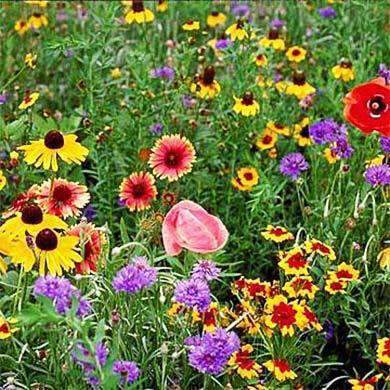
michigan wildflowers seeds MIDWEST WILDFLOWER MIX
SKU: 38896579293
michigan wildflowers seeds

michigan wildflowers seeds MIDWEST WILDFLOWER MIX

Sale price$19.78 Regular price$21.98
Save 10%

Shipping Estimate
USA
  • USA
  • CAN

Ships within 48 hours · Estimated delivery Jul 7 - Jul 12

Promo Codes Available:

For Your Every Summer RSVP, with Code: SUMMER15

Description

michigan wildflowers seeds MIDWEST WILDFLOWER MIXMidwest Wildflower Seed Mix is formulated for IL, IN, IA, eastern KS, KYml, MI, MN, MO, eastern NE, OH, WI, southern Manitoba, and Ontario. This wildflower seed mix is blended to give the widest possible range of colors and periods of bloom.~~~ Midwest Wildflower Seed Mix is formulated for IL, IN, IA, eastern KS, KY, MI, MN, MO, eastern NE, OH, WI, southern Manitoba, and Ontario. This wildflower seed mix is blended to give the widest possible range of

Midwest Wildflower Seed Mix is formulated for IL, IN, IA, eastern KS, KYml, MI, MN, MO, eastern NE, OH, WI, southern Manitoba, and Ontario. This wildflower seed mix is blended to give the widest possible range of colors and periods of bloom.~~~

Midwest Wildflower Seed Mix is formulated for IL, IN, IA, eastern KS, KY, MI, MN, MO, eastern NE, OH, WI, southern Manitoba, and Ontario. This wildflower seed mix is blended to give the widest possible range of colors and periods of bloom. Very few wildflowers bloom continually throughout the season, therefore we have included spring, summer, and fall blooming species in each mixture. Colors include blue, purple, red, white, yellow and pink. Mix heights vary from 10 in. to 8 ft.

Product Information

  • Application or Use: Ornamental, Lawn, Cover Crop, Erosion Control
  • Germination Time: 14 - 21 days, under optimal conditions
  • Growing Locations: Transition Zone & Cool Season
  • Height: 2 - 4 feet
  • Sunlight Requirements: 8+ hours, full sun for best results
  • Advantages: Perfectly blended for the Midwest U.S.
  • When to Plant: See Instructions Tab.

**This mix is Non-GMO**

This mix contains the following seed. *Mixture is subject to change depending on seed availability*

  • Lanceleaf Coreopsis
  • Purple Coneflower
  • Blue Flax
  • California Poppy
  • Clasping Coneflower
  • Plains Coreopsis
  • Calendula
  • Black Eyed Susan
  • Rocket Larkspur
  • Mixed Colors Corn Poppy

This mix may vary depending on harvest and availability.


*Product packaging may appear different than what is pictured. ~~~

 Wildflower Planting Time Based on Region:

Southeast

  • Fall, Winter: Sowing wildflowers in Fall/Winter is the ideal time in the Southeast, with October 1 – December 31 being the best dates. The weather is ideal for starting seeds, and seedlings can grow and harden off before frost.
  • Spring: A good time to plant wildflowers, especially annual species that flower quickly. Plant after the last frost date when soil temperatures have warmed to around 55°F, typically occurring within a month or so after the final frost of winter; this ensures the seeds can germinate properly without being affected by cold weather.
  • Summer: You can plant wildflower seeds in the summer, but the hot sun can dry out the soil and stress your seedlings. Summer is a good time to plant quick-growing annual wildflowers.


Southwest

  • Fall: A good time to plant spring wildflowers in the desert Southwest. Fall's cooler temperatures and seasonal rains help seeds germinate. In the mountains, you can plant after spring frosts.
  • Winter: In areas that get snow, winter seeding can give seeds an advantage in the spring. 
  • Spring: A popular time to plant wildflowers in most states. You can plant after the last frost and when the soil temperature is at least 55°F. In warmer climates, you can plant at the end of the rainy season.
  • Summer: You can plant wildflower seeds in the summer, but the hot sun can dry out the soil and stress your seedlings. Summer is a good time to plant quick-growing annual wildflowers.


Northeast

  • Fall, Winter: The best time to plant wildflowers in the Northeast is in late fall, after the first frost but before heavy snow. This is known as dormant seeding and can take place from November to December. Cold temperatures and damp soil during the winter help wildflower seeds germinate. 
  • Spring: Plant in early spring, after the ground has thawed and soil temperatures reach around 55-65°F. This is a popular time to plant wildflowers because it's typically rainier, which helps water seedlings. 
  • Summer: You can plant wildflower seeds in the summer, but the hot sun can dry out the soil and stress your seedlings. Summer is a good time to plant quick-growing annual wildflowers.


Midwest

  • Fall, Winter: Plant in late fall (November–December) after the first frost. The seeds will overwinter and germinate in the spring. Fall planting is a good option for cooler climates and can give the seeds an early start in the spring. 
  • Spring: Plant in early spring (April–May) after the last frost when the soil temperature is consistently above 55°F. Spring is a popular time to plant because the soil is usually moist from rain, and you can see the wildflowers grow right away.
  • Summer: You can plant wildflower seeds in the summer, but the hot sun can dry out the soil and stress your seedlings. Summer is a good time to plant quick-growing annual wildflowers.


Western

  • Fall, Winter: Plant in late fall (November–December) after the first frost. The seeds will overwinter and germinate in the spring. Fall planting is a good option for cooler climates and can give the seeds an early start in the spring. 
  • Spring: Plant in early spring (April–May) after the last frost when the soil temperature is consistently above 55°F. Spring is a popular time to plant because the soil is usually moist from rain, and you can see the wildflowers grow right away.
  • Summer: You can plant wildflower seeds in the summer, but the hot sun can dry out the soil and stress your seedlings. Summer is a good time to plant quick-growing annual wildflowers.


Pacific Northwest

  • Fall, Winter: Plant in late fall (November–December) after the first frost. The seeds will overwinter and germinate in the spring. Fall planting is a good option for cooler climates and can give the seeds an early start in the spring. 
  • Spring: Plant in early spring (April–May) after the last frost when the soil temperature is consistently above 55°F. Spring is a popular time to plant because the soil is usually moist from rain, and you can see the wildflowers grow right away.
  • Summer: In cooler zones with higher elevation, you can plant wildflowers in late spring to early summer, after the risk of frost has passed. You can plant wildflower seeds in the summer, but the hot sun can dry out the soil and stress your seedlings. Summer is a good time to plant quick-growing annual wildflowers.


More on wildflower mixtures and plantings:

Our wildflower mixtures are formulated on the basis of climatic conditions (rainfall, temperature range, humidity) and elevation. Most species in our mixtures adapt readily to different soil types, provided climate and elevation are suitable. Annuals have been included to establish cover quickly and to give color the first year; some may produce new plants the following year (the biennials may also reseed). Perennial plants live for more than two years, and most flower from the second year onward.

These mixtures are blended to give the widest possible range of colors and periods of bloom. Very few wildflowers bloom continually throughout the season; therefore, we have included Spring, Summer and Fall-blooming species in each mixture. Colors include blue, purple, red, white, yellow and pink. Mix heights vary from 10 in. to 8 ft.

In general, our mixtures are formulated to contain approximately equal numbers of seeds of each species. This varies somewhat because of costs, availability and/or climatic conditions. Mixtures may vary occasionally from the indicated listing, based on availability of individual species.

Seed Quality:

Most wildflower seeds and mixtures have a purity of 95 to 99% and total viable seed percentages of between 70 to 95%. The total viable seed percent is the germination percent, plus the hard seed or dormant seed percent. Hard seeds have impermeable seed coats and cannot imbibe water during seed testing. Dormant seeds are viable seeds that have specific physical or physiological conditions that prevent the seed from germinating at the time of seed testing. The PLS (Pure Live Seed) is obtained by multiplying the percent purity by the percent total viable seed and then dividing by 100.

Uses of Grasses:

Wildflowers can be sown alone or with grasses. For most areas of the United States, we recommend using one of our native grass mixtures. For specific requirements, individual species may be preferred. Hard Fescue or Sheep Fescue work well in most areas of the United States. However, in the southeastern states of Alabama, Florida, Georgia, Louisiana, Mississippi and South Carolina, we recommend warm-season grasses; Hard and Sheep Fescue will not thrive in these climates.

Warm-season grasses to consider include Gramas, Buffalo Grass and Bluestems. These grasses grow very slowly and are planted for aesthetic and ecological reasons rather than prompt stabilization of soil.

Aggressive grasses should be avoided because they will crowd out most wildflowers; these grasses include Kentucky Bluegrass, Smooth Brome, Crested Wheatgrass, Bermuda Grass, and Annual Rye. If wildflowers must be used with these grasses, the flowers should be planted in high-density patches as accents to the grassed areas. Or the flowers may be sown with the grasses if the planting rates of the grasses are reduced significantly.~~~

Plant at a rate of 40 to 44 lbs. per acre (1 lb. per 1,000 sq. ft.).

Sowing wildflower seeds without care and planning usually produces unsatisfactory results. Here are some important factors to consider: Does the site support plants now? If you have a site where nothing, including weeds, is growing, that site is unlikely to support wildflowers. Will there be adequate moisture during germination and establishment? Can you supply supplemental water, if necessary? What weed seeds are likely to be present in the soil? Will weeds spread to your site from adjacent areas? Assessment of these factors will enable you to make a realistic choice of a site where wildflowers will prosper and to decide what action will be necessary to ensure your success.

When to Plant:

The best time to plant in your area depends on the climate and rainfall patterns as well as the species you are planting. In cool climates, plant annuals, perennials or mixtures of annuals and perennials in Spring, early Summer or late Fall. Fall plantings should be late enough so that seeds do not germinate until Spring. Perennials can also be sown in early fall provided that there are at least 10 to 12 weeks of growing time before the plants go dormant for the Winter. Late Fall plantings are advantageous when supplemental irrigation cannot be provided and adequate rainfall is anticipated in the spring.

In mild climates, plant during the cooler months of the year, fall through spring, for best results. Fall plantings done prior to periods of rainfall will insure an early display of flowers the following Spring.

Site Preparation:

Proper site preparation is important for prompt germination of seed and healthy growth of seedlings. Best results will be obtained by planting on cleared ground. Remove existing vegetation to avoid competition from other plants. This may be done by pulling, tilling under, spraying with a general herbicide, or by a combination of these methods, depending upon the size of the area, type and density of vegetation and other factors. Loosen soil by scraping, tilling or scarifying. Tilling should be utilized only when soil is very compacted and further weed control measures can be taken. Specific recommendations are given under the heading, Weed Control.

Seed Application:

Method of application depends on the size of the area and the terrain. On small areas, broadcast seeds evenly either by hand or by use of a drop or cyclone spreader. It is helpful to mix a carrier such as clean, dry sand with the seed; sand adds volume and aids in even distribution. We recommend using a ratio of 1 or 2 parts sand to 1 part seed. Rake in lightly, covering seeds to a maximum depth of 2 to 3 times their thickness. Or drag the area lightly with a piece of chain link fence to mix the seed into the surface of the soil. For seeding large areas, i.e., over one acre, specially-designed drills are most effective. Drill to a maximum of 1/4 in. and firm soil with a cultipacker. This maximizes seed-to-soil contact. Hydroseeders are also effective, especially for steep slopes, rocky terrain and other areas where conditions make it impractical for other methods of seed application.

Hydroseeding is the application of a slurry of seed and water to soil. The slurry may also contain mulch (hydromulching), a tackifier and fertilizer. Mulches are made of wood fiber, paper or excelsior, and their purpose is to hold seeds in place, help retain moisture and provide protection from erosion (mulches are usually dyed green as a visual aid in even distribution). Rates of application for most mulches are between 1,500 and 2,300 pounds per acre. In general, hydroseeding or hydromulching is most successful in moist climates or in irrigated areas.

Most authorities agree that germination is better when seed is applied first with 5 to 10% of the mulching fiber; the balance of the mulch being applied separately as a second step. This approach ensures optimal seed-to-soil contact. Otherwise, many seeds are wasted because they become suspended in the fiber.

It is important that proper procedures are followed to minimize the amount of time that seed is circulated through pumps or paddles prior to application. Overcirculation may damage the seed.

Moisture:

All seeds, including wildflowers, need ample moisture to germinate and to develop into healthy seedlings. Best results will be obtained by soaking the planted areas thoroughly and maintaining consistent moisture for 4 to 6 weeks, then gradually reduce waterings. In non-irrigated situations, plant in the Spring or before periods of anticipated rainfall. After seedlings are established, watering may be reduced depending on the climate and rainfall. In arid climates or during drought conditions, up to 1/2 in. of supplemental water per week may be required to maintain an optimal display. If weeds are present, remember that they benefit from moisture as much as the wildflowers and may dominate over-watered areas.

Fertilization:

Many wildflowers benefit from some fertilization if the soil does not have adequate nutrients. Some wildflowers do fine in poor soils, while others require a more fertile environment. We recommend that a soil test be performed when soil quality is unknown. If the soil needs improvement, use a low nitrogen fertilizer with a 5-10-10 ratio or add organic matter such as weed-free straw or grass clippings, well-rotted compost, peat moss, or leaf mold. In addition to adding nutrients, organic materials enhance soil structure and encourage beneficial microorganisms. Avoid over-fertilizing which may promote weed growth and lush foliage rather than flowers.

Weed Control:

Weed control is the biggest problem facing plant establishment, and one which has no easy solution. Weed seeds are present in many situations and lie dormant, but viable, for long periods. A weedy area converted to wildflowers will have a large reservoir of weed seeds in the soil, ready to germinate when conditions are favorable. In most cases, it is advisable to consider weed control in two phases—as part of site preparation prior to planting, and as an important component of the post-germination maintenance program.

Before planting, remove existing weeds by pulling, tilling under, applying a glyphosate herbicide such as RoundUp, or by a combination of these methods. For additional weed control after site preparation, a soil fumigant may be used, or the area may be irrigated to encourage weed growth and then sprayed with a general herbicide.

In very weedy areas, the following method is suggested: Till soil or spray vegetation with RoundUp. When using an herbicide, allow vegetation to die, then rake out the dead debris. If perennial weeds such as bindweed are present, using an herbicide is more effective than tilling. Irrigate to encourage germination of weed seeds near the surface; most seeds will germinate within two weeks if consistent moisture is available. Do not till the soil again because this will bring even more weed seeds up to the surface. Spray any new growth with RoundUp. After raking out dead vegetation, allow soil to recover for 3 to 4 weeks before planting seed. From our experience, a recovery period of this duration is advisable because extensive use of glyphosate herbicides may cause a delay in germination and in the vigorous growth of seedlings.

Once the seeds have germinated, further weed control is usually necessary. If practical, pull all weeds as soon as they can be identified.

Other successful techniques are spot-spraying with a general herbicide or selectively cutting weeds with a string trimmer. Be sure to remove weeds before they reseed.

Many unwanted annual and some perennial grasses can be controlled with the herbicides Grass-B-Gon, Ornamec, and Fusilade. These post-emergents do not affect broad-leaved plants so they can be applied over existing flowers. They are most effective when sprayed on new growth and young plants. Take care to avoid treating areas with desirable native grasses or fescues.

What to Expect:

Wildflowers can provide an excellent, low cost alternative in large-scale, high maintenance situations, as well as a satisfying change from traditional urban landscaping. However, during their initial establishment period, wildflowers require as much maintenance as traditional plantings.

A smooth, weed and vegetation-free planting bed is important for good seed-to-soil contact and prompt germination. Avoid seeding more than the recommended rate since overseeding can result in crowded conditions the first year, and poor establishment of perennials. Cover seeds lightly to protect them from drying out during germination, and to prevent them from being eaten by birds. Consistent moisture is important for 4 to 6 weeks after planting.

A wildflower planting requires the same weed control measures as traditional landscaping. Effective measures include site preparation prior to planting and a post-germination maintenance program.

Most of our wildflower mixes contain annual, biennial and perennial species. The annuals, which may not be native to your area, are included to assure maximum color during the first season and to act as a nurse crop for the slower-growing perennials. Annuals germinate quickly when conditions are favorable, providing a quick ground cover and competition against weeds. Natural reseeding of annuals ranges from significant to minimal, depending on the species, climate, soil texture and other factors. Most perennial and biennial species begin to bloom the second season, but not as profusely as annuals. Therefore, wildflower plantings look noticeably different after the first year.

Sometimes it is desirable or even necessary to sow seed in second and subsequent years. Reseeding may be necessary if establishment of wildflowers is spotty or poor. It is possible to reseed bare areas with the original mixture. Loosen soil of bare areas and provide adequate weed control and supplemental irrigation as needed. Where natural reseeding of annuals is minimal, sowing annuals each spring can produce a magnificent annual and perennial display throughout the growing season.

If desired, wildflowers may be mowed in the Fall following seed set. Mow to a height of 4 to 6 in., and leave the residue on the ground because it is a reservoir of viable seeds.

Shipping Notes
  • Free Standard Shipping on $100+ Orders to the USA.
  • Except Preorder products are shipped in 48 hours.
  • Delivery to the USA:
  1. Standard Shipping : 3-10 business days
  • If time is of the essence, please consider selecting expedited delivery for faster service.
Exchange/Return Notes
  • We offer a 30-day return/exchange service after receiving.
  • Final sale items are not eligible for returns or exchanges.
  • To process your return/exchange, please contact us at [email protected]
  • Please click here for more details>>> Return & Exchange Policy
SKU: 38896579293

Discover Niche Categories That Outsell michigan wildflowers seeds

Top-Converting Item to Boost Your Average Order

4.4 ★★★★★
Based on 781 reviews
Sort
Highest Rating
Newest First
Oldest First
Product Reviews
C
Verified Purchase
Colleen Marie Zukowski
Lowell, US
★★★★★ 5
When you finish this book, be prepared to go through withdrawal.
Format: Hardcover
I finished Six of Crows and immediately found myself missing Kaz and his crew, which is a surefire sign that I just finished a book that I absolutely loved. Kaz Brekker, criminal, gang leader, outcast, has assembled a group of misfit criminals from The Barrel to pull off the crime of a lifetime, a crime that even the most capable and seasoned lawbreakers would find nearly impossible. But for a group of men and women who have nothing left to lose, the impossible could be the one thing that will bring them salvation and the wealth they need to start new lives. But before they can go about saving the world they must first get past the secrets they are hiding, the resentment they hold back, and the mistrust they feel towards one another, and focus on not getting killed by the odds stacked against them. I had been looking forward to reading this book since it was released because there were so many tempting aspects to it: theft, magic, fantasy, so many things that I love in a good story. Six of Crows is set in the same world as Bardugo’s Grisha Trilogy but in a different land, with different characters, and it is not necessary to read the other trilogy first. I felt like the story got off to a slow start but after the first part of the book (it is divided into several parts) it really picked up and I could not put it down. Once I was halfway through the book I caught myself thinking about it all the time and wondering what would happen next with each of the characters that I had grown to love so much. To tell the story, Bardugo switches each chapter to be from a different main character’s point of view, but I felt she did it in a different and more engaging way than I have seen it done by other authors in the past. The trouble I fall into sometimes when reading a story that switches between characters is the breakup of the storyline, since each character usually jumps to a different time or location. Bardugo switches characters yet tells the story seamlessly so that each chapter starts exactly where the last left off, but with the point of view of someone new. So the story never breaks succession and there is never a lull in the action. This way we learn the emotions, motivations, and differing viewpoints of each character without the excitement of the story ever getting interrupted. The character development in the story is incredible and you quickly begin to learn the talents and flaws of each character and feel as if you know them personally and love each of them for who they are. Bardugo uses the present, flashbacks, internal thoughts, etc. to teach you the history of each character and give you a glimpse into why they have each become the person they are. The storyline was very unique and often focused on special abilities that some characters possess (the Grisha) which are incredibly interesting and a different take on magic. Once you get about 100 pages into the book the story really picks up pace and it is basically nonstop action after that point, done in near flawless fashion. There were small things about the book that bothered me, but these are rather insignificant details like the ages of certain characters or odd interactions which took nothing away from the story at all and were just little things that I noticed occasionally. Overall Bardugo told a brilliant story and I loved every second of it. I finished this book several days ago and I still find myself missing the characters, Ketterdam, and everything about the story. It has been a long time since I have read a book that tugged at my heart enough that it made me go through a slight withdrawal and left me feeling a little depressed that I was not still immersed in the world of the book and the lives of its characters. Six of Crows has done that to me and the more I think about the book the more I love it and I find myself already anticipating the next novel in the trilogy. The book ends with a cliffhanger but not one that leaves you screaming in rage at having to wait so long for the next book, but enough for you to feel eager with anticipation as you patiently await book two. I look forward to the day where I am back in The Barrel hanging out with Kaz and the rest of the crew as the next part of the incredible journey takes place. “When everyone knows you’re a monster, you needn’t waste time doing every monstrous thing.”
WAS THIS REVIEW HELPFUL?YesReportShare
Reviewed in the United States on November 5, 2015
S
Verified Purchase
Shawn Craven!
Waukegan, US
★★★★★ 5
A fun heist adventure with a lovable cast of characters!
Format: Kindle
Kaz Brekker is a young criminal mastermind with a knack for meticulously planning every step of a greater picture before making a single move. He's spent a lot of time gaining a reputation, gathering a small gang, and building a legend and mystique around himself. His ultimate goal is revenge, and every move he makes is just another step toward it. When he is hired to carry out an impossible heist, he needs to gather a crew and plan his moves even more carefully. Where this book truly shines is with its characters. Kaz and his crew are all very different personalities, and their banter and relationships with each other are all wonderful. Each of the six main characters are given full, compelling backstories, motivations, skill sets, personality quirks, and personal demons to sort out. It was a joy getting to know these characters and seeing them bounce off of each other. Kaz is an excellent character, and feels like a teenage supervillain-in-training. He is human, and suffers from trauma, insecurities, getting emotionally attached, but does everything he can to come off cold and detached to keep up with the legacy he has built for himself - and when you get to see Kaz from other peoples' perspectives, you can see just how successful he's become at it. I'll admit I was not a fan of Matthias, one of the POV characters, at first. He's well-written, but his worldview and way of thinking were difficult for me to wrap my head around or justify. As the story went on and Matthias got more fleshed out and complex, I came to love him. Although there are six main characters, only five of them get POV chapters -- the sixth is still a very interesting character, and I would love to see a bigger glimpse into his mindset. After finishing the book I can understand why he was not given his own chapters, and I'm VERY excited to learn more about him in the sequel. The worldbuilding is also very impressive. I understand that there are other books and trilogies and such set in this same world. I've yet to read the others at the time of writing this review, but I am intrigued by the world these characters live in, the customs and cultures of its people, the history that is alluded to, etc. This world feels real and fleshed out, and it's very clear that a lot of thought and care were put into it. Six of Crows is an extremely fun book, I'm pumped to read its sequel and the other stories set in this world, and to check out the Netflix series based on one of them! I highly recommend this book!!
WAS THIS REVIEW HELPFUL?YesReportShare
Reviewed in the United States on April 6, 2025
F
Verified Purchase
FranJessca @ A Book Lovin Mama's Blog
Los Angeles, US
★★★★★ 4
4-stars: 'Six of Crows' by Leigh Bardugo
Format: Hardcover, Format: Hardcover
This is going to be a very long review. I’m sorry ahead of time, but I knew it wouldn’t be a short review after I finished the book. Lots needed to be typed, but I promise no spoilers. Six of Crows is set in Leigh Bardugo’s Grishaverse, but this time readers will get to follow six different characters on a mission to pull off a very dangerous heist together. This book will pull you in different directions because all six characters get to tell the story from their point of view before, during, and after the heist. It’s crazy how Leigh Bardugo managed to keep up with all six points of view while building the storyline to this new epic adventure in the Grishaverse. Storyline/My Thoughts: First, if you read the Shadow and Bone Trilogy, then I will let you know now that Six of Crows doesn’t take place simultaneously as the trilogy. It’s set further in the years after the war has happened. Unfortunately, the Grisha are still treated horribly, and most are hidden or at Ravka helping the King rebuild, but this book is not focusing on that storyline. Instead, it’s focusing on six different characters, which each have a different personality and background. They are all supposed to be in their teens but come off as maturer in age. If you lived the way they did, then you would be much wiser in years to deal with the issues they have had to succumb. Readers will get to read some of their backstories when they tell their points of view in Six of Crows. (It’s amazing how authors can keep up with everything. I can’t even remember yesterday sometimes due to memory issues.) I’m going to try to break down what I liked about each character without going overboard. I loved how Leigh Bardugo wrote each character differently. This is one reason why I was interested in the book. Kaz Brekker has a heartbreaking back story, but he has managed to fight through everything thrown at him. He has a disability that requires him to have a cane, but he’s stronger than ever. He’s one scary character, even to his team, because he plans things that will put himself and everyone at risk. I enjoyed his character, especially after finding out what happened to him. He’s on a mission for revenge for what happened to him, and he will do anything to get that revenge. One thing that drove me crazy about him is his feelings for a particular character that he would rather deny than tell the truth. Just tell her!!!! Inej Ghafa is by far my favorite character of the six. She’s been through a lot too, and Kaz saved her from the life she had at the Menagerie. She became known as the Wraith since she’s able to sneak up on people. She’s a fighter. She puts Kaz in his place a couple of times, and only she can do it to him. I could go on and on about her character. I loved getting to read her point of view. Jesper Fahey has a secret that he’s unwilling to share with anyone on the team until he has to on the heist. He has a gambling issue, but he’s an excellent sharpshooter. I loved how even he questioned Kaz, but he also became friendly with another person on the heist. Nina Zenit is a Grisha Heartrender who uses her magic to survive the slums. Her abilities include controlling someone’s breathing, heart, and cells in their bodies. She’s one Grisha you don’t want to mess with, and in this book, she ends up putting herself at risk for everyone else to survive. Matthias Helva is a former druskelle and a Fjerdan witch hunter. Both Nina and he are dangerous together because he can’t stand what she is, and Nina is trying to make it right by Matthias. They have a complicated past and relationship that could put the others at risk. Matthias is one person you either could trust or not, and there were times I didn’t feel I could trust him with the group during the heist. Wylan Van Eck is someone that Kaz brings to the crew for leverage since the person who requested Kaz’s help happens to be Wylan’s father. Wylan, though, has his own tricks up his sleeve, and I hope I get to know him more in the next book. He fit right into the crew during the heist. All six are on a dangerous heist to break out a scientist from an impenetrable prison and put themselves at risk of being put in jail or, worst, being killed. (It’s all Kaz’s fault, but it was a deal that no one could turn down.) The heist reminded me of the movie Ocean’s Eleven, but much more risk to it, and instead of stealing money and gold, they have to steal a person. This person is someone everyone wants for themselves since they have created something that will change the odds. The thing that drove me bonkers about this book was how slow it started for me. It took me a while to gain my interest in the story. I’m used to reading multiple POVs, so that was not an issue. It was the issue of getting to the heist, going through everything, and then how it ended. It took a while to get through it all. I also was bothered by how Kaz did not get the revenge he wanted in this book. He had a chance but didn’t take it. He deserves revenge for what happened to him. He also didn’t share his feelings with a specific character that he should have in this book. I hope he starts sharing them in the next book. I know Kaz will be out for revenge even further in the next book, but for something else entirely. Overall, this book receives four stars from me. I think if the book would’ve grasped me from the beginning and not been slow to start, then I would have given it five stars. There was a lot to take in the beginning. Leigh Bardugo is a master at storytelling, though, and I can’t wait to see the Shadow and Bone and Six of Crows books be brought to life in the Netflix series. I already love the actors/actresses they chose to play the book characters. Now I need to make time to read the Crooked Kingdom because this book left me with a cliffhanger. Standalone or Part of Series: It’s part of the Six of Crows Duology. It’s also part of Leigh Bardugo’s Grishaverse. (If you read the Shadow and Bone Trilogy, then you will read about certain characters in this book from the current characters. There will be a moment of clarity of who Nina is and where she came from, and why she ended up with the crew. I don’t think you have to read the Shadow and Bone Trilogy to read this book, but I feel readers will miss out on some connections between the books.) Cliffhanger: Yes. Would I recommend this book? Yes. If you are a fan of YA Fantasy involving a dangerous heist with six different characters, you will enjoy this book. I also would recommend the audiobook if you enjoy listening to books. The narrators were fantastic at having the characters come to life when I listened to the book instead of reading it.
WAS THIS REVIEW HELPFUL?YesReportShare
Reviewed in the United States on April 14, 2021
S
Verified Purchase
Suzanne Wiseman
Charlottesville, US
★★★★★ 5
This may just be my new favorite YA Fantasy series!
Format: Hardcover
*May contain spoilers Six of Crows is one of those books that I could truly kick myself for waiting so long to read. Now that I’ve finally finished reading it, all I keep thinking is what a fool I was to deprive myself of one of the most original and amazing fantasy stories I’ve ever read. I feel like I’m not even going to begin to do this book justice, but hopefully, since I’m pretty sure I’m one of the last people on the planet to actually read it, you guys will all just nod your heads in agreement because you already know why Six of Crows is such a fabulous read. For those unfamiliar with the basic storyline, Six of Crows follows Kaz Brekker, a teenage criminal mastermind, who has been offered an opportunity to achieve wealth beyond his wildest dreams. How? By completing what can probably best be described as Mission Impossible. He has to break into the Ice Court, a heavy guarded military stronghold that has never successfully been broken into before. Once inside, his mission is to locate and smuggle out a scientist who is being held hostage there because he possesses knowledge on how to amplify and weaponize magic. Kaz knows enough about the dangers of the Ice Court to know that, without the right team, this heist is going to be nearly impossible, possibly even a suicide mission. Lucky for Kaz though, he knows exactly who the right team is: a deadly gang of young thugs, thieves, and runaways who are just desperate enough to agree to be part of this crazy mission. LIKES What I loved most about Six of Crows are the characters. Leigh Bardugo has crafted some of the most fascinating and unique characters I’ve come across in YA fantasy. I always enjoy stories that feature an anti-hero and with Kaz and his “Crows,” we have 6 anti-heroes! I love anti-heroes because they’re always such complex characters and these characters are no different. What each of the Crows have in common is that they have no family and they’ve each had to do some pretty awful things in the name of survival, including resorting to thievery and murder. Through flashbacks that give us backstory on each of the characters, however, Bardugo manages to make this gang of thugs so sympathetic that you can’t help but fall in love with them. I also liked the angle that each character seemed to have their own, sometimes selfish motives, for wanting to be a part of Kaz’s mission and it added an element of suspense at times, as I wondered if someone would sabotage the mission to serve their own needs. It’s hard to pick a favorite character because they’re all so badass, but Kaz is definitely near the top of my list. As I’ve already mentioned, he’s a criminal mastermind. Even though he’s a teenager, his reputation precedes him and he is feared by many in Ketterdam, the city where the story takes place. Kaz can be as greedy as he can be cruel, but he’s also so brilliant, brazen, and daring that you can’t help being drawn to him. Kaz is also haunted by events from his past that left him alone and destitute, and he’s highly motivated by the desire for revenge against the man he holds responsible for what happened. In addition to Kaz, there are also two badass female characters, Inej and Nina. Inej, known as the wraith, has a reputation for being somewhat of a ninja. Kaz calls her his spider because she can climb her way pretty much anywhere and can do so undetected, a very handy skill in their line of “work.” She’s also very skilled with knives and is perhaps the most murderous member of Kaz’s team. I just loved watching her in action as she cut down anyone who posed a threat to the team. What made Inej especially fascinating to me was the connection between her and Kaz. As much as Kaz tries to be all business, all the time and never show any emotion or weakness, it’s clear that he has a soft spot when it comes to Inej and her safety. It’s also pretty clear that there’s a good chance the feeling is mutual. Nina is what is known as a Grisha, which means she possesses magical abilities. For the purposes of Kaz’s mission, Nina can use that magic to do useful things like slow people’s heartrates down until they lose consciousness. She can also use her powers for healing purposes, also handy when you’re on a super-dangerous mission. As we learn from her backstory, Nina’s people have been persecuted for years because of their magic -- imprisoned, tortured, and even burned at the stake. Because the Grisha are the ones whose magic would be weaponized, Nina has personal reasons for wanting to take part in this mission. Matthias is one of the characters that intrigued me the most. At first, I couldn’t stand him, but the more I got to know about him, the more I just grew to adore him. Kaz recruits him by breaking him out of jail and offering him a pardon for his crimes in exchange for his help with the mission. Kaz sees Matthias as one of the biggest assets to the team because he used to work in the Ice Castle and can therefore give them the overall layout of the place, how the security works, etc. Matthias is torn because he knows he should be loyal to the Ice Castle, but at the same time, how can you turn down a chance to be pardoned so that you can get your life back? What makes the whole situation even more complicated is that he and Nina have shared history and he holds her responsible for his imprisonment. Tension, much? I swear I was convinced those two were going to kill each other for about half the book! Beneath all that hate they seemed to have for each other though, you could sense there was something more, an almost smoldering attraction for one another. Let me tell you – I’m not usually big on romance, but I was shipping the heck out of Nina and Matthias! Jesper and Wylan. While these two guys were clearly assets to the team as well with their knowledge of weapons and explosives, respectively, what I loved most about Jesper and Wylan was that they provided a bit of comic relief where the other characters were so intense all the time. Jesper and Wylan teased each other relentlessly and their banter was just hilarious at times. The world building in Six of Crows is also top notch. Bardugo paints a vivid picture of Ketterdam with its rival street gangs swarming around duking it out for power. It’s a dark and gritty world, as well as a dangerous one, filled with assorted thieves, predators, and traitors. It’s hard to know who, if anyone, can be trusted. The atmosphere definitely creates a sensation that all of the characters are vulnerable to attack by anyone anywhere so they have to be in survival mode at all times. The Grisha magic system is also well thought out and vividly drawn. I went into Six of Crows without having read the Grisha series, which was probably a mistake as I’m sure it would have further enriched my understanding of the Grisha magic and their history, but even without having read it, I still felt like I completely understood the magic and why it would be such a valuable weapon if it could be amplified and harnessed. Imagine practically indestructible armies of Grisha fighting on your behalf. You’d be unstoppable. Action, Action, Action! As I’m sure you can imagine just based on the details of their mission, Six of Crows is truly action-packed. There are endless twists and turns, obstacles that need to be overcome, enemies that need to be taken out, plans that fall apart and then need to be improvised. Although the novel starts out at a fairly slow pace as we are meeting each character and establishing the world of Ketterdam, once Kaz and his gang get started on their missions, it’s like jumping on a thrill ride that doesn’t stop until the final page. DISLIKES I can’t really say this is a dislike of the book, but it did take me about a hundred pages or so to really become invested in the characters and get sucked into the story. Again, I’m chalking up my slow start to needing extra time to understand the Grisha magic and how it worked because I didn’t read the Grisha trilogy first. Once I did get sucked in, however, there was no stopping me. It probably took me 3 or 4 days to get to page 100, but then I inhaled the last 300 or so pages in another day and a half. I guess my advice would if you are struggling to get into it, stick with it until they actually get started with the planning of their mission. It might be a slow build in the beginning, but it’s a wild ride from that point to the very end. FINAL THOUGHTS I truly loved pretty much everything about Six of Crows, hence why I’m kicking myself for having waited so long to read it. Up until now, Victoria Schwab’s Shades of Magic series has been, hands down, my favorite YA fantasy series. I have to say though, Six of Crows is seriously giving it a run for its money. RATING: 4.5 STARS
WAS THIS REVIEW HELPFUL?YesReportShare
Reviewed in the United States on June 23, 2017
M
Verified Purchase
M Burks
Lexington, US
★★★★★ 3
Adult Fiction disguised as YA
Format: Kindle
When you first read the blurb and or the initial chapters of Crows, you’d think this was an adult fantasy book. The book even reads like adult fantasy, until you discover it’s anything but. I think the biggest plot twist to this is in the way the author matter-of-factly tells you the exact age of her characters and its always coupled after explaining that characters extraordinary background. Somehow it’s possible to be a seasoned assassin, rogue or racketeer (or all three, in that order) at just 13-17 years old. Somehow you can live the life of a jaded 50-year-old at the ripe ol’ age of 12. Somehow all the adults are either too rich, too dense or too dead (or all three, in that order) to operate a lucrative underground business, but kids are exceptionably capable. Somehow it’s possible to be a father-figure to people the same age as you. I’m specifically talking about Kaz here. He’s like that hardnose uncle who grunts all the time and tells you only what he wants you to hear. I loled each time he scolded a member of his crew. Initially (before I knew the ages of these people) I thought Kaz & Inej’s relationship was more a teacher/mentor relationship, but then it morphed into this awkward romance where Kaz has less personality than a rubber ducky and Inej a lukewarm glass of water. To be fair, Inej got better as the story progressed, becoming the only one I really liked. To the author’s credit, she does make a point to explain Numbuh One—I mean, Kaz’s abnormal cynical mannerism. But then the other characters (who are younger btw) act similarly. What’s their excuse? It was jarring to get behind, but what aided me through was that I just pictured everyone looking like the main cast from Kids Next Door and it helped tremendously! Matthidus and Nina are virtually the same character. Their chapters were a drag on the narrative due to the fact that these two NEVER STFU about what they did to one another. It’s the “woe, it’s me” amped up to a thousand. Jesper and Wylan were cool… that’s all I have to say about them. Never at one point did I have a liking to any of the characters (besides Inej), neither did I feel they were ever in any real danger. Kaz is a walking-talking dues ex machina. The characters find themselves in a bind and he already has the solution to their problems. He’s like Superman morphed with Batman while the other characters are just your bog standard Metropolis denizens who constantly need saving or guidance. In a nutshell, he’s a Mary Sue. I found the pacing bogged down to the point that it was hard to keep my eyes open while reading. Not because it’s badly written but because the author constantly reverts back to the characters’ backstory over and over again. There would be a needless flashback in the middle of a fight scene. Characters near death randomly float off to dream land while getting the crap beat out of them. It was jarring. Closing remarks All-in-All, Crows is a unique book. I can’t really talk about the plot without spoiling anything, but it’s innovative and engaging. I can say the book is worth your time if you can circumvent the kids playing grownup, then you should enjoy it.
WAS THIS REVIEW HELPFUL?YesReportShare
Reviewed in the United States on March 28, 2019

recommand products