Shipping Estimate
USA
- USA
- CAN
- USA
- CAN
Ships within 48 hours · Estimated delivery Jul 15 - Jul 20
 Promo Codes Available:
For Your Every Summer RSVP, with Code: SUMMER15
Description
can dogs eat cooked yucca Buy 'Chaparral Yucca - Hesperoyucca whipplei' OnlineI ntroducing the Chaparral Yucca, also known as Hesperoyucca whipplei. Native to Southern California and Baja California, the Chaparral Yucca has several common names, including Our Lord's Candle, Spanish Bayonet, Quixote Yucca, foothill yucca, and Yucca whipplei. These names reflect its tall, candle like inflorescence and the sharp, bayonet like leaves. The Chaparral Yucca is an evergreen dense rosette of rigid, sword shaped gray blue leaves that can
I ntroducing the Chaparral Yucca, also known as Hesperoyucca whipplei. Native to Southern California and Baja California, the Chaparral Yucca has several common names, including Our Lord's Candle, Spanish Bayonet, Quixote Yucca, foothill yucca, and Yucca whipplei. These names reflect its tall, candle-like inflorescence and the sharp, bayonet-like leaves.
The Chaparral Yucca is an evergreen dense rosette of rigid, sword-shaped gray-blue leaves that can grow up to 3 feet tall and 6 feet wide. The leaf edges are saw-toothed with needle-like sharp tips.
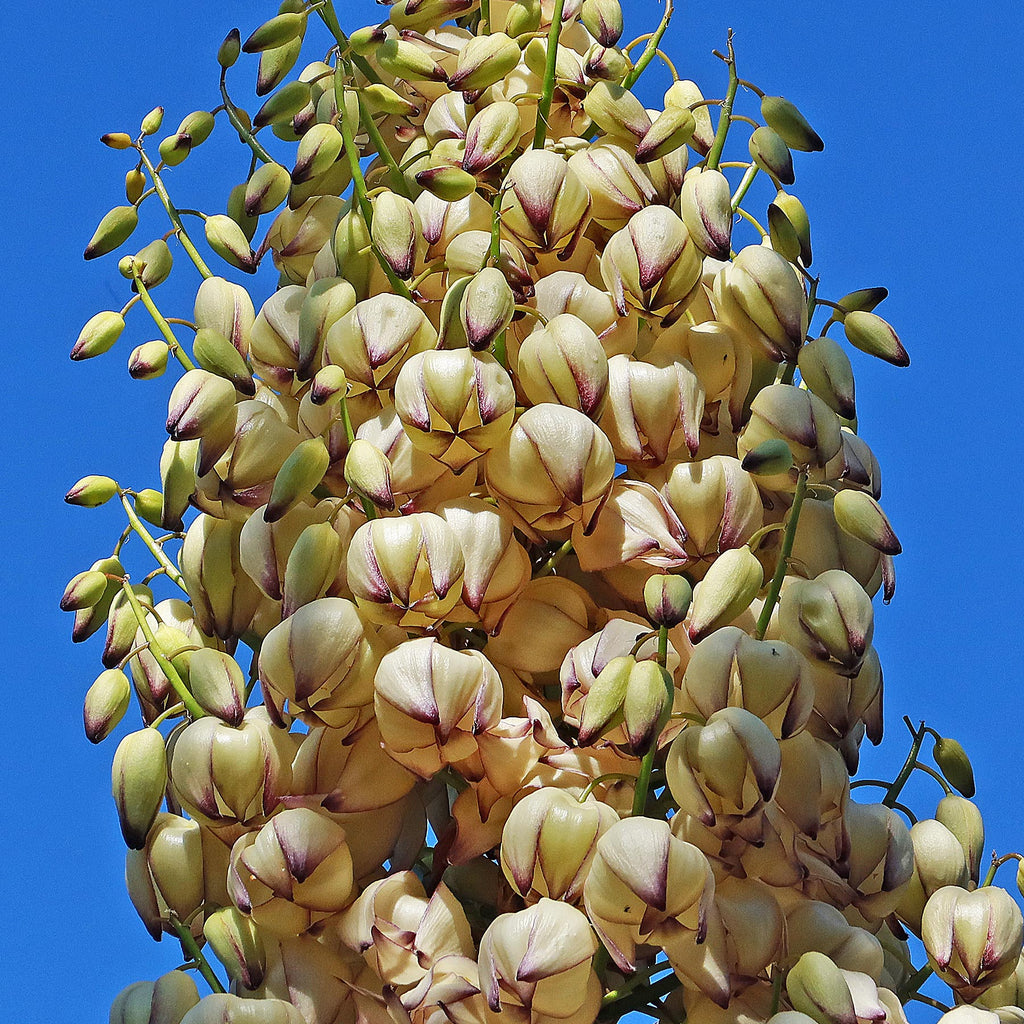
The flowers of Chaparral Yucca bloom when they reach maturity of 5-10 years, with numerous bell-shaped white to purplish flowers during the late spring or early summer. It produces a magnificent flower spike that can reach heights of 10 to 15 feet. These flowers emit a sweet fragrance, attracting pollinators such as moths and bees. It is pollinated by the California yucca moth, with Tegeticula muculata and Hesperoyucca whipplei forming an exclusive relationship, despite numerous associations between Yucca and yucca moth.
Chaparral yuccas only bloom once, and before flowering, they may produce smaller plants around the base, leaving behind genetically identical smaller plants around the original plant's dead stalk.
The flowers of Chaparral Yucca are edible. They can be eaten fresh, cooked, or dried. Native Americans in the Southwest have traditionally eaten them, and they have even been parboiled to remove some of their bitterness.
Chaparral yuccas can be propagated through both seeds and rooted suckers. It is important to provide proper care and patience during the propagation process to ensure successful growth and establishment of chaparral yuccas.
Watering Needs
The Chaparral Yucca has specific watering needs that are important to keep in mind. This resilient plant is native to arid regions and is well adapted to drought-like conditions. As a result, it is crucial to avoid overwatering the Chaparral Yucca. It prefers dry to moderately dry soil and is highly tolerant of drought.
In the spring and summer, during the growing season, it is recommended to water the Chaparral Yucca sparingly. To avoid root rot, let the soil dry out entirely in between waterings. It's best to check the moisture level by sticking your finger about an inch into the soil. Water the Chaparral Yucca if it feels dry, but if it still feels slightly moist, wait a bit before watering again.
In contrast, during the dormant period in fall and winter, the Chaparral Yucca requires even less water. Reduce the frequency of watering significantly as your Hesperoyucca whipplei enters a period of rest. It is important to maintain well-draining soil to prevent waterlogged conditions, which can be detrimental to the Chaparral Yucca plant's health.
Remember, it's always better to underwater than to overwater the Chaparral Yucca. This resilient plant is adapted to survive in dry climates, so it can handle periods of drought. By providing the right balance of water and allowing the soil to dry out between waterings, you can help ensure the health and longevity of your Chaparral Yucca.
Additionally, it's important to note that Chaparral Yucca contains saponins, which are mildly toxic to humans and pets if consumed in large quantities. The leaves and flowers have a bitter taste, acting as a deterrent for most pets. However, it's always wise to keep this plant out of reach of curious children.
Light Requirements
When growing indoors, the Chaparral Yucca prefers bright, indirect light. It does well in a sunny window where it can receive 4-6 hours of sunlight each day. However, it's important to avoid placing it in direct, harsh sunlight, as this can scorch its leaves. If you notice the leaves turning yellow or brown, it may be a sign that your Chaparral Yucca is receiving too much direct light. Adjusting its position or using sheer curtains to filter the sunlight can help create the ideal lighting conditions.
When grown outdoors, the Chaparral Yucca thrives in full sun. It loves basking in bright sunlight for most of the day. This Chaparral Yucca Hesperoyucca whipplei is well adapted to arid regions and can tolerate intense heat and sunlight. However, it's still important to acclimate the yucca gradually to direct sunlight if you're transitioning it from indoor to outdoor conditions. Start by placing it in a partially shaded area and gradually expose it to more sunlight over a few weeks.
Whether indoors or outdoors, it's important to find the right balance of light for the Chaparral Yucca. Just keep an eye on any signs of sunburn or light stress and adjust accordingly.
Optimal Soil & Fertilizer Needs
Chaparral Yucca favors very airy, sandy soil that drains well. Planting them in ordinary soil will result in compacted roots, stunted growth, and, most likely, root rot. Instead, make or buy a well-draining potting mix, or ideally, use our specialized succulent potting mix that contains 5 natural substrates and mycorrhizae to promote the development of a strong root system that helps your Chaparral Yucca succulent to thrive.
When it comes to fertilizing the Chaparral Yucca, it generally doesn't require a lot of additional nutrients. This Hesperoyucca whipplei is adapted to survive in nutrient-poor soils. However, a light application of a balanced (5-10-5), slow-release fertilizer in the spring can give it a little boost. Look for a fertilizer with low nitrogen and potassium (NPK). Remember, it's always better to under-fertilize than to over-fertilize, as excessive nutrients can lead to weak growth.
If you prefer an organic approach, you can also use compost or well-rotted manure as a natural fertilizer. Apply a thin layer around the base of the Chaparral Yucca, avoiding direct contact with the stem. This can provide some organic matter and nutrients over time.
Hardiness Zone & More
If growing indoors, Chaparral Yucca generally prefers average room temperatures between 60-80°F. This plant can tolerate slightly cooler temperatures at night, but it's best to avoid extreme temperature fluctuations. Keep in mind that it's important to protect the yucca from cold drafts, as they can cause damage to the leaves.
If you are living in USDA zones 7-11, you can grow your Heseroyucca whipplei outdoors year-round. It can tolerate temperatures as low as 10°F in zone 7 and higher. However, in colder zones, it's important to provide some protection during freezing temperatures, such as covering the Chaparral Yucca or moving it indoors.
In terms of humidity, the Chaparral Yucca is quite adaptable and can handle a wide range of humidity levels. It can tolerate both dry and moderately humid conditions. However, it's important to avoid excessively high humidity, as it can lead to fungal diseases. Good air circulation can help prevent any issues related to humidity.
The Bottom Line
Overall, the Chaparral Yucca (Hesperoyucca whipplei) is a remarkable succulent plant that captures attention with its striking features and ability to thrive in arid environments. Its tall, candle-like inflorescence and sharp, bayonet-like leaves make it a visually stunning addition to any landscape. The creamy-white flowers that bloom in late spring or early summer emit a sweet fragrance, attracting pollinators and adding to their allure. While it's important to be cautious of its toxicity, the Chaparral Yucca remains a captivating and resilient plant that adds a touch of beauty and resilience to its surroundings.
Shipping Notes
- Free Standard Shipping on $100+ Orders to the USA.
- Except Preorder products are shipped in 48 hours.
- Delivery to the USA:
- Standard Shipping : 3-10 business days
- If time is of the essence, please consider selecting expedited delivery for faster service.
Exchange/Return Notes
- We offer a 30-day return/exchange service after receiving.
- Final sale items are not eligible for returns or exchanges.
- To process your return/exchange, please contact us at [email protected]
- Please click here for more details>>> Return & Exchange Policy