SKU: 31360395038
short palm plants

short palm plants Dwarf Palmetto Tree – Cold-Hardy, Low-Maintenance Tropical Palm

Sale price$24.38 Regular price$27.09
Save 10%

Shipping Estimate
USA
  • USA
  • CAN

Ships within 48 hours · Estimated delivery Jul 13 - Jul 18

Promo Codes Available:

For Your Every Summer RSVP, with Code: SUMMER15

Description

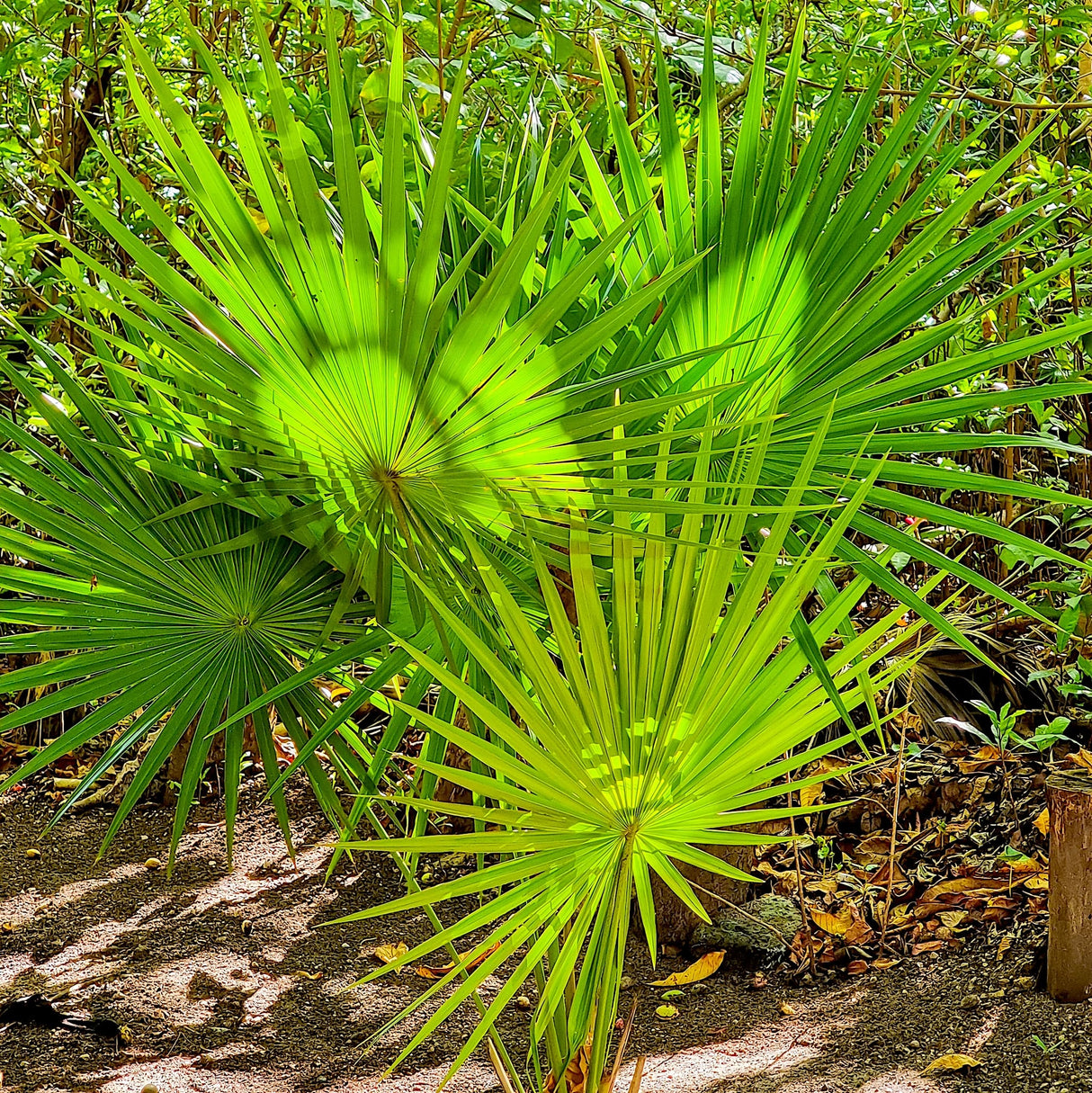
short palm plants Dwarf Palmetto Tree – Cold-Hardy, Low-Maintenance Tropical PalmDwarf Palmetto Tree: Tropical Elegance, Minimal Effort The Dwarf Palmetto Tree (Sabal minor) is the perfect combination of tropical beauty and effortless care. Its lush, fan shaped fronds give a landscape that classic palm tree feel, but with a compact, hardy twist. Unlike towering palm trees, this slow growing species maxes out around 4 6 feet tall, making it an excellent choice for small gardens, walkways, patios, or understory plantings. Its a palm

Dwarf Palmetto Tree: Tropical Elegance, Minimal Effort

The Dwarf Palmetto Tree (Sabal minor) is the perfect combination of tropical beauty and effortless care. Its lush, fan-shaped fronds give a landscape that classic palm tree feel, but with a compact, hardy twist. Unlike towering palm trees, this slow-growing species maxes out around 4-6 feet tall, making it an excellent choice for small gardens, walkways, patios, or understory plantings.

It’s a palm that doesn’t need to live in Florida to thrive—this cold-hardy variety can survive temperatures as low as 10°F, making it one of the toughest palms available. Whether you’re looking for a low-maintenance accent plant or a bold statement piece in a native wildlife garden, the Dwarf Palmetto is a standout.


Why Choose the Dwarf Palmetto Tree?

1. Cold-Hardy & Tough as Nails

Most palm trees struggle in cooler climates, but not this one. The Dwarf Palmetto can handle frost, snow, and even occasional ice storms. It thrives in USDA zones 7-11, making it one of the most cold-hardy palms available. If you love the look of palms but live outside of typical palm-growing regions, this is your solution.

2. Practically No Maintenance

Once established, this palm is incredibly self-sufficient. It’s drought-tolerant, pest-resistant, and disease-resistant, making it an easy addition to any landscape. It thrives in both full sun and partial shade, and it doesn’t require pruning—the fronds stay naturally attractive year-round.

3. Perfectly Compact for Any Space

Unlike towering palms that outgrow their space, the Dwarf Palmetto remains at a manageable height of 4-6 feet tall and wide. It’s an excellent choice for small gardens, foundation plantings, or even large containers on patios or decks. It also works well as an understory plant beneath taller trees in a woodland garden.

4. A Haven for Wildlife

If you love attracting birds and pollinators to your garden, the Dwarf Palmetto won’t disappoint. Its blue-black berriesare a favorite of songbirds, small mammals, and even butterflies. Plus, its thick fronds provide excellent cover for birds looking for a safe place to nest.

5. Coastal & Flood-Tolerant

Do you live near the coast or in a flood-prone area? The Dwarf Palmetto is naturally adapted to wet, sandy, and even brackish soils. It can handle periodic flooding and poor drainage, making it ideal for rain gardens or areas with heavy seasonal rainfall.


Where to Grow the Dwarf Palmetto

This palm is incredibly adaptable and can be used in a variety of landscape designs:

  • As a focal point in small gardens
  • In native or wildlife-friendly gardens
  • Along walkways or driveways for a tropical touch
  • Under taller trees as an understory plant
  • In large containers on patios or entryways
  • Near ponds or water features, since it tolerates wet soil
  • In coastal landscapes where salt exposure is a concern

It thrives in full sun to partial shade and prefers well-draining soil, though it can handle clay or sandy conditions.


How It Compares to Other Palms

Feature Dwarf Palmetto (Sabal minor) Other Small Palms (e.g., Windmill, Pindo)
Cold Hardiness Survives down to 10°F Typically struggles below 20°F
Drought Tolerance Excellent once established Moderate to high
Size 4-6 ft tall and wide Often larger, up to 15-20 ft
Sun Requirements Full sun to partial shade Usually prefers full sun
Maintenance Almost no upkeep needed Some pruning or trimming required
Wildlife Benefits Berries attract birds, butterflies Some attract wildlife, but not all
Soil Tolerance Handles wet, dry, sandy, and even clay soils Some struggle with wet or heavy soils


If you love the look of Windmill or Pindo palms but don’t have the space—or if you need a palm that can handle colder winters and wetter conditions—the Dwarf Palmetto is the best choice.


Bring a Touch of the Tropics to Your Garden—Without the Work

Whether you're designing a lush, low-maintenance landscape or simply looking for a compact, cold-hardy palm, the Dwarf Palmetto is a smart pick. It’s one of the easiest palms to grow, and it thrives in conditions where many other tropical plants struggle.

Plant one today and enjoy year-round greenery, wildlife visits, and a carefree tropical vibe in your outdoor space.


Plant Details

  • Mature Height: 4-6 feet
  • Mature Width: 4-6 feet
  • Sun Exposure: Full sun to partial shade
  • Botanical Name: Sabal minor
  • Other Common Names: Dwarf Palmetto, Bush Palmetto, Sabal Palm


Shipping Notes
  • Free Standard Shipping on $100+ Orders to the USA.
  • Except Preorder products are shipped in 48 hours.
  • Delivery to the USA:
  1. Standard Shipping : 3-10 business days
  • If time is of the essence, please consider selecting expedited delivery for faster service.
Exchange/Return Notes
  • We offer a 30-day return/exchange service after receiving.
  • Final sale items are not eligible for returns or exchanges.
  • To process your return/exchange, please contact us at [email protected]
  • Please click here for more details>>> Return & Exchange Policy
SKU: 31360395038

Discover Niche Categories That Outsell short palm plants

Top-Converting Item to Boost Your Average Order

4.2 ★★★★★
Based on 1475 reviews
Sort
Highest Rating
Newest First
Oldest First
Product Reviews
C
Verified Purchase
Chris
Houston, US
★★★★★ 5
Prefect fit
Size: CA12290-Premium, Size: CA12290-Premium
Excellent product! OEM Replacement. If you are buying for horse power gains. You will not really notice any difference
WAS THIS REVIEW HELPFUL?YesReportShare
Reviewed in the United States on February 18, 2025
B
Verified Purchase
Brendon MO
West Palm Beach, US
★★★★★ 5
K and N is the best
Size: CA12290-Premium
In my opinion, you can’t buy a better air filter. Been buying them for all my cars since the 1990s.
WAS THIS REVIEW HELPFUL?YesReportShare
Reviewed in the United States on December 8, 2024
S
Verified Purchase
Steve
Dallas, US
★★★★★ 2
Does not fit 2023 Honda Accord as it says in the title
Size: CA12290-Premium, Size: CA12290-Premium
Does not fit 2023 Honda Accord as it says in the title. Seems like good quality otherwise.
WAS THIS REVIEW HELPFUL?YesReportShare
Reviewed in the United States on October 3, 2024
P
Verified Purchase
Philip and Lucy
Los Angeles, US
★★★★★ 5
Fits Toyota 2010 FJ cruiser
Perfect fit for a Toyota 2010 FJ cruiser. Install might have been the easiest cabin filter I've done in any car that new. Remove glove box, pull out the cover and replace it. Fits great and takes odors out from it sitting for 6 months in the driveway. No notice to less airflow when on any level of fan speed.
WAS THIS REVIEW HELPFUL?YesReportShare
Reviewed in the United States on May 30, 2026
S
Verified Purchase
S
Houston, US
★★★★★ 5
Comparison with POTAUTO filter: Very similar but cheaper
I bought a POTAUTO MAP 1033C and EPAuto CP846 cabin air filter to compare them for use in my 09 Legacy (gen 4). They both seemed comparable and are cheaper than most other, similar filters, though the POTAUTO was and still is ~33% more expensive than the EPAuto. Both seem built well-enough, considering they're only being used as relatively low-flow cabin filters. That said, the EPAuto is slightly better, mainly due to the white trim piece being unattached along one side on the bottom of the POTAUTO filter. Almost certainly nothing that will affect its performance or longevity, but it is interesting considering it's the more expensive of the two. However, it must be kept in mind that this is an incredibly small sample size. In one of my very scientific tests (/s), I held them up side by side and looked through them toward the sun (obviously being careful) to judge thickness/density and uniformity. Neither had any thin spots that I noticed, and they were pretty similar overall. One of them blocked slightly more light than the other, indicating more filtration, but I unfortunately don't remember which one. I feel like it was the EPAuto, but I don't really want to speculate as I could very well be wrong. What I do remember is that the difference was so minor that all else being equal, it wouldn't justify the cost difference between the two. In other words, even if the POTAUTO were the slightly better one, it wouldn't be worth the extra few dollars for the minimal amount of extra filtration. In another test, I compared the filters to each other and the old filter (which I'm pretty sure was OEM, but certainly not a charcoal filter, so it was significantly thinner) by blowing air from a compressor through them. I held the nozzle at roughly the same distance from each on one side of the filters, and I held my other hand at roughly the same distance from each on the other side. The old filter, unsurprisingly, let much more air flow through. Both charcoal filters were much more restrictive due to their extra thickness, leading me to feel much less air coming through. Both were roughly the same. Both filters also held up just fine to the strong blasts of air. I bought a couple other filters that I was going to cut to fit to use one or both with these filters as a pre-filter and/or additional charcoal layer. After the airflow test, I decided against this, as these are a lot more restrictive than OEM already, and I didn't want to push it, since that could at best cause issues with getting good airflow into the car, and at worst could damage the blower. If not for the fact many, many people have been using these and similar filters for a long time without apparent issue caused by this, I would hesitate to even use these. I haven't noticed a decrease in the airflow, but it's doubtful I would since I rarely turn the fan up past the first couple settings (usually have it on the first) if I have it running at all, and I have the center vents pulled out (to access the inside of the dash) which causes the flow at the vents to be reduced slightly. TL;DR - Both the POTAUTO and EPAuto charcoal filters appear to be a good choice, with the EPAuto having a slight edge on build quality (based on my limited sample size of one each) and a cheaper price. Filtration appears to be very similar between the two, certainly not enough of a difference to warrant the extra price for the POTAUTO over the EPAuto. Flow is significantly more restrictive than OEM filter but doesn't appear to be an issue. I give the EPAuto 5 stars and the POTAUTO 4 stars, only because the value of the POTAUTO is a good bit less (very similar or possibly even inferior quality for 33% more money). I can't speak to their longevity or performance, but I don't imagine either should prove to be an issue. -------------------------------------------------- As a side note relating specifically to the Legacy: replacing the cabin filter in this car is a PITA. It's not overly difficult per se, but a serious pain and certainly not something you're going to do when you have a spare few minutes. I'd rate it probably around a 3.5/10 in difficulty and a 7/10 for annoyance. While you can sort of access it by removing the manual compartment, you can't remove the tray through that. So you need to actually take the whole glove box out, which requires removing the side panel, unhooking the string/loop that keeps it from falling all the way down, and removing a few plastic screws, which can be a bit of a pain (and apparently Subaru loves them since they're all over the car). A stubby Philips driver will be helpful. Once you have the glove box out of the way, you have to unscrew several more of those plastic screws to remove the plastic cover between the glove box and the filter. This hole is where you gain access. Be careful when removing the old filter as loose dirt and debris may fall out and make a bit of a mess. You don't really want to get any in the fan below it if you can help it. Reverse the steps to reassemble it, and remember to reattach the string. Getting the glove box back in its track can be a bit of a challenge; in my experience from doing it multiple times I've found you sort of half force it and half don't. That is, it'll likely offer some resistance even if it's lined up, so if you try to baby it you'll probably be there a while, but also play with the alignment a bit to see if you can get it without marring up the tab and the slot on the right side too much. All in all, expect to spend anywhere from 15-45 minutes on this, and make sure you have a standard length as well as a shorter or stubby Philips screwdriver. I have to say, when it comes to air filters, this car is horrible. The air intake filter is a pain to change, too--much worse than most if not all other cars I've done. -------------------------------------------------- Keywords: Subaru Legacy, fourth gen, fourth generation, 4th gen, 4th generation, 03, 04, 05, 06, 07, 08, 09, 2003, 2004, 2005, 2006, 2007, 2008, 2009
WAS THIS REVIEW HELPFUL?YesReportShare
Reviewed in the United States on September 29, 2017

recommand products