Shipping Estimate
USA
- USA
- CAN
- USA
- CAN
Ships within 48 hours · Estimated delivery Jul 14 - Jul 19
 Promo Codes Available:
For Your Every Summer RSVP, with Code: SUMMER15
Description
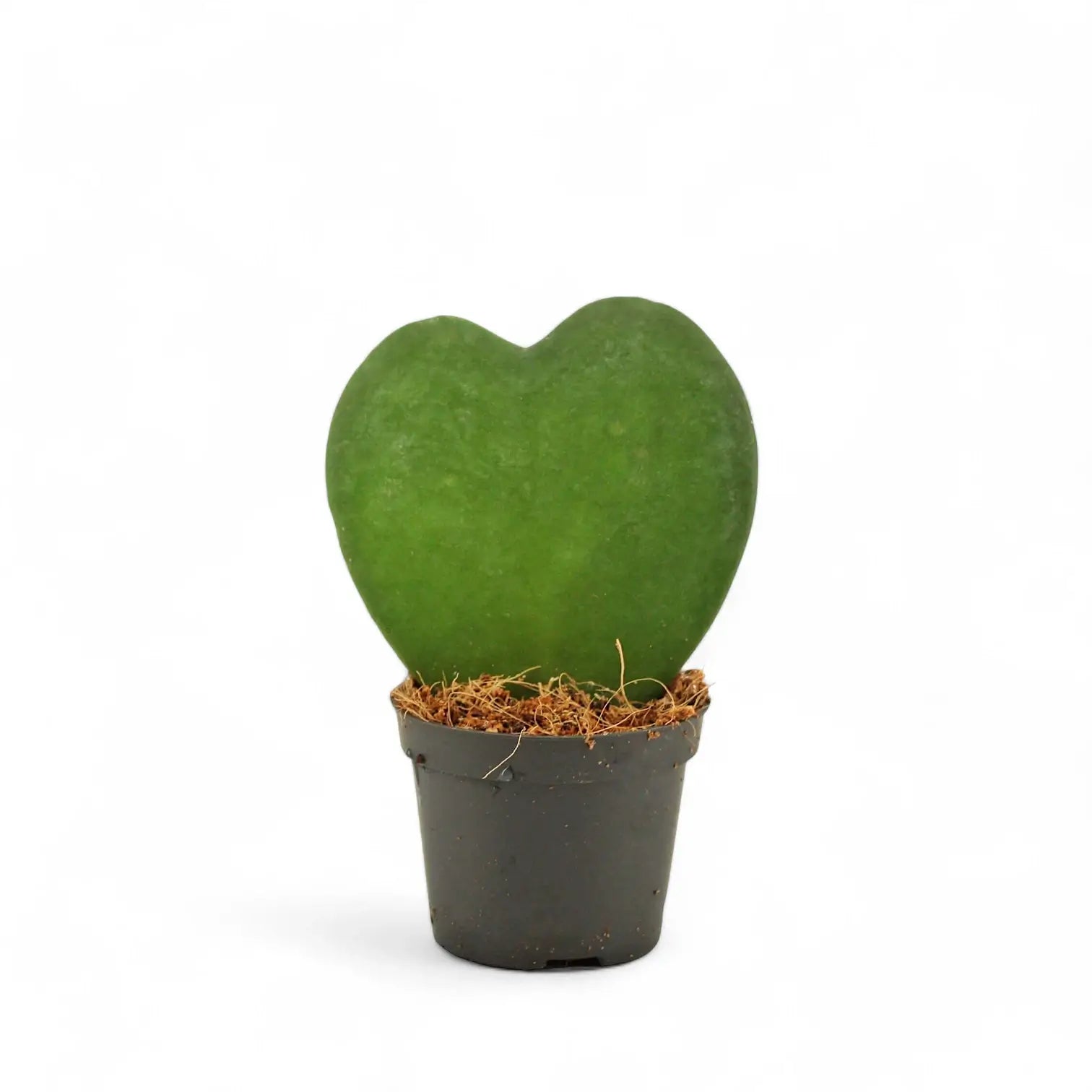
heart shaped succulent plant Hoya kerriiHoya kerrii Hoya kerrii is the classic heart leaf wax plant, grown for thick, fleshy leaves arranged in opposite pairs on slow, twining stems. A rooted stem plant can develop into a long lived vine with aerial roots at the nodes, while a single rooted leaf often remains a living leaf for a very long time. Stem tissue is what allows the plant to build a true vine. Established plants grow deliberately, sending out searching stems before new leaves
Hoya kerrii
Hoya kerrii is the classic heart-leaf wax plant, grown for thick, fleshy leaves arranged in opposite pairs on slow, twining stems. A rooted stem plant can develop into a long-lived vine with aerial roots at the nodes, while a single rooted leaf often remains a living leaf for a very long time. Stem tissue is what allows the plant to build a true vine.
Established plants grow deliberately, sending out searching stems before new leaves appear. Mature vines can produce rounded umbels of waxy flowers with night fragrance and reddish-brown nectar, so flowering plants are best kept away from surfaces that could stain.
Heart-shaped Hoya kerrii leaves and slow vine growth
- Growth habit: Slow, twining epiphytic to lithophytic vine with aerial roots along mature stems.
- Leaves: Thick, green, heart-shaped leaves with a firm, succulent texture.
- Stem cuttings: Rooted stems can grow into vines; rooted single leaves usually remain as leaves.
- Flowering: Mature plants can form waxy umbels on persistent spurs.
- Placement: Older stem plants can be grown on hoops, trellises or hanging pots once active vine growth begins.
From rooted stem cutting to mature sweetheart vine
Hoya kerrii is native from Indochina to western Malesia, where it grows as a climbing epiphyte or lithophyte in wet tropical habitats. Its thick leaves hold moisture, while its roots are adapted to airy positions on bark or rock rather than dense, heavy soil.
In indoor cultivation, the slow pace is normal. A healthy rooted stem cutting may spend months building roots before extending new shoots. Bare vines should usually stay in place because they can later produce leaves or flowering spurs.
Root care for slow-growing Hoya kerrii
- Light: Give bright filtered light for strong leaf growth and flowering potential. Very dim positions slow this species further.
- Watering: Water deeply, then let most of the mix dry before watering again. Thick leaves store moisture, but roots still need regular rehydration.
- Substrate: Use bark, pumice, perlite and coco chips so water drains quickly and oxygen remains around the roots.
- Pot size: Keep the pot close to the size of the root system. A large pot can stay wet too long around a slow-growing plant.
- Humidity: Average to moderate humidity is usually enough, with steadier growth around 50–70%.
- Temperature: Keep at 18–28°C and avoid cold, damp substrate.
- Training: Guide new stems onto a hoop or trellis while they are flexible, or let mature stems trail from a hanging container.
- Peduncles: Leave old flowering spurs attached, as they can bloom again on mature plants.
No vine growth, wrinkled leaves and sticky flowers
- No vine growth: Check whether the plant has a node and stem tissue. A rooted leaf alone usually stays alive but remains static.
- Wrinkled leaves: Check the full depth of the pot. Wrinkling can come from dryness or from damaged roots that cannot absorb water.
- Yellow soft leaves: Look for wet substrate, low temperature or a pot that holds moisture around the roots for too long.
- Bare searching stems: Keep healthy bare vines unless shaping is needed; they can later carry leaves or flowers.
- Sticky flowering: Mature umbels may drip reddish-brown nectar, so move the plant away from porous surfaces when buds open.
Pet safety and milky sap
Hoya kerrii is listed as non-toxic to cats, dogs and horses by NC State Extension and ASPCA. The plant is still ornamental and can release milky sap when cut, so wash hands after pruning and keep trimmings away from pets that chew houseplants.
Hoya kerrii name origin and family
Hoya kerrii Craib belongs to Apocynaceae and was first published in 1911. The species epithet honours Arthur Francis George Kerr, the plant collector associated with early material from Southeast Asia, while Hoya honours Thomas Hoy.
Hoya kerrii grows slowly from stem cuttings into a sturdy sweetheart vine with thick paired leaves and long bare runners before new foliage forms.
Shipping Notes
- Free Standard Shipping on $100+ Orders to the USA.
- Except Preorder products are shipped in 48 hours.
- Delivery to the USA:
- Standard Shipping : 3-10 business days
- If time is of the essence, please consider selecting expedited delivery for faster service.
Exchange/Return Notes
- We offer a 30-day return/exchange service after receiving.
- Final sale items are not eligible for returns or exchanges.
- To process your return/exchange, please contact us at [email protected]
- Please click here for more details>>> Return & Exchange Policy