Shipping Estimate
USA
- USA
- CAN
- USA
- CAN
Ships within 48 hours · Estimated delivery Jul 12 - Jul 17
 Promo Codes Available:
For Your Every Summer RSVP, with Code: SUMMER15
Description
lion's ear plant seeds Lion's Ear – UJAMAA SEEDSLenotis nepetifolia Seeds per pack ~ 50 Packed for 2026 Leonotis nepetifolia, commonly known as lion's ear or klip dagga, is a species of plant in the mint family, Lamiaceae. It is native to tropical Africa and southern India but has spread to other tropical and subtropical regions around the world. Not to be confused with Leonotis leonurus which is a perennial that requires a long growing season whereas Leonotis nepetifolia is an annual. Leonotis
Lenotis nepetifolia
Seeds per pack ~ 50 Packed for 2026
Leonotis nepetifolia, commonly known as lion's ear or klip dagga, is a species of plant in the mint family, Lamiaceae. It is native to tropical Africa and southern India but has spread to other tropical and subtropical regions around the world.
Not to be confused with Leonotis leonurus which is a perennial that requires a long growing season whereas Leonotis nepetifolia is an annual. Leonotis nepetifolia is known as Lion's Ear, while Leonotis leonurus is known as Lion's Tail. Leonotis nepetifolia contains more leonurine, a pseudoalkaloid, than Leonotis leonurus.
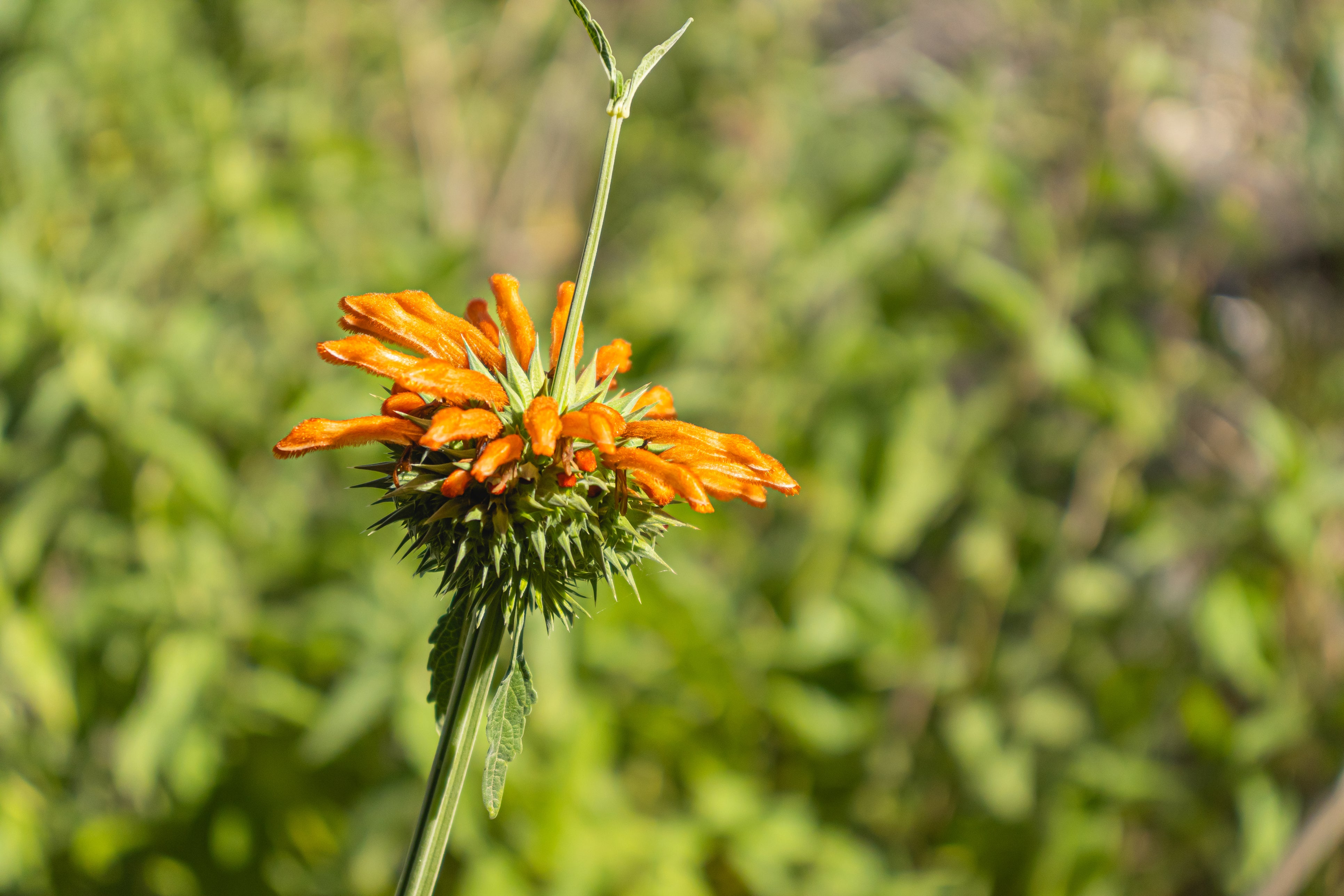
Lion’s Ear can grow up to 10 feet tall, with square, green stems that are often woody at the base. The leaves are broadly lanceolate, a narrow oval shape tapering to a point like a lance, and serrated. They can grow up to 5 -6 inches in length. One of the most distinctive features of Leonotis nepetifolia is its bright orange or sometimes red flowers, which are tubular and arranged in spherical inflorescences that encircle the stem at intervals, resembling a lion’s mane, hence the name "lion's ear." The flowering season varies depending on the region but typically occurs in late summer to fall.
Lion’s Ear thrives in a variety of environments, from open, disturbed areas to grasslands and woodland edges. The plant prefers full sun and well-drained soil. Leonotis nepetifolia is often grown as an ornamental plant due to its striking flowers and height, which can add structure and color to garden settings. In traditional medicine, various parts of the plant are used to treat fevers, headaches, dysentery, and other ailments. The leaves are also sometimes used as a relaxant or mild intoxicant.
The plant is drought-tolerant once established and can thrive in poor soil conditions, making it relatively easy to maintain. It can be propagated from seeds or cuttings and tends to spread easily, sometimes becoming invasive in suitable climates. Overall, Leonotis nepetifolia is a robust, eye-catching plant that not only enhances the visual appeal of gardens but also has a range of traditional uses.
Growing Leonotis nepetifolia, or Lion's Ear, can be a rewarding experience due to its vibrant flowers and medicinal properties. Here’s how to grow this plant successfully:
Sow seeds in late winter to early spring indoors, or directly outdoors after the last frost when the soil has warmed up. Use a well-draining soil mix. Incorporate compost or other organic matter to enrich the soil if necessary. Scatter the seeds on the surface of the soil and lightly press them in, but do not cover them deeply, as they need light to germinate. Keep the soil moist but not waterlogged.
Lion's Ear requires full sun to partial shade, but it blooms best in full sun. Plant them in a location where they can spread out, as they can grow quite large. Space them about 18-24 inches apart to allow for good air circulation and growth. While the plant is establishing, water it regularly to keep the soil consistently moist. Once established, Leonotis nepetifolia is quite drought-tolerant, but it will benefit from occasional watering during prolonged dry spells, especially in hotter climates.
It doesn’t require a lot of fertilization. A light application of a balanced fertilizer in the early spring can promote healthier growth and flowering. Trim the plant back in late fall or early spring to encourage bushier growth and more flowers. Deadheading (removing spent flowers) can also encourage more blooms.
Keep an eye out for common pests like aphids and spider mites. Use insecticidal soap or neem oil as a natural treatment if needed. Ensure good air circulation around the plants to prevent fungal diseases. Avoid overhead watering to minimize the risk of leaf diseases.
In cooler climates, Leonotis nepetifolia is treated as an annual, as it may not survive freezing temperatures. In warmer zones, it can behave as a perennial. Mulching around the base can help protect the roots in colder areas.
By following these guidelines, you can successfully grow Leonotis nepetifolia in your garden, enjoying its striking flowers and the wildlife it attracts, like bees and hummingbirds.
Shipping Notes
- Free Standard Shipping on $100+ Orders to the USA.
- Except Preorder products are shipped in 48 hours.
- Delivery to the USA:
- Standard Shipping : 3-10 business days
- If time is of the essence, please consider selecting expedited delivery for faster service.
Exchange/Return Notes
- We offer a 30-day return/exchange service after receiving.
- Final sale items are not eligible for returns or exchanges.
- To process your return/exchange, please contact us at [email protected]
- Please click here for more details>>> Return & Exchange Policy