SKU: 20102451904
anthurium clarinervium brown edges

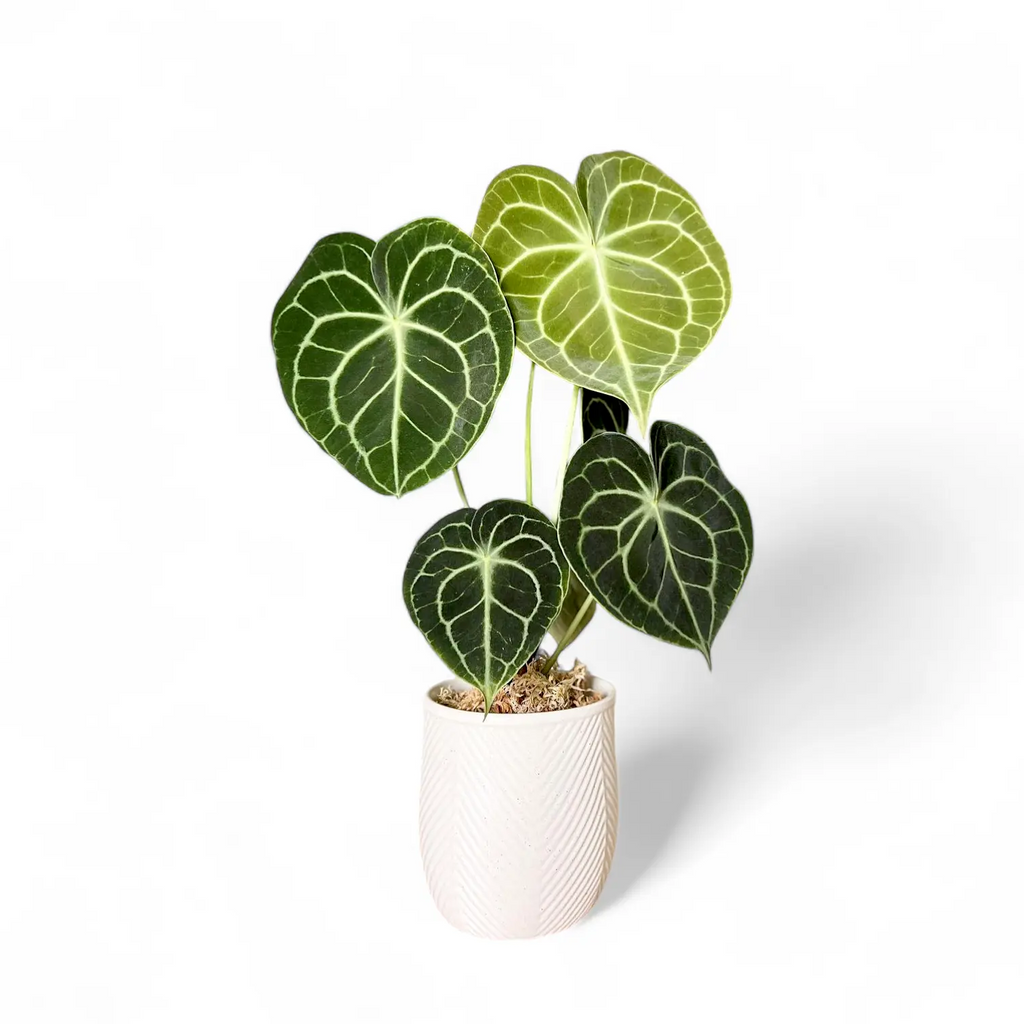
anthurium clarinervium brown edges Anthurium Clarinervium (Velvet Cardboard)

Sale price$22.96 Regular price$25.51
Save 10%

Pay in installments of $6.38 with ShopPay, AfterPay and Klarna

Shipping Estimate
USA
  • USA
  • CAN

Ships within 48 hours · Estimated delivery Aug 8 - Aug 13

Promo Codes Available:

For Your Every Summer RSVP, with Code: SUMMER15

Description

anthurium clarinervium brown edges Anthurium Clarinervium (Velvet Cardboard)The nickname says it all Velvet Cardboard Anthurium. Anthurium clarinervium is native to a single Mexican state, Chiapas, where it grows as an epiphyte on limestone karst and rocky outcroppings in the shaded forest. Its thick, almost leathery, heart shaped leaves have a dense velvety surface and a network of bold, bright white veins that stand out against the deep green with the clarity of chalk on a blackboard. The leaves feel as substantial as they

The nickname says it all — Velvet Cardboard Anthurium. Anthurium clarinervium is native to a single Mexican state, Chiapas, where it grows as an epiphyte on limestone karst and rocky outcroppings in the shaded forest. Its thick, almost leathery, heart-shaped leaves have a dense velvety surface and a network of bold, bright white veins that stand out against the deep green with the clarity of chalk on a blackboard. The leaves feel as substantial as they look — stiff, cardboard-like, built for endurance. At 40–65 cm it is compact enough for a shelf or tabletop and dramatic enough to anchor any room. One of the finest collector aroids for indoor growing.

💡 A Rock-Dweller, Not a Forest Floor Plant — Why Soil Matters In the wild, this Anthurium grows on limestone outcrops and tree surfaces, not in ground soil. Its roots are adapted to maximum air circulation and fast drainage — dense, moisture-retentive soil will kill it. A chunky, bark-heavy aroid mix is not optional here; it is the single most important factor in keeping this plant alive and thriving long-term.
☀️

Light

Bright indirect light — away from direct sun at all times. An east-facing window or 1–2 m back from a south-facing window with a sheer curtain is ideal. In autumn and winter, a little gentle direct morning sun is beneficial. The white veining dulls noticeably in low light — a reliable indicator that the plant needs more brightness. A grow light works very well.

💧

Watering

Allow the top third of the soil to dry before watering — then water thoroughly until it drains freely. Empty the saucer immediately. The chunky mix dries faster than standard potting soil; check by weight — a light pot means it's time to water. Reduce frequency in autumn and winter. Consistent overwatering is the leading cause of decline.

💦

Humidity

50–70% preferred — higher than average indoor humidity. Use a humidifier, pebble tray, or morning misting. Critically, ensure good air circulation alongside humidity — stagnant moist air encourages fungal issues on the velvety leaf surface. Do not mist in the evening. Keep away from radiators, AC vents, and heating sources.

🌱

Growing Media

Chunky, bark-heavy, extremely well-draining mix — this is non-negotiable. Use: 40% orchid bark, 25% perlite, 20% coco coir, 15% potting soil. pH 5.5–6.5. Can also grow in 100% sphagnum moss kept consistently moist but never sodden. Never use dense potting soil alone. Repot every 2–3 years in spring, one size up. A shallow, wide pot suits the root system better than a deep one.

🌾

Feeding

Balanced liquid fertilizer at half strength every 4–6 weeks in spring and summer only. Apply to moist soil. Flush soil every 3 months to prevent salt build-up. Do not feed in autumn or winter. Less is more — over-fertilizing causes root burn and brown tips.

🍂 Winter Rest — Cooler and Drier Is Better In winter, allow temperatures to drop slightly to 15–18°C and reduce watering further. This cooler, drier rest period mimics the plant's natural seasonal rhythm and promotes healthier, more vigorous growth the following spring. Do not stop watering entirely — just reduce frequency significantly.
🍊 Orange Berries — A Bonus on Mature Plants Mature Anthurium clarinervium occasionally produce flowers — a small green-white spathe, not particularly ornamental — followed by bright orange berries that are genuinely decorative. These appear on established plants only and are a sign of a thriving, well-cared-for specimen.
⚠️ Common Issues & Quick Fixes

Yellow Leaves

Overwatering or direct sun. Let the top third dry completely, check drainage, and move out of any direct light. Widespread yellowing with soggy soil means root rot — unpot, trim black roots, repot in fresh chunky mix, and water much less frequently.

Brown Tips or Crispy Edges

Low humidity or proximity to a heater, AC vent, or fan. Boost humidity and relocate away from drying air sources. Also check watering — prolonged dryness causes the same symptom. Existing brown tips are permanent; trim neatly.

Dull Veining or Small New Leaves

Insufficient light — the white vein pattern dims visibly in low light and new leaves grow smaller. Move to a brighter indirect position or add a grow light. Feed monthly during the growing season to support healthy leaf development.

New Leaves Look Rusty or Bronze

Completely normal — new leaves emerge in a rusty green-bronze colour before deepening to the rich dark green of mature leaves over 5–10 days. Do not mistake this for a deficiency or disease.

Spider Mites, Thrips or Mealybugs

Inspect leaf undersides and petiole bases regularly. Wipe with a soft damp cloth then spray with diluted neem oil or insecticidal soap every 5–7 days for 3 weeks. Good air circulation and maintaining 50%+ humidity reduce pest pressure significantly.

📋 Quick Plant Profile

Botanical Name Anthurium clarinervium Matuda
Common Names Velvet Cardboard Anthurium, White-Veined Anthurium
Family Araceae
Origin Chiapas, Mexico only — limestone karst and rocky epiphytic habitat
Signature Feature Thick, velvety, cardboard-like heart leaves with bold white veins
New Leaf Colour Rusty bronze-green → deepens to dark green over 5–10 days
Light Bright indirect; no direct sun; grow light effective
Watering Top third dry; empty saucer immediately; reduce in winter
Humidity 50–70%; good air circulation essential alongside humidity
Temperature 20°C–27°C growing; 15–18°C winter rest; no cold drafts
Soil Chunky bark-heavy aroid mix; pH 5.5–6.5; or 100% sphagnum moss
Pot Type Shallow and wide; always with drainage holes
Mature Height 40–65 cm; spread up to 1 m
Berries Bright orange; produced on mature plants after flowering
Propagation Root division in spring; stem cuttings rooted in water
Ideal For Collectors, Shelves, Tabletops, Bright Humid Rooms
Care Level Intermediate — chunky soil and air circulation are the keys
Shipping Notes
  • Free Standard Shipping on $100+ Orders to the USA.
  • Except Preorder products are shipped in 48 hours.
  • Delivery to the USA:
  1. Standard Shipping : 3-10 business days
  • If time is of the essence, please consider selecting expedited delivery for faster service.
Exchange/Return Notes
  • We offer a 30-day return/exchange service after receiving.
  • Final sale items are not eligible for returns or exchanges.
  • To process your return/exchange, please contact us at [email protected]
  • Please click here for more details>>> Return & Exchange Policy
SKU: 20102451904

Discover Niche Categories That Outsell anthurium clarinervium brown edges

Top-Converting Item to Boost Your Average Order

4.5 ★★★★★
Based on 10 reviews
Sort
Highest Rating
Newest First
Oldest First
Product Reviews
J
Verified Purchase
Jfaith
Natrona Heights, US
★★★★★ 5
Stays put and dissolves slowly. Orange flavor is nice.
If you have to use something overnight for dry mouth definitely get these. I use one nightly with my mouth guard. The orange flavor is very nice and it dissolves slowly overnight. It's small enough to do the trick, but not be overpowering. It stays put. And it works. Definitely notice the improvement inside my mouth.
WAS THIS REVIEW HELPFUL?YesReportShare
Reviewed in the United States on November 13, 2025
I
Verified Purchase
Irina Wen
Natrona Heights, US
★★★★★ 5
This is a seminal book on psychotherapy. A must have!
Format: Hardcover
In the age of virtual (dis)connection, concerning high rates of depression and anxiety, and the importance of self-reliance and individualism, this book comes as a lighthouse of hope and direction. Attachment Theory in Practice is a must-have for any therapist who is looking to deepen their work and bring desired transformation and change to their clients’ lives. The book provides a beautiful overview of the current state of the mental health field and the need for focusing on emotion, attachment and connection in psychotherapy. Dr. Johnson reminds us that “in order to shape optimal regulation that allows clients to harness their emotions for growth and aliveness, therapists have to ensure that clients are actively engaged with an emotional reality.” She echoes the findings from research on emotion regulation and suggests that “coregulation, rather than solo self-regulation, is the baseline, normal, and most-efficient strategy for us as social animals.” Dr. Jonson clearly posits that change is an emotional and an interpersonal phenomenon. The book also outlines very practical guidance to working with couples, individuals, and families using the the attachment framework and EFT. As a therapist who is interested in science and empiricism, I am delighted to see the tremendous amount of research support EFT for couples has received over the past decade and I look forward to learning more about the findings in the areas of EFIT and EFFT.
WAS THIS REVIEW HELPFUL?YesReportShare
Reviewed in the United States on July 1, 2019
C
Verified Purchase
CC Tsai
Carnegie, US
★★★★★ 5
A Foundational Book in EFT
Format: Hardcover
In a field of books about EFT, Sue Johnson’s new book provides an up-to-date summary of the latest developments in the EFT method, including applications for individual, couple and family therapy. Having been a student of EFT for 12 years or more, this book was more than a repetition of the fundamentals of the method, its stages and steps, which appear in her earlier books and have been elaborated by other authors. Here, I found her efforts to situate EFT conceptually in the field of psychotherapy, not only its attitude toward defining health and distress, but the underlying principles for its attitude toward how change occurs and its unique principles for how therapists help clients (individual, couple or family) foster change in themselves and their lives. She explains and illustrates the use of the EFT Tango moves, which implement the EFT method within the clinical dialogue and actualize the change process. No doubt, this book will become a primary source for future EFT training and is worth both reading and mastering cover-to-cover.
WAS THIS REVIEW HELPFUL?YesReportShare
Reviewed in the United States on June 21, 2019
T
Verified Purchase
Tracy Lewis
West Palm Beach, US
★★★★★ 5
Broadens EFT Couple frame to individual and family work
Format: Hardcover, Format: Hardcover
I am really digging in to this. Even though it is an academic book, I find it highly readable and pragmatic. I am chewing slowly on pieces and am using my attachment TANGO (read the book) with my individual clients to great effect. Previously I would use an attachment frame but it wasn’t as focused and organized. Really an orienting perspective. Of course I am also integrating this precisely written guide with my couples, as I am an EFT couple therapist. And for classroom teaching the first few chapters alone highlight—and back up with research the reliability of attachment as a unifying frame. I call it my “map for human” and it Really is. Thank you Sur for putting all that research in one place.
WAS THIS REVIEW HELPFUL?YesReportShare
Reviewed in the United States on February 15, 2019
A
Verified Purchase
Angie Juniper
Birmingham, US
★★★★★ 5
Love this book!!
Format: Hardcover
Sue Johnson has done it again! She is on the cutting edge of Attachment Science and is leading the way in helping us humans join other humans on our journey of healing! As a therapist, she has impacted how I work and practice the art of connecting. Thanks Sue!! Great job! This book has expanded Emotionally Focused Therapy so that no one is missing out.... individuals, couples, and families can all be impacted by the process of emotional resonance, regulation and revision. Thank you!
WAS THIS REVIEW HELPFUL?YesReportShare
Reviewed in the United States on July 21, 2019

recommand products