Shipping Estimate
USA
- USA
- CAN
- USA
- CAN
Ships within 48 hours · Estimated delivery Jul 13 - Jul 18
 Promo Codes Available:
For Your Every Summer RSVP, with Code: SUMMER15
Description
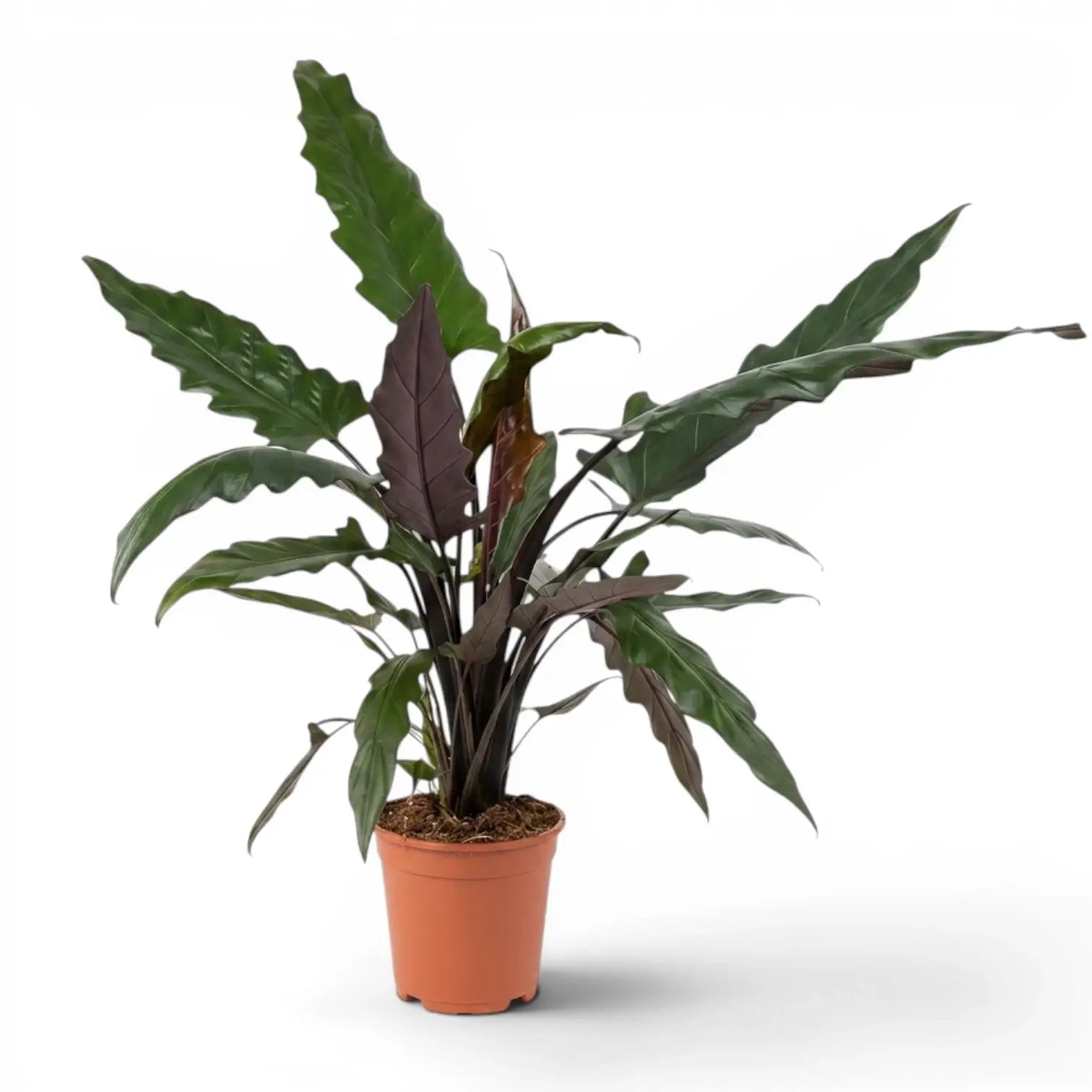
philodendron lauterbachiana Alocasia lauterbachianaAlocasia lauterbachiana Alocasia lauterbachiana, often called Purple Sword Alocasia, is a tall, narrow leaved species with dark green to bronze green blades, serrated margins and purple to brown purple undersides. The plant grows upright from a brown stem and carries its leaves in a terminal base, giving it a strong vertical line. Longer petioles, sword like blades and a structured base become more visible as it matures. Alocasia lauterbachiana
Alocasia lauterbachiana
Alocasia lauterbachiana, often called Purple Sword Alocasia, is a tall, narrow-leaved species with dark green to bronze-green blades, serrated margins and purple to brown-purple undersides. The plant grows upright from a brown stem and carries its leaves in a terminal base, giving it a strong vertical line. Longer petioles, sword-like blades and a structured base become more visible as it matures.
Alocasia lauterbachiana (Engl.) A.Hay is native from northern New Guinea to the Bismarck Archipelago. The species can form a treelet with an erect brown stem to around 1.5 m, leaves in a terminal cluster, petioles to around 40 cm and narrowly hastate blades with serrately lobed margins. The anterior lobe can reach around 60 cm long and 15 cm wide in species material. In warm, favourable conditions, mature plants can reach around 80–130 cm tall, with long leaves around 45–50 cm.
Purple Sword leaf shape
The leaves are long, narrow and pointed, with serrated to lobed margins that give each blade a sword-like profile. The upper surface is dark green to bronze-green, while the underside is dark purple to brown-purple. This colour contrast is most visible when leaves angle outward or when the plant is viewed from below. The petioles are often mottled chocolate brown, adding pattern to the upright structure.
With age, Alocasia lauterbachiana develops a more visible stem and the leaf cluster sits higher above the pot. Mature plants can become top-heavy, so container stability matters. A strong root system allows longer petioles, larger serrated blades and steadier upright growth.
- Leaf shape: narrow hastate blades with serrated to lobed edges.
- Leaf colour: dark green to bronze-green above, dark purple to brown-purple below.
- Petioles: upright to arching, often with chocolate-brown mottling.
- Growth habit: erect brown stem with leaves held in a terminal base.
- Scale: a larger indoor Alocasia, with mature plants needing vertical space and a stable pot.
Native range and rainforest-edge habitat
Alocasia lauterbachiana is native to northern New Guinea and the Bismarck Archipelago. Botanical notes place it in lowland rainforest, especially near river edges and forest edges. Indoors, keep conditions warm and humid, with filtered light and an open substrate that can stay lightly moist while still draining well.
The species grows larger when roots are warm and active. Indoors, the long leaves need clearance from walls, shelves and neighbouring plants. A bright but gentle exposure helps petioles strengthen and colour show clearly on the blades, while harsh direct sun can scorch the leaf surface.
Light, water and sword leaves
- Light: Give bright, softened light or soft filtered morning sun. This keeps upright growth firmer, deepens leaf colour and strengthens petioles.
- Watering: Water the full pot, then allow air back around the roots before the next soak.
- Substrate: Use a tall-pot-friendly mix with bark, coco husk, coarse mineral drainage and enough fine material to hold moisture. Larger roots need a moist but breathable potting mix.
- Temperature: Temperatures around 20–28 °C suit active growth, while colder rooms slow water use.
- Humidity: Raised humidity helps long narrow blades expand smoothly and reduces dry edge stress on serrated margins.
- Feeding: Feed lightly to moderately while the plant is actively growing. Larger leaves and petioles need steady nutrition when light and root warmth are strong.
- Pot choice: Use a stable pot with drainage to steady the tall leaves. Move up in stages as roots fill the pot and the plant gains height.
- Mineral substrates: Alocasia lauterbachiana can adapt to inert mineral or semi-hydro substrates after careful transition, with consistent warmth and balanced nutrients.
Height, repotting and seasonal growth
As Alocasia lauterbachiana matures, the upright growth can become broad enough to need dedicated vertical space. Rotate the pot gradually to keep petiole direction balanced, and give emerging leaves clearance while they expand. Long blades can mark if they press against glass, walls or shelves before the tissue has firmed.
Repot as the plant produces new leaves when roots have filled the container or the substrate has lost its open structure. Choose a modest size increase and keep the stem base at a stable level in the mix. Through the low-light season, the plant may slow leaf production and hold its existing base. Watering intervals usually stretch because larger pots and cooler rooms dry more slowly.
Sword leaves as early alerts
- Brown serrated edges: Check humidity, watering consistency, heat load and mineral build-up. Narrow lobed margins show stress quickly.
- Yellow lower leaves: Check pot weight, root condition and recent temperature changes. One older leaf can fade naturally, while several yellow leaves together point to root or moisture stress.
- Soft petioles: Check root warmth, drainage and the last watering interval. Cold wet substrate can weaken upright growth.
- Small new leaves: Low light, root restriction, recent repotting or cooler conditions can reduce the next leaf size.
- Leaning base: Rotate the pot gradually, check whether light is one-sided and make sure the container is heavy enough for the plant’s height.
- Pest damage: Spider mites, thrips and mealybugs can hide along petiole bases, leaf backs and serrated margins. Inspect new growth before damage spreads.
Growth cycle and division
Remove fully yellowed leaves at the base with clean scissors once they have faded. Keep healthy leaves in place even when they have small edge marks, because the tall base needs functioning leaf area to feed the next growth. Mature leaves can be wiped gently with a damp cloth while supporting the blade from below.
Propagation is by division, stem sections or offsets while growth is active, depending on how the plant has developed. Firm pieces need warmth, a stable position and an open substrate while roots re-establish. Mature plants can flower with paired inflorescences, mottled peduncles, a greenish ivory spathe marked with chocolate-purple tones and orange-red berries. Indoors, the tall serrated foliage and purple undersides give the plant its strength.
Handling long sword-leaf petioles
Alocasia lauterbachiana contains irritating calcium oxalate crystals. Keep the long leaves and cut sections away from pets and small children. Gloves help protect sensitive skin during pruning, repotting and division.
Lauterbachiana name origin
The accepted name is Alocasia lauterbachiana (Engl.) A.Hay, published under Alocasia in 1990, with Schizocasia lauterbachiana Engl. as the basionym. The species name honours Karl Lauterbach, the botanist connected with the original New Guinea material.
Shipping Notes
- Free Standard Shipping on $100+ Orders to the USA.
- Except Preorder products are shipped in 48 hours.
- Delivery to the USA:
- Standard Shipping : 3-10 business days
- If time is of the essence, please consider selecting expedited delivery for faster service.
Exchange/Return Notes
- We offer a 30-day return/exchange service after receiving.
- Final sale items are not eligible for returns or exchanges.
- To process your return/exchange, please contact us at [email protected]
- Please click here for more details>>> Return & Exchange Policy