Shipping Estimate
USA
- USA
- CAN
- USA
- CAN
Ships within 48 hours · Estimated delivery Jul 15 - Jul 20
 Promo Codes Available:
For Your Every Summer RSVP, with Code: SUMMER15
Description
anthurium longifolium Anthurium longissimilobum – Elongated Strap LeavesAnthurium longissimilobum striking triangular lobes and rare climbing form Anthurium longissimilobum is a rare climbing species from Ecuador, known for its sharply defined, triangular subhastate leaves and elegant, narrow proportions. The leaf blades stretch vertically, with long posterior lobes that hug the stem as it climbs upward. Each blade is stiff, semi leathery (subcoriaceous), and matte green with visible venation built to thrive in high
Anthurium longissimilobum – striking triangular lobes and rare climbing form
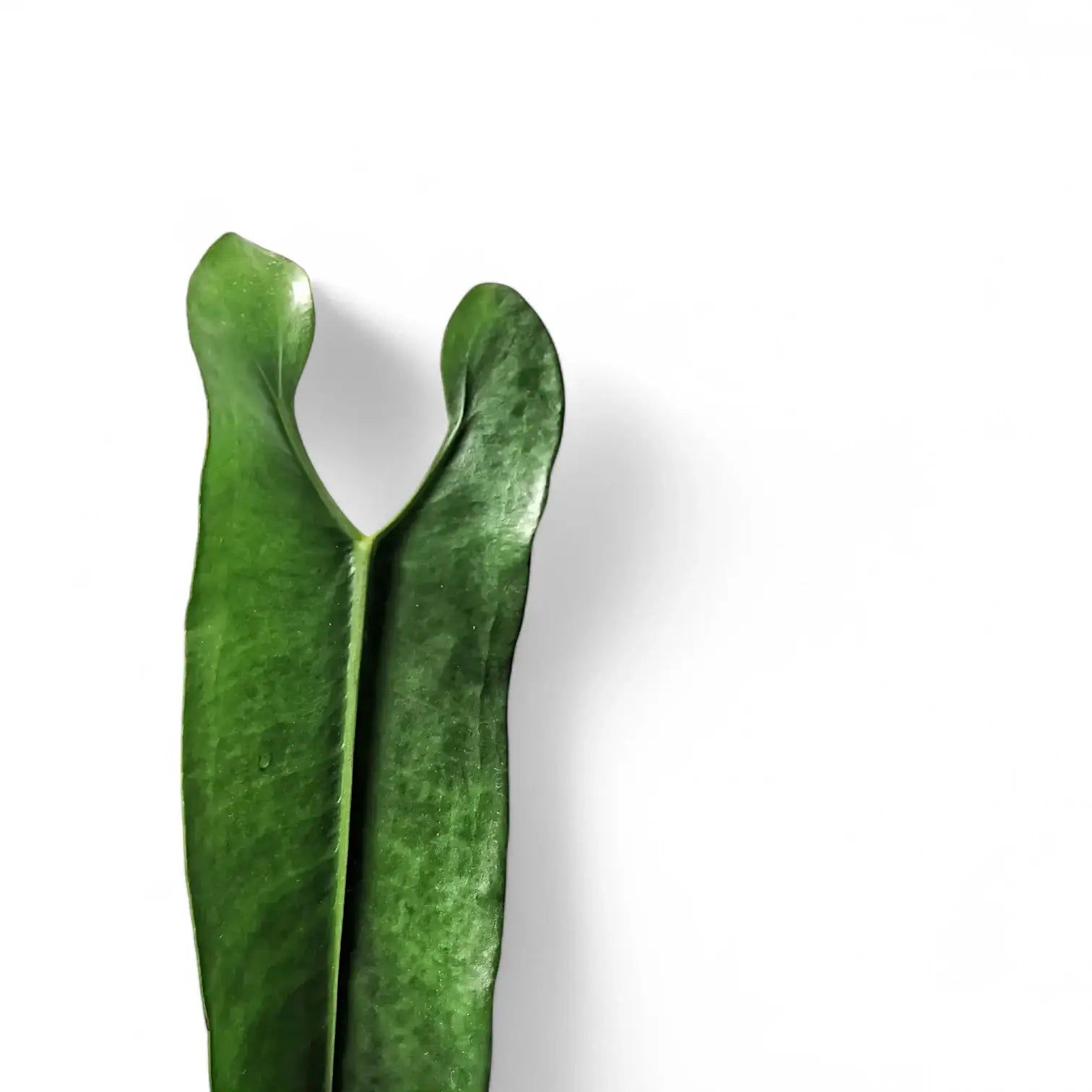
Anthurium longissimilobum is a rare climbing species from Ecuador, known for its sharply defined, triangular-subhastate leaves and elegant, narrow proportions. The leaf blades stretch vertically, with long posterior lobes that hug the stem as it climbs upward. Each blade is stiff, semi-leathery (subcoriaceous), and matte green with visible venation – built to thrive in high-humidity, canopy-level habitats. As part of Anthurium sect. Calomystrium, this species brings both architectural form and botanical intrigue, growing with an appressed-climbing habit and maturing into a visually slender, upright specimen over time.
Distinctive structure and foliage traits
- Leaf shape: Narrowly triangular to subhastate with extremely long posterior lobes
- Texture: Subcoriaceous (semi-leathery), matte green
- Growth form: Appressed-climbing epiphyte with internodes that stay close to the support
- Leaf size: Blades can reach 50 – 70 cm in length when mature
- Petiole: Cylindrical and moderately long
Habitat information and background
This species is native to wet montane forests in Ecuador, typically found at mid-elevation in humid, filtered light environments. It grows epiphytically, hugging tree trunks or mossy surfaces with its appressed stems. In its natural range, temperatures average between 18 – 26 °C with high year-round humidity and consistent moisture. Indoors, Anthurium longissimilobum climbs slowly but steadily, forming long vertical columns. Its growth habit is ideal for moss poles or bark mounts. As with most aroids, the plant is toxic to pets and humans if ingested.
- Origin: Ecuadorian cloud forests
- Elevation range: Mid-elevation (approx. 1,200 – 1,800 m)
- Climate: Humid, warm, with filtered light and steady moisture
- Growth type: Appressed-climbing epiphyte
- Indoor height: Up to 1.2 – 1.5 m with support
- Toxicity: Yes – not pet safe
Anthurium longissimilobum indoor care instructions
- Light: Prefers bright, indirect light. Avoid harsh sun on its delicate leaf surface.
- Water: Keep the substrate lightly moist. Allow top 2 cm to dry before watering again.
- Humidity: Requires high humidity (70%+). Growth slows dramatically in dry air.
- Temperature: Ideal between 18 – 26 °C. Sensitive to cold drafts.
- Soil: Use an airy epiphytic mix – bark-heavy with coco coir and perlite.
- Repotting: Every 2 years or when the mix compacts. Choose tall pots or mount for climbing.
- Fertilizing: Feed monthly with a balanced aroid fertilizer at half strength.
- Propagation: Division or top cuttings from mature plants with aerial roots.
- Hydroponics: Can adapt to semi-hydro using inert substrate if humidity is controlled.
- Pruning: Trim lower leaves as needed to encourage vertical growth. Do not cut healthy lobed leaves.
Problems and what to do about them
- Leaf browning: Usually due to dry air or low humidity. Increase ambient moisture levels.
- Yellowing leaves: Common with overwatering or poor drainage. Use airy substrate and reduce watering.
- Root rot: Caused by compact soil. Repot in a coarse epiphytic mix.
- Pests: Watch for thrips and mealybugs near leaf bases. Remove manually or apply neem oil.
- Stunted growth: Often linked to lack of support. Provide a moss pole for better vertical anchoring.
Additional care notes and growing advice
This species grows best when its natural epiphytic conditions are mimicked – steady moisture, high humidity, and vertical support are key. Avoid letting it dry out completely or exposing it to stagnant air. Studying how Anthurium longissimilobum grows in Ecuadorian forests helps you provide the right balance of light and structure indoors, especially since its growth habit differs from most rosette-forming anthuriums.
Etymology and botanical origin
The genus name “Anthurium” combines Greek “anthos” (flower) and “oura” (tail), referencing the spadix. The species name “longissimilobum” refers to its unusually long lobes. This species was described by botanist Thomas B. Croat, a leading authority on aroid taxonomy, and belongs to the section Calomystrium.
Order Anthurium longissimilobum now
This rare epiphytic climber is made for collectors who appreciate sharp forms and textured foliage. Order today to secure your Anthurium longissimilobum while it's available.
Shipping Notes
- Free Standard Shipping on $100+ Orders to the USA.
- Except Preorder products are shipped in 48 hours.
- Delivery to the USA:
- Standard Shipping : 3-10 business days
- If time is of the essence, please consider selecting expedited delivery for faster service.
Exchange/Return Notes
- We offer a 30-day return/exchange service after receiving.
- Final sale items are not eligible for returns or exchanges.
- To process your return/exchange, please contact us at [email protected]
- Please click here for more details>>> Return & Exchange Policy