Pay in installments of $5.15 with
 ,
,
 and
and

Shipping Estimate
USA
- USA
- CAN
- USA
- CAN
Ships within 48 hours · Estimated delivery Jul 6 - Jul 11
 Promo Codes Available:
For Your Every Summer RSVP, with Code: SUMMER15
Description
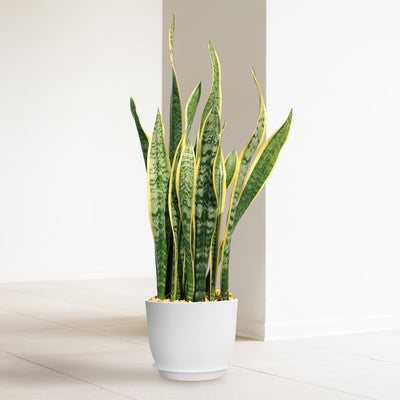
sansevieria circular Variegated Snake PlantIntroducing the Sansevieria laurentii, known as the variegated snake plant, is one of the most popular snake plant varieties. Native to Tropical West Africa, the Sansevieria laurentii has several other common names, such as snake plant laurentii, variegated mother in law's tongue plant, Sansevieria trifasciata laurentii, or striped snake plant. The Sansevieria laurentii differs from the other main type of snake plant, Sansevieria zeylanica because of
Introducing the Sansevieria laurentii, known as the variegated snake plant, is one of the most popular snake plant varieties. Native to Tropical West Africa, the Sansevieria laurentii has several other common names, such as snake plant laurentii, variegated mother-in-law's tongue plant, Sansevieria trifasciata laurentii, or striped snake plant.
The Sansevieria laurentii differs from the other main type of snake plant, Sansevieria zeylanica because of its green leaves with yellow striped edges and larger size.
The plant has tall, rigid sword-like leaves that grow upright and can reach up to 8 feet tall.
Its leaves provide a striking contrast between their dark green color and the dazzling gold variegation around the edges.
The flowers of this variegated snake plant are creamy white, pale green, and bloom from late winter through early spring, making it a true showstopper in any garden. This perennial Sansevieria laurentii succulent is perfect for those looking for a low-maintenance addition to their garden or indoor space.
Sansevieria is part of our clean air plant collection, which filters airborne toxins. The Laurentii snake plant is a popular plant that can be grown in both rock gardens and landscaping, as well as in decorative pots indoors. It's a versatile plant that adds beauty to outdoor spaces and brings a touch of greenery to indoor environments.
However, because this snake plant laurentii grows slowly, large plants can be expensive.
When and How to Water Your Variegated Snake Plant
The Variegated Snake Plant is a drought-tolerant succulent that should be watered every 2–3 weeks during spring and summer and only once every 4–5 weeks during fall and winter, allowing the soil to dry completely between waterings.
From March to August, during the growing season, water your Sansevieria laurentii every 2 to 3 weeks, giving just enough water to moisten the root zone. This is when the plant is actively photosynthesizing and may absorb water more quickly, especially in warm, bright indoor conditions. Always ensure excess water drains out fully and never let the pot sit in water.
From September to February, during the dormant season, reduce watering to once every 4 to 5 weeks, or only when the soil is bone dry. The plant’s growth slows down significantly during cooler months, and its water needs decrease accordingly. Overwatering in winter can easily lead to soft, rotting roots or fungal issues.
Thanks to CAM photosynthesis, this snake plant opens its stomata at night, conserving water efficiently throughout the day. This adaptation, along with its thick, moisture-retentive leaves, means it’s better to underwater than overwater. Wrinkling or slight leaf shriveling are early signs it’s time to water, while mushy or yellowing leaves indicate excess moisture and possible root rot.
Light Requirements - Where to Place Your Variegated Snake Plant
If growing indoors, place your Sansevieria succulents directly in front of a west- or south-facing window, where it gets 4-6 hours of bright, indirect light.
If Sansevieria laurentii don't receive enough bright light, their dark green leaves with yellow variegated edges may grow leggy, become paler, and shorten.
So, make your succulent happy and give your variegated snake plant plenty of brighter light.
When growing outdoors, this Sansevieria laurentii prefers full sun to partial shade for at least 4-6 hours but can also tolerate low light conditions, making it a great choice for rooms with limited natural light. Direct sunlight should be avoided because it can burn your variegated snake plant leaves.
Remember, it's important to gradually acclimate it to the outdoor environment to prevent sunburn. Start by placing it in a shaded area and gradually move it to a spot with more sunlight over a few weeks. This will help the plant adjust to the increased light levels.
Optimal Soil & Fertilizer Needs
The Sansevieria laurentii snake plant thrives in well-drained soil and should be fertilized once a year in spring. Moisture can be a real killer, leading to root and stem rot in no time. But fear not, my fellow green thumbs! Planet Desert has got your back with our specialized succulents potting mix that includes organic mycorrhizae – perfect for promoting healthy roots and happy Sansevieria laurentii.
When it comes to fertilizing your variegated snake plant, it only needs a small amount of fertilizer applied once a year in the spring. Succulents prefer a fertilizer with lower doses of NPK, with a maximum ratio of 5-10-5 that is higher in phosphorus than nitrogen.
Hardiness Zones & More
In the United States, this is mostly an indoor plant, but if you live in southern Florida or Hawaii, then you can cultivate it outdoors in USDA zones 9-11.
This plant thrives in dry, semi-tropical conditions, but it goes dormant when temperatures dip, slowing its growth significantly.
If exposed to prolonged cold or frost, especially below 50°F, the leaves may suffer scarring, mushiness, or collapse.
Even in zones where outdoor cultivation is possible, it’s best to grow them in containers so they can be easily relocated when temperatures become unfavorable.
How to Grow Variegated Snake Plant Best Indoors
To grow your Variegated Snake Plant successfully indoors, maintain a warm, stable environment with temperatures between 65°F and 75°F, which closely mimics its native tropical climate. This plant does not tolerate frost or cold drafts, so it should always be kept away from open windows in winter or air conditioning vents. High humidity can also be problematic, as it increases the risk of rot, so aim for dry, well-ventilated indoor conditions. Its upright, sword-shaped leaves not only make it a great vertical accent in tight spaces but also help purify indoor air, making it both a functional and decorative choice for homes and offices.
Wildlife - Variegated Snake Plant Attracts the Following Friendly Pollinators
The variegated snake plant produces small, fragrant flowers that attract a variety of friendly pollinators such as bees, butterflies, and hummingbirds. These pollinators are essential for the plant's reproduction and play a crucial role in maintaining biodiversity in the ecosystem.
According to ASPCA, the variegated snake plant is mildly toxic to humans and pets if ingested. The entire plant contains saponins, which can cause gastrointestinal issues like nausea, vomiting, and diarrhea. However, it is safe to touch and handle, making it a popular choice for indoor decoration in homes with pets or children.
How to Propagate Your Sanseveria laurentii
The Sansevieria laurentii can be propagated through division or leaf cuttings. To propagate through division, carefully separate the plant into smaller sections with roots attached and replant them in fresh soil. For leaf cuttings, simply cut a healthy leaf into smaller sections and plant them in soil to root.
Key Takeaways
- The variegated snake plant stores water in its thick, upright leaves, making it extremely drought-tolerant and perfect for forgetful waterers or low-maintenance homes.
- Its striking vertical foliage is edged with golden-yellow margins, giving it a bold, architectural look that stands out in any modern interior.
- This plant improves indoor air quality by filtering toxins like formaldehyde and benzene, making it both beautiful and functional for home or office spaces.
- Thanks to CAM (Crassulacean Acid Metabolism) photosynthesis, it absorbs carbon dioxide at night, making it one of the few houseplants ideal for bedroom air purification.
- It’s nearly indestructible in the right pot, tolerating low light, dry air, and minimal care, yet leaf damage can occur if temperatures drop below 50°F.
Final Thoughts
Overall, the Sansevieria Laurentii (snake plant laurentii) is a beautiful and resilient plant suitable for indoor spaces due to its ability to tolerate various conditions. Its upright leaves and variegated pattern add elegance to any room. It is low-maintenance, thrives in well-draining soil, and prefers bright, indirect light. Watering should be minimal to prevent overwatering. It can withstand neglect and drought periods. Sansevieria Laurentii's air-purifying qualities make it an excellent choice for improving indoor air quality.
With the easy-to-care-for variegated snake plant - Sansevieria laurentii, you'll start to spend less time maintaining your garden and more time taking in its beauty!
You may also like the other popular snake plant varieties, including the moonshine snake plant, the mother-in-laws snake plant, the Cylindrical snake plant, and the Zeylanica snake plant.
Shipping Notes
- Free Standard Shipping on $100+ Orders to the USA.
- Except Preorder products are shipped in 48 hours.
- Delivery to the USA:
- Standard Shipping : 3-10 business days
- If time is of the essence, please consider selecting expedited delivery for faster service.
Exchange/Return Notes
- We offer a 30-day return/exchange service after receiving.
- Final sale items are not eligible for returns or exchanges.
- To process your return/exchange, please contact us at [email protected]
- Please click here for more details>>> Return & Exchange Policy